Can You Turn a Memory Foam Mattress to Extend Its Life?
You shouldn’t flip your memory foam mattress because its comfort layers are designed only on one side. Flipping it can actually damage these layers, making your mattress less comfortable over time.
Instead, try rotating it every 3 to 6 months. This helps distribute wear evenly and prevents sagging. Doing this keeps your mattress supportive and extends its lifespan without voiding the warranty.
Want to keep your memory foam mattress comfy and durable for years? We’ve got some helpful tips on how to care for it properly. Taking a little time for regular maintenance can make a big difference in how your mattress feels and lasts.
Key Takeaways
- Memory foam mattresses are usually one-sided, designed with comfort layers only on top and a firm support core underneath.
- Flipping a memory foam mattress can damage comfort layers and void the warranty, so it’s generally not recommended.
- Rotating the mattress every 3 to 6 months promotes even wear and helps prevent sagging and indentations.
- Regular rotation maintains the mattress’s support zones, preserving comfort and extending overall mattress lifespan.
- Always follow manufacturer care guidelines to ensure proper maintenance and warranty protection.
Why Memory Foam Mattresses Are Typically One-Sided
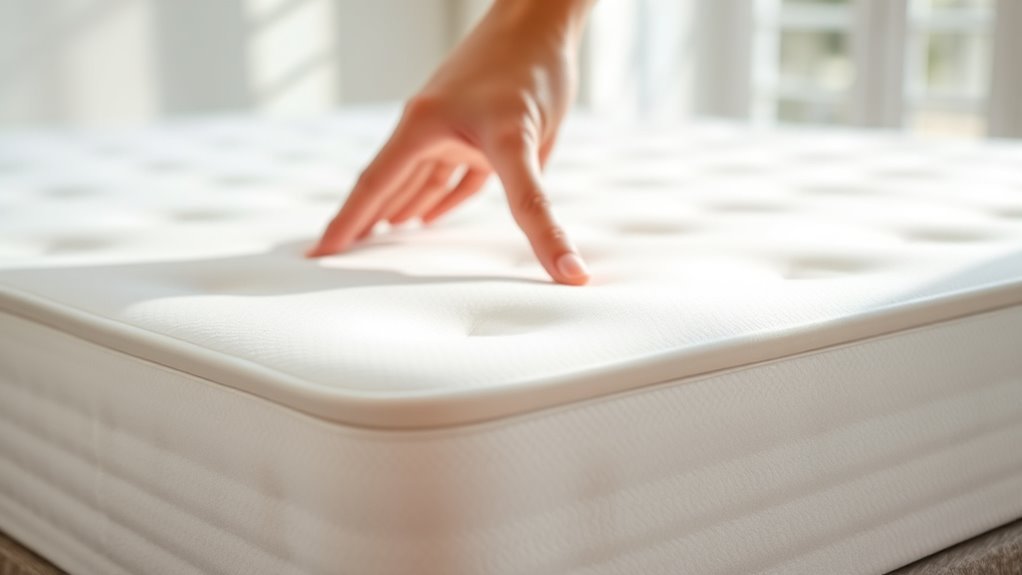
A memory foam mattress is usually one-sided because its design focuses on comfort and support layers that sit only on top. You won’t find a reversible surface in most memory foam mattresses due to their construction and materials.
Memory foam mattresses are typically one-sided, prioritizing top-layer comfort and support without a reversible surface.
The dense support core underneath is meant to stay put, providing steady support without flipping. If you try flipping a one-sided mattress, you risk damaging the comfort layers and compromising the overall design.
This can affect your sleeping experience and may even void the warranty. Manufacturers understand this, so they typically recommend rotating the mattress 180 degrees instead of flipping it.
Knowing this, you can care for your mattress properly while preserving its support, comfort, and longevity.
Benefits of Rotating Instead of Flipping Your Mattress
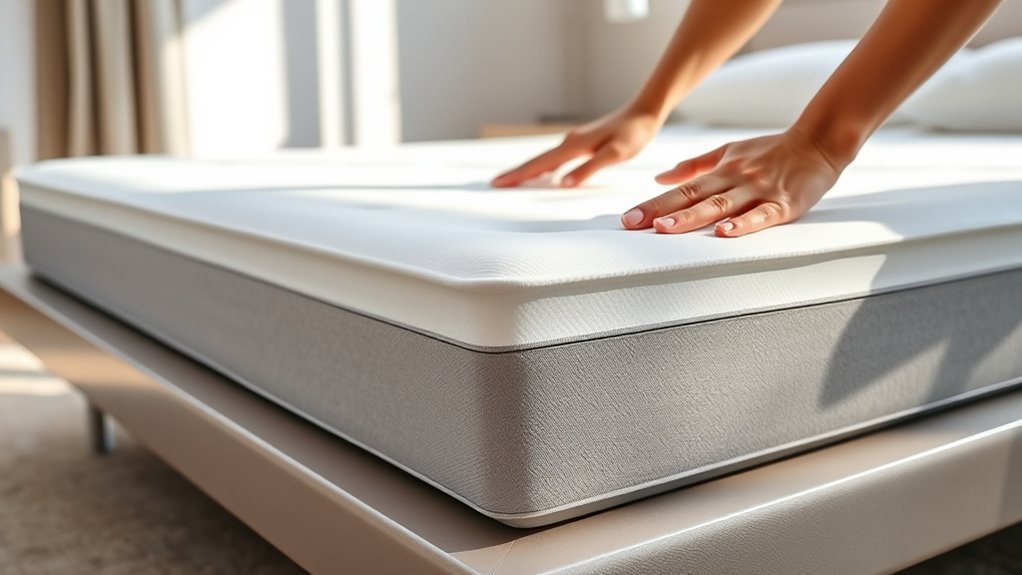
Although you can’t flip a memory foam mattress without risking damage, rotating it every few months offers significant benefits.
When you rotate your mattress, you promote even wear by distributing pressure across the surface without disrupting the comfort layers. It helps keep everything feeling just right.
You also preserve support zones designed specifically for top and bottom, maintaining ideal support. This means your mattress continues to cradle you properly night after night.
Plus, rotating extends the mattress’s lifespan by preventing uneven indentations and sagging. So, your mattress stays comfy for longer.
Lastly, it simplifies maintenance. You avoid the heavy lifting that flipping requires while still ensuring consistent support. Easy and effective!
How Rotation Helps Prevent Uneven Wear and Sagging
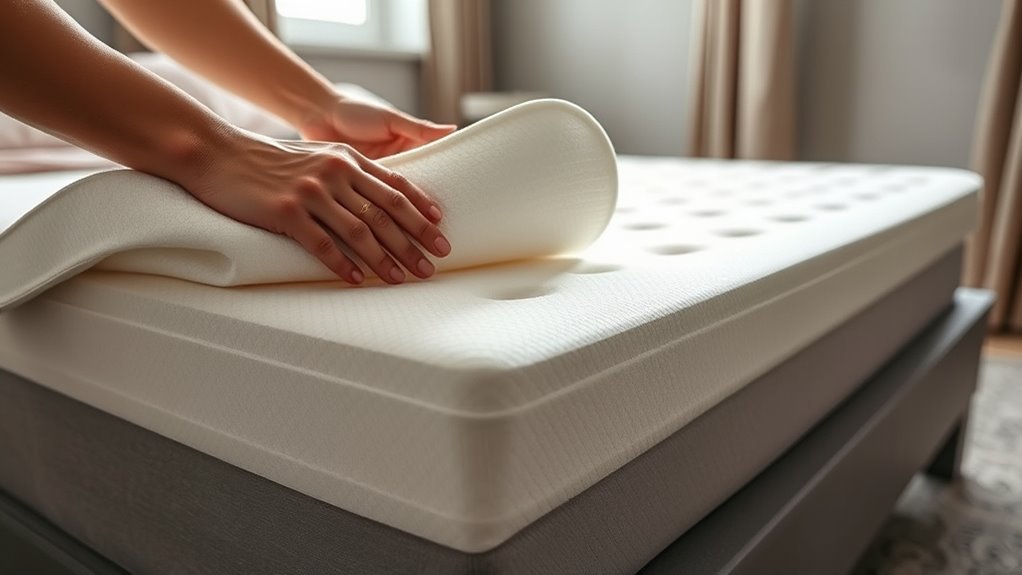
When you rotate your memory foam mattress every 3 to 6 months, you help distribute your body weight evenly. This reduces indentations and prevents sagging.
Rotating balances pressure across the mattress surface, which stops uneven wear and deep body impressions from forming. Over time, these wear patterns can mess with support and comfort, shortening how long your mattress lasts.
By rotating regularly, you make sure all parts of the mattress get similar use. This keeps support uniform and minimizes sagging.
Also, following the manufacturer’s rotation guidelines helps protect your mattress from premature damage.
Manufacturer Recommendations and Warranty Considerations
Keeping up with regular rotation helps your memory foam mattress stay comfortable and durable. But it’s equally important to follow the manufacturer’s specific recommendations.
Ignoring these guidelines might affect your mattress’s support and even void your warranty. Here’s what you should keep in mind:
- Check if your mattress is designed to be flipped or only rotated; not all models allow flipping.
- Rotate your mattress every 3 to 6 months as recommended to promote even wear and extend its lifespan.
- Follow the manufacturer’s instructions carefully to maintain warranty coverage—failure to do so might void it.
- Proper adherence to these guidelines ensures consistent support and maximizes both comfort and warranty protection.
Best Practices for Maintaining Your Memory Foam Mattress
To maintain your memory foam mattress’s comfort and durability, you should rotate it every 3 to 6 months and follow the manufacturer’s specific care instructions. Not all memory foam mattresses are designed to flip, so always check before rotating.
Providing proper support with a sturdy foundation reduces stress on the foam density, helping extend the life of your mattress. Regular care and maintenance include keeping it clean by vacuuming and using a mattress protector to block dirt and allergens that can degrade the foam.
Additionally, guarantee good ventilation by airing out your mattress periodically to prevent moisture buildup and maintain freshness. These best practices will help you preserve your mattress’s comfort and prolong its lifespan effectively.
Frequently Asked Questions
How Long Do You Let a Memory Foam Mattress Expand?
You should let your memory foam mattress expand for at least 24 to 72 hours, depending on the foam density and room temperature.
Waiting guarantees it fully expands and stabilizes, giving you proper support and comfort. So, it’s worth being patient!
Why Is My Mattress Sagging After Only 3 Months?
If you see deep dips forming like footprints in fresh snow after just three months, it’s likely poor support, heavy use, or humidity weakening your mattress.
Check your foundation, rotate it regularly, and guarantee proper ventilation.
These steps can really help keep your mattress in good shape longer. Just a bit of care goes a long way!
Can You Turn a Memory Foam Mattress?
You generally can’t turn a memory foam mattress because most are single-sided. However, you can rotate it 180 degrees regularly to promote even wear and extend its life.
Always check your mattress’s care instructions first. That way, you make sure you’re taking the best care of your mattress possible.
How Many Years Should a Memory Foam Mattress Last?
Think of your mattress as a loyal steed; it should carry you comfortably for about 8 to 10 years.
With care and rotation, you can keep it strong longer, but eventually, it’s time to let it rest.
You know, mattresses don’t last forever. So when it starts feeling less comfy, that’s your cue to think about a new one.
Conclusion
You might think flipping your memory foam mattress would double its life, but it’s usually one-sided for a reason. Instead, rotating it regularly helps you avoid uneven wear and sagging without risking damage.
While flipping seems like the obvious solution, rotation is the smarter move that keeps your mattress comfy and supportive longer. Follow your manufacturer’s advice, and you’ll enjoy a mattress that feels fresh, not worn out, night after night.
Rotating your memory foam mattress is a simple way to extend its life. It helps maintain even support and prevents the foam from breaking down prematurely. So, rather than flipping, make rotation a regular habit to keep your mattress comfortable and durable for years to come.