How Do You Use a Heated Mattress Pad on a Memory Foam Mattress Safely?
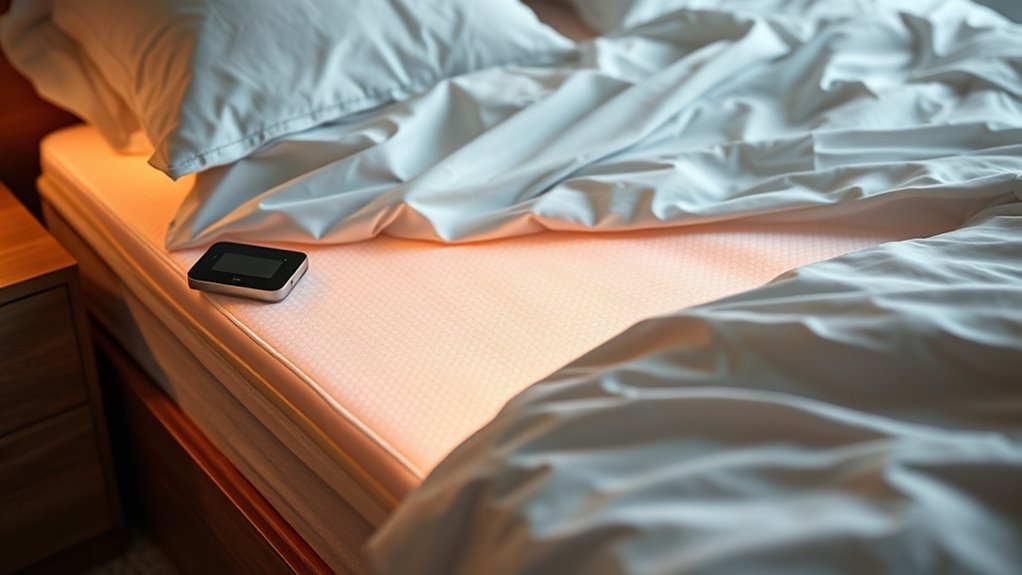
You can safely use a heated mattress pad on your memory foam mattress by placing a breathable sheet or protector between them to avoid direct heat contact. This simple step helps protect the foam from overheating and damage.
Choosing the right heated mattress pad is also important. Look for pads with safety features like automatic shut-off and adjustable temperature controls.
Keeping the heat low and limiting how long you use the pad will also help prevent any harm to your mattress. It’s all about balancing warmth with care.
Don’t forget to regularly check your mattress for signs of sagging or unusual odors, which could signal issues.
Want to keep your mattress comfy and avoid risks? Learning more about these best practices can make a big difference in how long your memory foam mattress lasts and feels cozy.
Key Takeaways
- Always place a breathable mattress protector or sheet between the heated pad and memory foam. This helps prevent direct heat contact and potential damage to your mattress.
- Choose heated mattress pads that come with safety certifications. Features like automatic shut-off and adjustable temperature controls are also a must-have for safe use.
- Set the temperature to the lowest effective level. It’s best to limit continuous use to 1-2 hours to avoid overheating the foam and causing damage.
- Regularly check your mattress and heated pad for any signs of sagging, chemical odors, or heat damage. If you notice anything unusual, stop using the heated pad right away.
- Make sure to follow the guidelines provided by both your mattress and heated pad manufacturers. This ensures compatibility and keeps things safe and comfortable.
Is It Safe to Use a Heated Mattress Pad With Memory Foam?
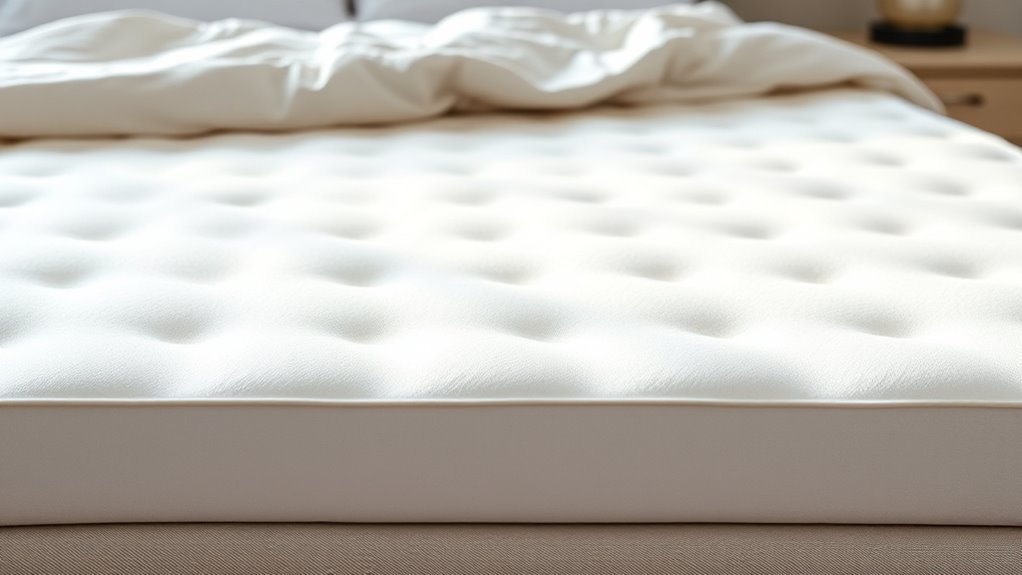
Although heated mattress pads offer cozy warmth, you should be cautious when using them with memory foam mattresses. Most manufacturers advise against placing a heated mattress pad directly on memory foam to prevent foam damage and avoid voiding your warranty.
Excessive heat can soften the foam too much, causing deformation and reducing support. To keep things safe, use a mattress protector between the pad and foam and keep temperature control settings low.
Also, avoid prolonged exposure to heat. Electric heated pads might accelerate foam deterioration or even trigger harmful off-gassing.
Always check your mattress manufacturer’s guidelines before use. Choosing a heated mattress pad with built-in safety features helps protect your memory foam and ensures a safe, comfortable night’s sleep without compromising your mattress’s lifespan.
Risks of Heat Damage to Memory Foam Mattresses
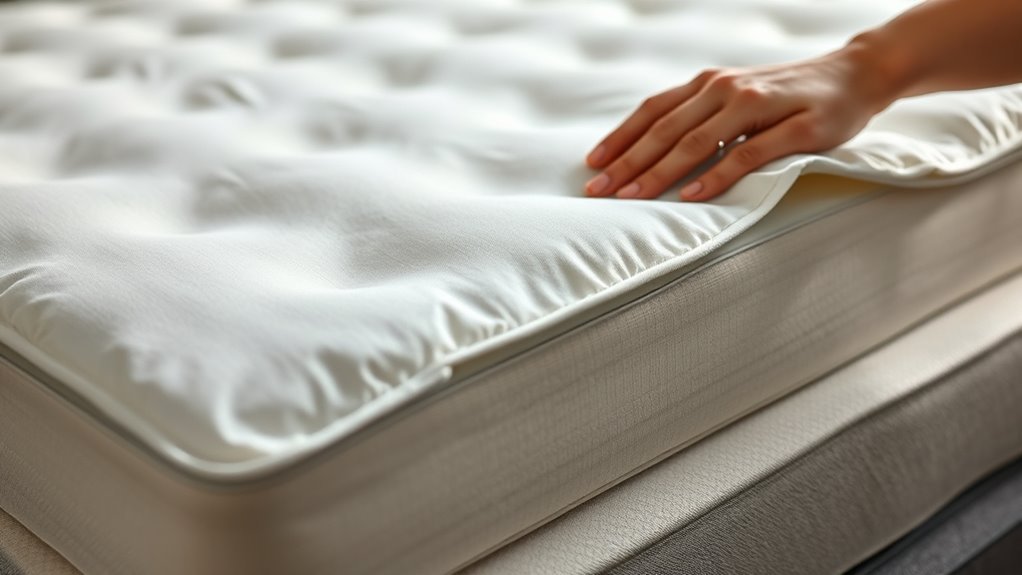
You need to be careful with the heat when using a heated mattress pad on memory foam, as excessive temperatures can soften and deform the foam permanently.
Knowing the temperature thresholds to avoid is key to protecting your mattress from damage. Watch for sagging or unusual odors, which are signs your foam might be breaking down.
Heat Effects on Foam
When you apply heat directly to memory foam, it can soften too much and lose its supportive structure. Excessive heat exposure accelerates the degradation of the foam, leading to permanent damage like warping or sagging.
This not only shortens your mattress’s lifespan but also compromises comfort and support. Plus, high temperatures can cause memory foam to off-gas unpleasant fumes, which may affect indoor air quality and your safety.
Because memory foam is temperature-sensitive, overheating reduces its ability to conform to your body effectively, defeating its purpose. So, to protect your mattress, you need to manage the heat carefully.
Avoid exposing the foam to excessive or prolonged high temperatures. Doing this minimizes the risk of damage and helps ensure your mattress stays comfortable and durable.
Temperature Thresholds to Avoid
Since memory foam is sensitive to heat, it’s crucial to keep the mattress temperature below 104°F (40°C) to prevent softening and damage. When using a heated mattress pad, avoid exceeding this temperature threshold to maintain your memory foam’s integrity.
Temperatures above 113°F (45°C) can cause serious structural harm and shorten the mattress’s lifespan. To stay within safe limits, set the heat setting on your pad to low or medium, as manufacturers typically recommend.
Using a thermometer to monitor the surface temperature helps you ensure the mattress stays within these safe temperature thresholds. By controlling the temperature carefully, you’ll protect your memory foam mattress and enjoy the warmth of your heated mattress pad without risking heat damage.
Signs of Foam Damage
Keeping your memory foam mattress below recommended temperatures helps prevent damage, but it’s important to recognize the signs that heat has already taken its toll.
Overheating can cause foam damage, leading to sagging, increased firmness, or a loss of contouring support. Prolonged heat exposure weakens the mattress’s structure, causing structural breakdown that shortens its lifespan.
You might also notice off-gassing—a chemical odor that signals the foam is deteriorating. Watch for these signs to protect your investment:
- Visible sagging, creasing, or rippling on the mattress surface
- Noticeable increase in firmness or reduced contouring ability
- Persistent chemical odors indicating off-gassing
- Areas that feel unusually soft or uneven due to structural breakdown
Spotting these early helps you avoid further damage and maintain comfort. So, keep an eye out and take action when needed!
Best Practices for Using Heated Mattress Pads on Memory Foam
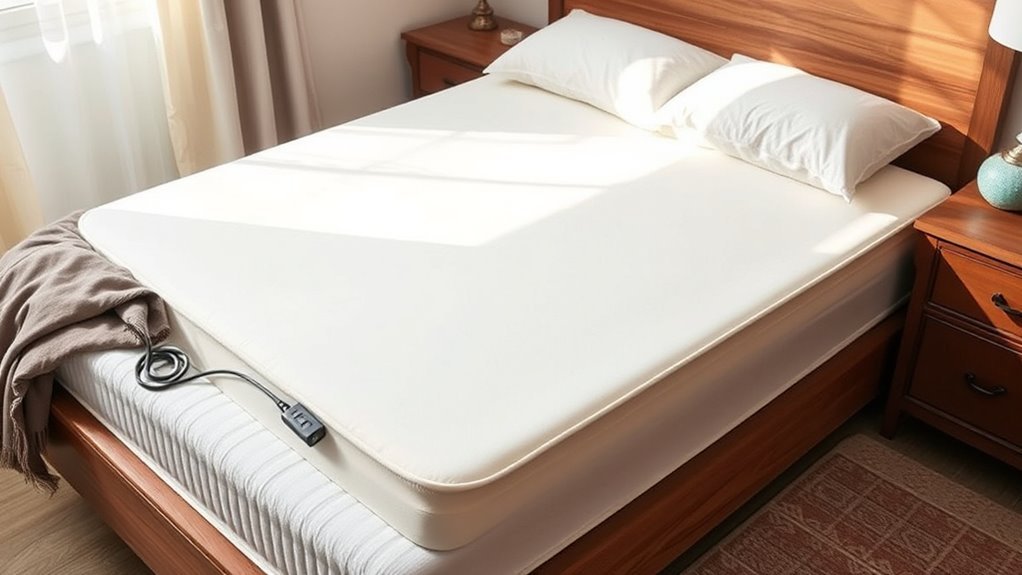
Although heated mattress pads can provide cozy warmth, you need to take special care when using them on memory foam mattresses to avoid damage. Always pick a heated mattress pad with proper safety certifications, automatic shut-off, and adjustable temperature controls to guarantee safe use.
Place a breathable, non-insulating sheet between the heated pad and your memory foam mattress to prevent direct heat contact. This helps with damage prevention.
Set the temperature to the lowest effective level and never exceed the manufacturer’s recommendations. Doing so helps avoid softening or warping the foam.
Use timers or safety features to avoid leaving the pad on all night. For ideal sleep comfort and safety, regularly inspect the pad and bedding.
If you notice signs of wear or overheating, stop using them right away. It’s better to be cautious and keep your mattress in good shape!
Choosing the Right Heated Mattress Pad for Memory Foam
When choosing a heated mattress pad for your memory foam, prioritize models with safety features like automatic shut-off and overheat protection. These features help keep you safe and your mattress in good shape.
Make sure the pad offers adjustable temperature controls to avoid damaging the foam. You want to be able to customize the heat without worrying about overheating.
Also, check that the materials are compatible and designed to fit snugly for even heat distribution. This way, you get cozy warmth all over, without any cold spots.
Safety Features Importance
Why is it vital to prioritize safety features when choosing a heated mattress pad for your memory foam mattress? Because memory foam is sensitive to heat, selecting a pad with reliable safety features helps prevent damage and guarantees your safety.
Look for key elements like overheating protection and automatic shut-off to avoid excessive heat buildup. Proper temperature control is essential to maintain comfort without risking harm.
Also, check for safety certifications to confirm the product meets industry standards.
Consider these safety features when selecting your heated mattress pad:
- Overheating protection and automatic shut-off for damage prevention
- Adjustable temperature control to suit your needs
- Safety certifications such as UL or ETL for verified quality
- Low-voltage operation or thermal fuse to reduce electrical risks
Temperature Control Options
Ensuring your heated mattress pad offers precise temperature control protects both your comfort and your memory foam mattress. Look for adjustable temperature settings to avoid overheating, and verify safety certifications like UL or ETL for reliable controls.
Automatic shut-off features prevent prolonged heat exposure, while dual-zone controls allow personalized warmth if sharing. Pads with layered insulation or sensors ensure even heat distribution, preventing hot spots that could damage memory foam.
| Feature | Benefit | What to Look For |
|---|---|---|
| Temperature Settings | Avoid overheating | Adjustable levels |
| Safety Certifications | Reliable temperature control | UL, ETL certified |
| Automatic Shut-Off | Prevents prolonged heating | Timer-based shut-off |
| Dual-Zone Controls | Personalized comfort | Separate controls for two |
Choose wisely to keep comfort and mattress safe. You’ll thank yourself later!
Material Compatibility Check
Although heated mattress pads can boost your comfort, you need to pick one that’s compatible with memory foam to protect your mattress. Material compatibility is essential to avoid heat damage and preserve your foam’s integrity.
Not every electric blanket or heated pad suits memory foam, so check the manufacturer guidelines closely.
Look for these when choosing your heated mattress pad:
- Confirm the pad is labeled safe for memory foam or foam mattresses.
- Ensure it carries safety certifications like UL, ETL, or CE.
- Choose a model with low-voltage or adjustable temperature controls to prevent overheating.
- Read user reviews and manufacturer guidelines to verify its suitability.
Following these steps helps maintain safety and prolongs your mattress life. Easy, right? Just a little bit of checking goes a long way!
Alternative Warming Methods That Protect Your Mattress
When you want to keep warm without risking damage to your mattress, consider alternative methods like using a heated topper or blanket over your bedding instead of placing heat directly on the mattress. A heated blanket layered over your sheets provides warmth while avoiding direct heat contact with the memory foam.
You can also add natural insulating blankets such as wool or fleece to trap heat effectively. Placing a protective mattress cover beneath any heat source further safeguards your mattress from potential damage.
Portable space heaters offer another warming method that keeps heat off the mattress altogether. By combining these warming methods with layered bedding, you protect your mattress’s integrity while staying cozy throughout the night.
This approach ensures lasting comfort without compromising your memory foam mattress. It’s a simple way to stay warm and keep your mattress in great shape!
Maintaining Mattress Health While Using Heat Sources
To keep your memory foam mattress in good condition while using heat sources, always place a mattress protector or sheet between the heated pad and the foam. This barrier reduces direct heat transfer, helping with damage prevention.
Set your heated mattress pad to the lowest safe temperature recommended by the manufacturer guidelines to avoid overheating. It’s also a good idea to limit use to 1-2 hours at a time to prevent long-term softening.
Keep your heated mattress pad at the lowest safe setting and limit use to 1-2 hours to protect your mattress.
Regular inspections of both your mattress and heated pad help you catch wear or sagging early. That way, you can stop use before any damage occurs.
Remember these key steps:
- Use a mattress protector to minimize direct heat transfer
- Set the heated pad to a safe temperature
- Limit continuous use duration
- Perform regular inspections following manufacturer guidelines
These habits keep your mattress healthy while you enjoy warmth safely.
Frequently Asked Questions
Is It Safe to Use a Heated Mattress Pad on a Memory Foam Mattress?
Yes, you can safely use a heated mattress pad on a memory foam mattress if you avoid high heat and limit usage time. It’s a good idea to use a barrier like a sheet between the pad and the mattress.
Also, make sure to follow the instructions that come with the pad. Regularly check the pad for any signs of damage and confirm it has safety certifications. Taking these steps helps keep things safe and cozy!
What Are the Potential Side Effects of Using a Heated Mattress Pad?
You might experience foam softening and a reduced mattress lifespan. Chemical off-gassing can also cause irritation, which is something to watch out for.
There are overheating risks and potential skin discomfort as well. To avoid these, you should monitor heat settings closely.
Limiting continuous use is important too. That way, you can ensure your safety and comfort while using the heated mattress pad.
Why Are People No Longer Buying Memory Foam Mattresses?
You might wonder why memory foam’s magic is fading—it’s because they trap heat, sag over time, and cost a pretty penny.
You’re choosing cooler, longer-lasting mattresses that breathe better and keep your wallet happier.
Do You Put Sheets Over a Heated Mattress Pad?
Yes, you should put breathable sheets like cotton over the heated mattress pad to protect your skin and secure it with a fitted sheet.
Avoid thick blankets on top to prevent overheating and check the manufacturer’s guidelines. It’s always good to follow their advice to keep things safe and comfy.
Conclusion
Imagine sinking into your memory foam mattress, warmth gently radiating without a hint of damage beneath. Using a heated mattress pad safely means more than just comfort—it’s about protecting that cozy support you rely on night after night.
By choosing the right heated mattress pad and following simple precautions, you can prevent heat from creeping too deep and preserve your mattress’s life. It’s all about balancing warmth with care to keep your mattress in top shape.
So, before you turn on that warmth, remember: a little care keeps your sleep haven perfect and inviting. Using a heated mattress pad on a memory foam mattress safely ensures you enjoy cozy nights without compromising the mattress’s durability or comfort.