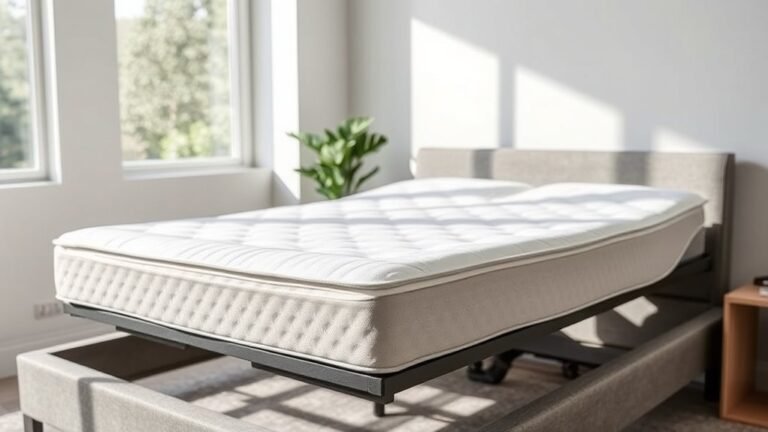
How Do You Use Any Mattress With a Tempur-Pedic Adjustable Base?
You can use many mattresses with a Tempur-Pedic adjustable base by choosing one that bends easily and supports your weight evenly—memory foam and latex work best. These materials adapt well to the base’s movements, giving you comfort and flexibility.
Make sure your mattress is about 10 to 14 inches thick to flex properly without damage.
Avoid rigid innerspring or waterbeds, as they can harm both mattress and base. These types don’t bend well and may cause wear or mechanical issues.
Also, securing the mattress properly on the base is key for safety and comfort.
It’s worth double-checking how your mattress pairs with the adjustable base. Keep exploring to uncover more tips on compatibility and care so you get the most out of your Tempur-Pedic setup.
Key Takeaways
- Use flexible mattresses like memory foam, latex, or hybrid with adequate coil flexibility for smooth adjustment and durability. These types work best because they bend easily with the base.
- Ensure mattress thickness is between 10 to 14 inches for proper support and ease of bending with the base. Too thick or too thin can affect comfort and function.
- Center the mattress on the adjustable base and secure it to prevent shifting during movement. This keeps everything stable when you change positions.
- Avoid innerspring, waterbeds, or rigid airbeds that lack flexibility and may damage the base or mattress. They just aren’t designed to flex with adjustable bases.
- Regularly inspect and maintain the mattress and base, following manufacturer guidelines for weight limits and setup. Taking care of them helps ensure they last longer and work well.
Choosing the Right Mattress Material for Adjustable Bases
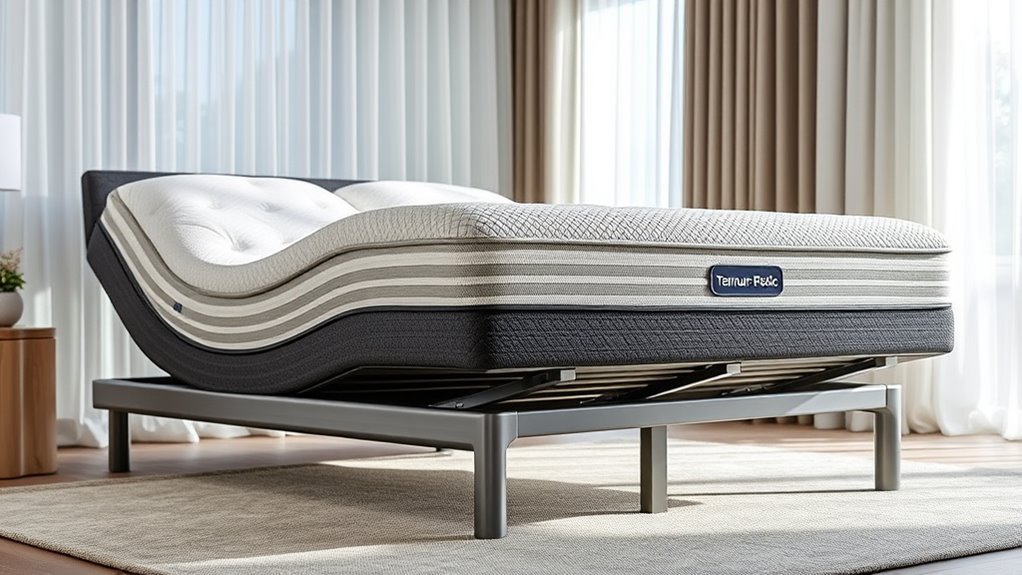
When you choose a mattress for your Tempur-Pedic adjustable base, flexibility matters most. Memory foam and latex mattresses stand out because their flexible materials bend easily without damage, ensuring excellent compatibility with adjustable bases.
Flexibility is key—memory foam and latex mattresses bend easily, ensuring perfect harmony with your Tempur-Pedic adjustable base.
Hybrid mattresses also work well since their individually pocketed coils provide the necessary support for smooth adjustable movements. Avoid innerspring, airbeds, or waterbeds, as they lack the flexibility needed and can suffer damage.
Selecting the right mattress materials directly impacts durability and performance on adjustable bases. While mattress thickness also plays a role, focusing on flexible mattress materials like memory foam, latex, or hybrids guarantees better compatibility and long-lasting support.
Keep these factors in mind to make the most of your Tempur-Pedic adjustable base. It’s all about choosing the right material for comfort and durability!
Mattress Thickness and Flexibility Considerations
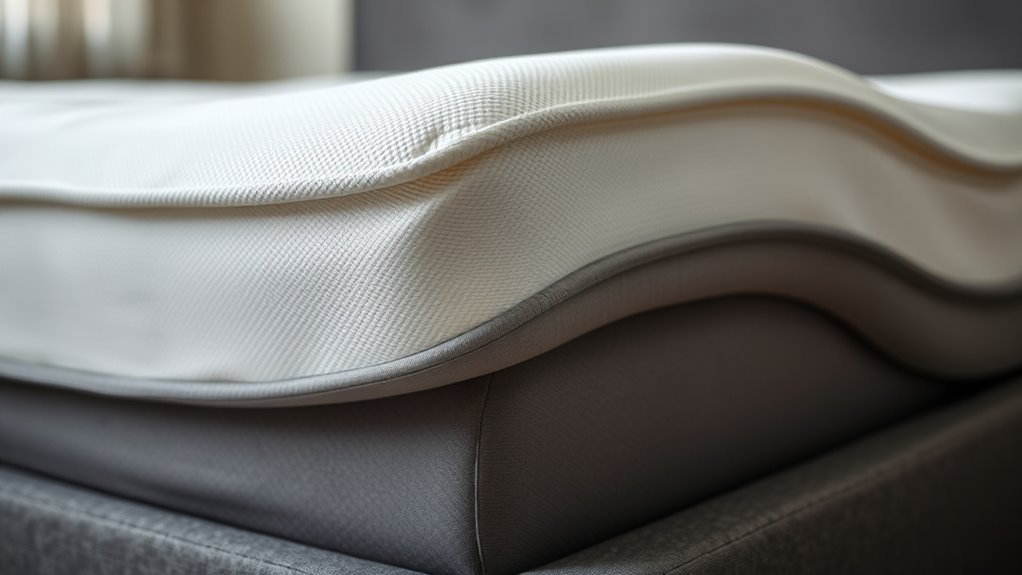
You’ll want a mattress between 10 and 14 inches thick to guarantee it bends smoothly with your Tempur-Pedic adjustable base. Memory foam, latex, and flexible hybrid mattresses work best because they adapt without damage.
Keep in mind, thicker or inflexible mattresses can hinder movement and affect how well your base performs. So, it’s really important to pick one that’s just right for bending and comfort.
Ideal Thickness Range
Since mattress thickness directly affects how well it flexes with an adjustable base, choosing one between 10 and 14 inches is essential for ideal performance. This thickness range ensures proper support and maintains adjustable base compatibility, especially with a Tempur-Pedic foundation.
Mattresses thinner than 10 inches may lack comfort and reduce the effectiveness of adjustable positioning. On the other hand, those thicker than 14 inches might not bend properly, risking damage and operational issues.
The ideal mattress height balances bed height and flexibility of materials, allowing for smooth movement without stressing the mattress. When selecting compatible mattresses, focus on this thickness range to guarantee proper support and durability.
Sticking to this guideline helps you enjoy the full benefits of your adjustable base without compromising mattress longevity or comfort. So, keeping within that 10 to 14-inch range really pays off!
Flexibility and Material
Although mattress thickness plays a crucial role, the material’s flexibility ultimately determines how well your mattress adapts to a Tempur-Pedic adjustable base. Memory foam and latex excel in flexibility, allowing the mattress to bend smoothly without damage, which enhances mattress compatibility.
Hybrid mattresses with individually pocketed coils also offer good conformity to the base’s movements, unlike traditional innerspring mattresses. Ideally, your mattress thickness should range between 10 to 14 inches; thicker options may struggle to flex properly, limiting the adjustable base’s effectiveness.
When choosing a mattress, focus on the material’s ability to conform and maintain durability during adjustments. This ensures seamless operation and maximizes comfort.
Impact on Performance
The flexibility and material of your mattress directly influence how well it performs on a Tempur-Pedic adjustable base. For suitable mattress compatibility, aim for a mattress thickness between 10 and 14 inches.
Thicker mattresses often cause movement restriction and operational issues with the adjustable base. Memory foam and latex excel in material flexibility, conforming smoothly to adjustable positions without damage.
Hybrid mattresses, with pocketed coils, provide better support and adaptability compared to traditional innerspring designs, which may resist bending. Choosing a mattress with the right thickness and flexibility ensures your adjustable base works efficiently, enhancing comfort and preventing wear.
Ignoring these factors can reduce performance, hinder support, and lead to premature malfunction. So, it’s best to prioritize mattresses that bend easily and fit within the ideal thickness range for the best experience.
Compatibility Requirements for Tempur-Pedic Adjustable Bases
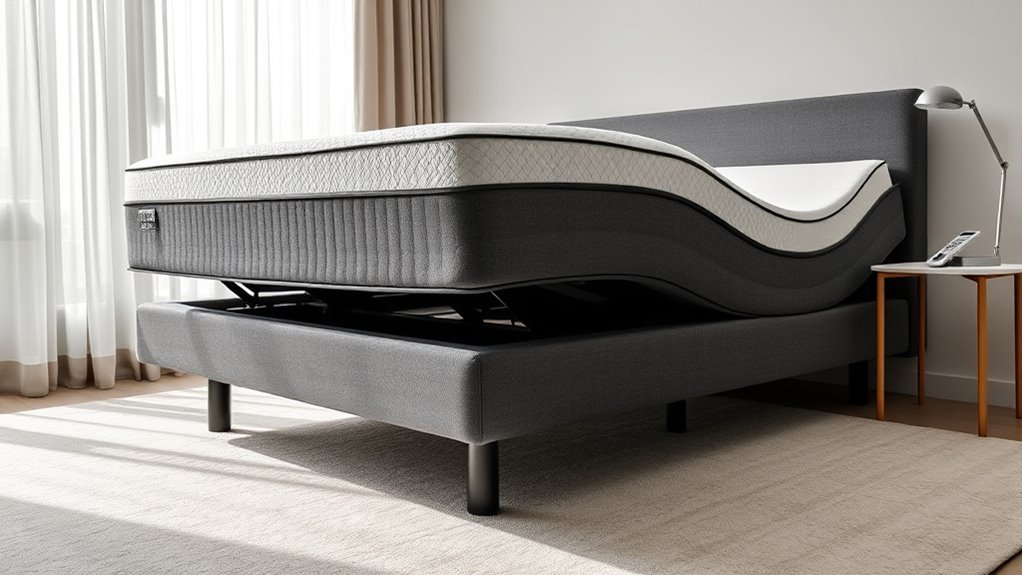
When you choose a mattress for a Tempur-Pedic adjustable base, it needs to lie completely flat in the zero position and support at least 650 pounds evenly.
For compatibility, you want a mattress with enough flexibility to bend without damage, such as memory foam or latex, which fit inside the adjustable base perfectly.
Hybrid mattresses with individually pocketed coils can also work if they offer adequate flexibility. Avoid mattresses with inflexibility, like traditional innersprings, airbeds, or waterbeds, as they won’t support the base’s movement properly.
Thickness matters too—aim for 10 to 14 inches to ensure the mattress can move smoothly with the adjustable base’s independent head feature, providing excellent support and comfort without compromising performance.
Risks of Using Incompatible Mattresses With Adjustable Bases
If you use a mattress that isn’t compatible with your Tempur-Pedic adjustable base, you risk damaging both the mattress and the base. Incompatible mattresses like innerspring or airbeds lack the necessary support and flexibility, causing uneven pressure that leads to foam deterioration and sagging.
This improper fit strains the base’s motor, increasing the chance of mechanical failure or motor strain. Using an unsuitable mattress can also void your warranty since Tempur-Pedic requires specific mattress compatibility for proper function.
Beyond damage, safety hazards arise as the mattress may shift or slip during adjustments, compromising your sleep quality and safety. To protect your investment and ensure peak performance, always choose a mattress designed to work seamlessly with your adjustable base’s support and movement capabilities.
Tips for Maintaining Mattress and Base Longevity
Although adjustable bases offer great comfort and flexibility, maintaining both your mattress and base requires some careful attention. For effective mattress maintenance, always use compatible materials like memory foam or latex that flex without damage.
Confirm your mattress thickness stays between 10 to 14 inches to avoid strain and support proper operation. Perform regular checks to tighten straps or fasteners, securing a secure fit that prevents shifting.
Follow the manufacturer’s guidelines for weight limits and proper setup to maximize base longevity. Avoid placing heavy objects or extra bedding that could interfere with movement and cause wear.
How to Verify Mattress and Base Compatibility Before Purchase
Maintaining your mattress and adjustable base starts with choosing the right combination. First, measure your bed frame and compare it to the base specifications to guarantee the adjustable base will fit inside properly.
Next, verify mattress thickness—ideally between 10 and 14 inches—to ensure it bends well with the base. Check manufacturer guidelines carefully to confirm your mattress type is suitable; memory foam and latex are compatible materials, while innerspring or waterbeds usually aren’t recommended.
Also, verify that the adjustable base support meets at least 650 pounds evenly and lies flat in the zero position. By measuring dimensions, confirming mattress thickness, and reviewing compatibility details, you’ll ensure your mattress and Tempur-Pedic adjustable base work together flawlessly for lasting comfort.
Frequently Asked Questions
Can You Use Any Mattress on a Tempur-Pedic Adjustable Base?
You can’t use just any mattress on a Tempur-Pedic adjustable base. You’ll need a flexible mattress like memory foam or latex, about 10-14 inches thick.
This helps avoid damage and guarantees proper support. Plus, it ensures your warranty coverage stays intact.
Can I Use Any Mattress With an Adjustable Base?
You can’t use just any mattress with an adjustable base because some won’t bend properly.
Choose flexible memory foam, latex, or certain hybrid mattresses to guarantee comfort and avoid damaging your base or voiding warranties.
It’s all about picking the right mattress that moves with your base. That way, you get the best experience without any hassle!
What Are Some Common Problems With the Tempur-Pedic Ergo Adjustable Base?
You’ll often face motor noise during adjustments, and sometimes the remote won’t connect properly. If it’s not calibrated right, you might notice some misalignment too.
Power surges can cause the base to reset unexpectedly. Mechanical wear might lead to squeaks over time.
Plus, software glitches can make features unresponsive or hard to sync. It can be a bit frustrating when things don’t work as smoothly as they should.
Which Adjustable Base Is Best for a Tempur-Pedic Mattress?
Back in the days of knights and castles, you’d choose the Leva Sleep split adjustable base for your Tempur-Pedic mattress. It offers independent control, solid support, and keeps your mattress comfy—perfect for modern comfort and warranty protection.
It’s like having the best of both worlds. You get to enjoy personalized comfort while making sure your Tempur-Pedic mattress stays in great shape. Sounds like a win-win, right?
Conclusion
Using any mattress with your Tempur-Pedic adjustable base is easier than you might think—just make sure it’s flexible and not too thick. Did you know that 70% of adjustable base users report better sleep quality when their mattress fits perfectly?
By choosing the right material and checking compatibility, you’ll avoid damage and enjoy maximum comfort. It’s all about finding that perfect balance between flexibility and support.
Remember, a well-matched setup not only enhances sleep but also extends the life of both your mattress and base. So, when you pick a mattress that works well with your Tempur-Pedic adjustable base, you’re investing in better sleep and longer-lasting comfort. That’s a win-win for your bedroom!