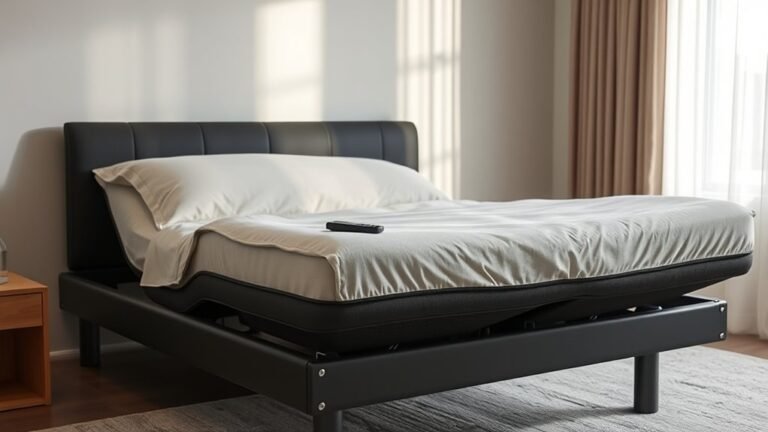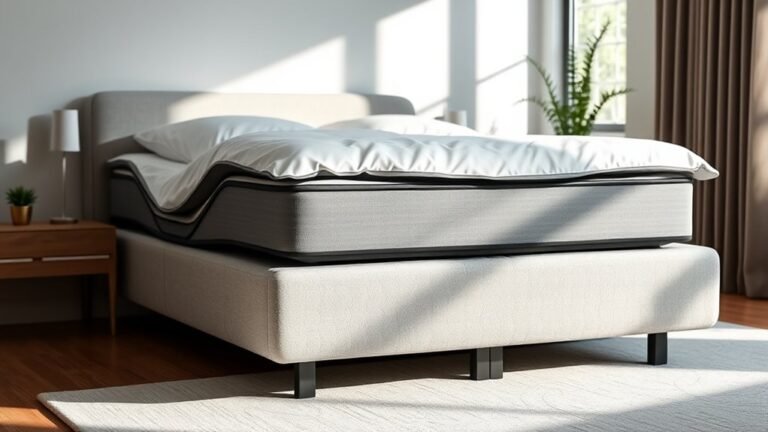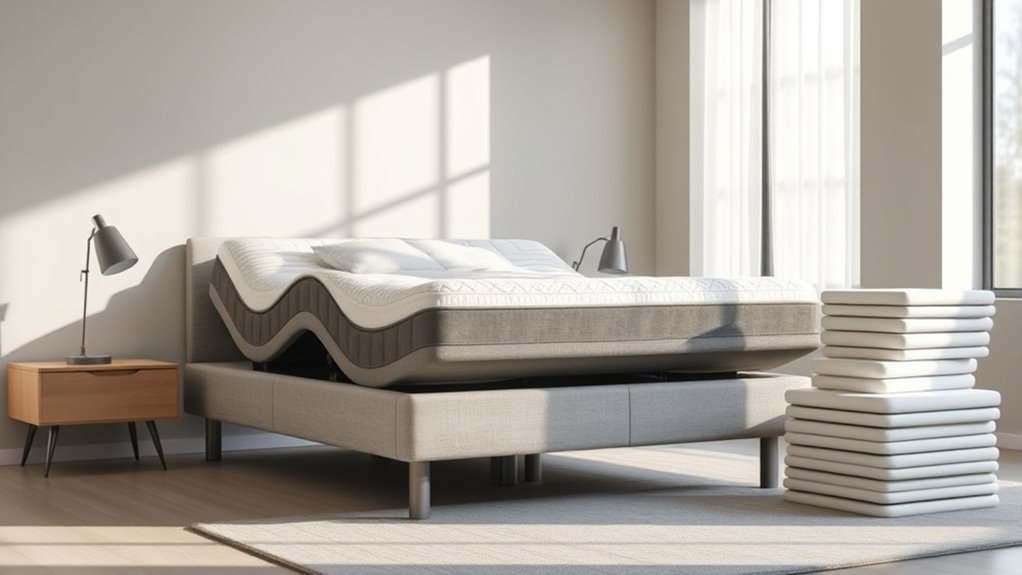
Do Adjustable Beds Require Special Mattresses?
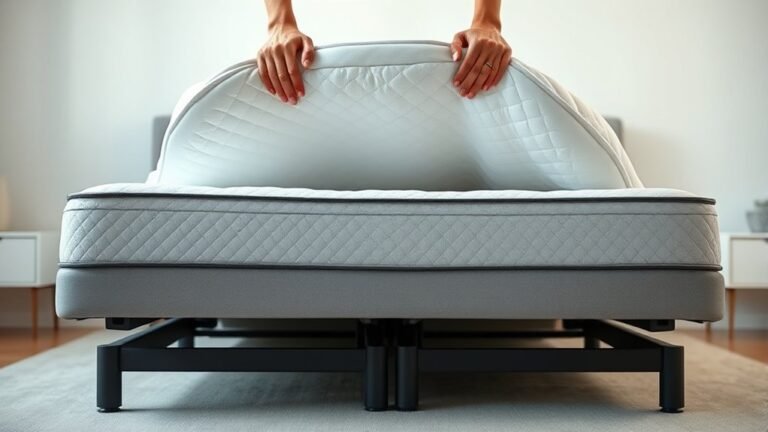
Yes, adjustable beds do require special mattresses that flex easily with the bed’s movements to prevent damage and guarantee comfort. You’ll want flexible materials like memory foam, latex, or hybrid designs that bend smoothly without losing support.
Avoid stiff innerspring mattresses, as they can restrict adjustment and wear out faster. Choosing the right thickness and weight also matters for durability and functionality.
Keep looking to discover how to pick and care for the best mattress with your adjustable bed. This way, you’ll ensure your setup is both comfortable and long-lasting.
Key Takeaways
- Adjustable beds require mattresses made from flexible materials like memory foam, latex, or hybrids. These materials bend smoothly with the frame, making adjustments comfortable and easy.
- Traditional innerspring mattresses usually aren’t compatible with adjustable beds. Their rigid coils restrict movement and can even cause damage over time.
- Ideally, mattress thickness should be between 10 to 14 inches. This range ensures proper articulation without getting in the way of the bed’s adjustments.
- Also, mattresses need to stay within the bed’s weight limit, which is typically between 300 and 600 pounds. This helps avoid putting too much strain on the adjustable base.
- Using a mattress specifically designed for adjustable beds really makes a difference. It enhances comfort, durability, and prevents damage during frequent position changes.
Benefits of Using an Adjustable Bed

When you use an adjustable bed, you can customize your sleeping position to reduce pressure points and boost comfort, which leads to better sleep quality. The adjustable bed base gives you the support you need by allowing you to elevate your head, legs, or both, which helps alleviate issues like acid reflux, sleep apnea, and chronic pain.
This flexibility also improves circulation and reduces swelling when you adjust your position. Beyond health benefits, it adds convenience for reading, watching TV, or working in bed by providing ergonomic angles.
Plus, if you have mobility challenges, the adjustable bed base makes it easier to get in and out of bed and shift positions during the night. Ensuring your mattress has compatibility with the base is key to maximizing these benefits.
Key Factors for Mattress Compatibility
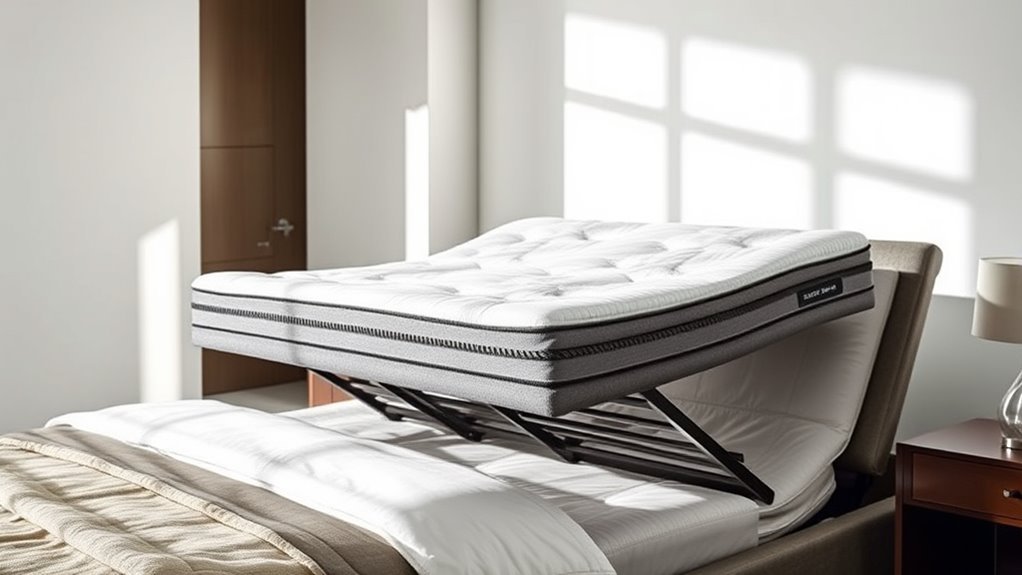
When choosing a mattress for your adjustable bed, you need to focus on flexibility to guarantee it moves smoothly with the frame. Memory foam, latex, and hybrid mattresses typically work best because they can bend without damage.
Thickness and weight also play a vital role in compatibility. Always check the mattress specifications to make sure it meets the requirements for your adjustable base. It’s worth taking the time to get this right so you can enjoy a comfortable and functional setup.
Mattress Flexibility Importance
Because adjustable beds move frequently, your mattress needs to flex easily to keep up without damage. Mattress flexibility is essential for maintaining proper support and ensuring smooth bed adjustments.
When your mattress bends effortlessly with the frame, it prevents cracking, deforming, or losing durability. Materials like memory foam and latex naturally offer this flexibility, making them ideal for adjustable beds.
On the other hand, traditional innerspring coils or dense foams can restrict movement and reduce the bed’s lifespan. The construction of your mattress—such as using pocketed coils or responsive foam layers—also plays a key role in compatibility.
Choosing a mattress designed for repeated bending ensures your adjustable bed functions well while providing consistent support throughout the night. It’s all about finding the right match for your bed’s movements.
Suitable Mattress Types
Selecting the right mattress type plays an essential role in how well your adjustable bed performs. You’ll find memory foam mattresses, latex, hybrid, and pocketed coil mattresses are generally compatible with adjustable beds because they bend easily without damage.
These materials provide the flexibility and support needed for smooth articulation. Avoid traditional innerspring mattresses with rigid coils and pillow tops—they usually can’t flex properly and may get damaged.
When choosing a mattress, check the manufacturer’s specs to confirm it’s designed for adjustable beds. This guarantees durability and comfort as you adjust positions.
Thickness and Weight Limits
Adjustable beds work best with mattresses that are between 10 to 14 inches thick, ensuring ideal flexibility and support. When shopping for adjustable mattresses, you should pay close attention to mattress thickness because anything thicker than 14 inches can limit the bed’s ability to bend properly, reducing its functionality.
Weight limits also play a vital role in compatibility. Most adjustable beds support mattresses weighing between 300 to 600 pounds, depending on the model. If your mattress is heavier than 150 pounds, you might need a reinforced frame to avoid sagging or damage during adjustments.
Sticking within recommended mattress thickness and weight limits helps maintain the bed’s durability, support, and smooth movement. This way, you’ll get the most out of your adjustable bed setup.
Mattress Types Best Suited for Adjustable Bases
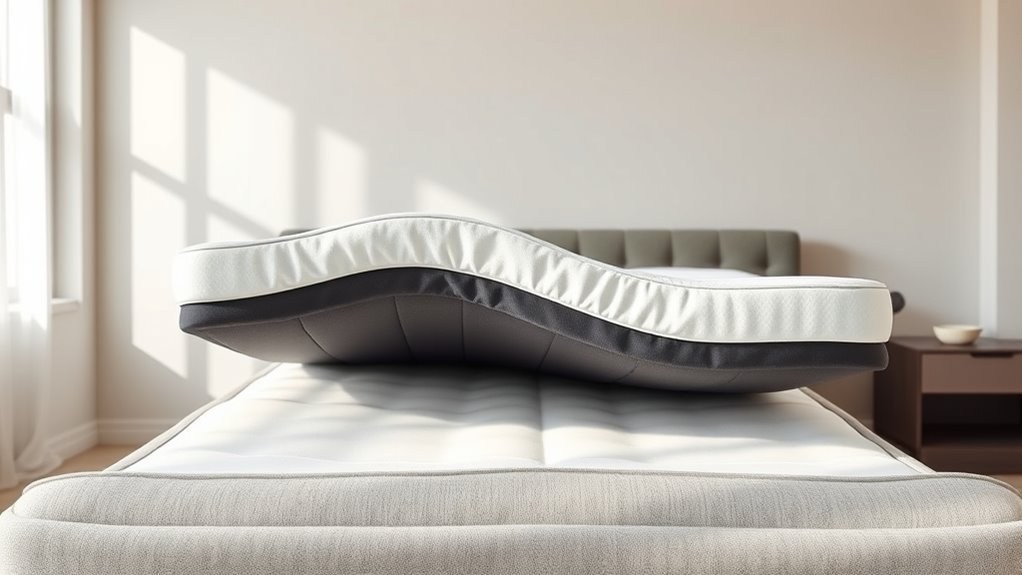
When choosing a mattress for your adjustable bed, focus on flexible materials like memory foam or latex that bend easily without harm. These materials adapt well to the bed’s movements, keeping you comfortable throughout the night.
Keep in mind that mattresses between 10 and 14 inches thick work best to ensure smooth movement. Too thick or rigid mattresses can make it harder for the bed to adjust properly.
Flexible Mattress Materials
Because flexible materials can bend and recover without damage, memory foam and latex mattresses work especially well with adjustable bases. When you choose a mattress, compatibility with your adjustable bed is key.
Memory foam’s ability to contour and flex without breaking down makes it an excellent choice. Similarly, latex mattresses naturally respond to movement while maintaining support, ensuring durability.
Hybrid mattresses combining foam or latex layers with pocketed coils also offer great flexibility and support, adapting well to adjustable frames. Avoid traditional innerspring mattresses with rigid coils, as they lack the necessary flexibility and may damage the bed or mattress.
Ideal Mattress Thickness
How thick should your mattress be to work best with a flexible base? Ideally, your mattress thickness should fall between 10 to 14 inches for adjustable beds. This range provides the right balance of flexibility and support, allowing the bed to bend smoothly without strain.
Mattresses thicker than 14 inches often become too rigid or heavy, which can hinder the bed’s movement and even damage the mechanism. On the other hand, thinner mattresses around 8 to 10 inches offer better flexibility but might not provide enough support for some sleepers.
Memory foam, latex, and hybrid mattresses within the 10-14 inch range are usually the most compatible mattresses for adjustable beds. They ensure comfort while maintaining *ideal* bed functionality. Choosing the right mattress thickness helps your adjustable bed perform at its best.
How to Determine if Your Mattress Works With an Adjustable Base
If you want to use your mattress with an adjustable base, start by checking the label or manufacturer specifications to see if it supports flexibility. Mattresses made from memory foam, latex, or hybrid materials are generally compatible because they bend easily and provide proper support when adjusted.
Avoid traditional innerspring mattresses unless they’re specifically designed to flex with an adjustable frame. To be sure, test your mattress by placing it on the adjustable base and moving the head and foot sections. Watch for smooth movement without damage or discomfort.
If you’re unsure, contact the mattress or bed manufacturer to confirm compatibility. Taking these steps ensures your mattress works well with your adjustable bed and offers the support and comfort you need.
Thickness, Flexibility, and Weight Considerations
Once you’ve confirmed your mattress works with an adjustable base, pay close attention to its thickness, flexibility, and weight. Mattress thickness should ideally stay under 14 inches to ensure smooth bending.
Flexibility matters—memory foam, latex, and hybrid mattresses adapt well without damage. Mattress weight also plays a key role; heavier mattresses, especially those thicker than 13-14 inches, can strain the base’s motor and reduce durability.
Make sure your mattress weight fits within the adjustable bed’s capacity for maximum performance.
| Mattress Thickness | Flexibility | Mattress Weight |
|---|---|---|
| Under 14 inches | High (foam, latex) | Moderate (within base limits) |
| Over 14 inches | Low (innerspring) | Heavy (may strain motor) |
Adjustable beds require balance among these factors for durability and comfort.
Maintenance Tips for Mattresses on Adjustable Beds
Because adjustable mattresses undergo frequent bending, you should rotate your mattress every 3 to 6 months to evenly distribute wear and maintain its flexibility. Proper mattress maintenance also involves using a mattress protector to guard against moisture and dust buildup, which can affect the mattress’s material flexibility.
Avoid flipping mattresses designed as no-flip, since this can damage the internal structure and reduce adjustable bed compatibility. Keep your mattress clean and free of debris to prevent material degradation that could hinder smooth bending.
Ultimately, always follow the manufacturer’s maintenance guidelines to ensure your mattress provides proper support and remains adaptable to your adjustable bed’s movements. These steps help prolong your mattress’s lifespan while maintaining its comfort and performance.
Choosing the Right Mattress for Your Adjustable Bed Needs
When selecting a mattress for your adjustable bed, you’ll want to focus on materials that offer both flexibility and support, such as memory foam, latex, or hybrid designs with pocketed coils. These types of adjustable mattresses bend easily with your bed’s movements while maintaining comfort.
Avoid mattresses over 14 inches thick, as they may limit adjustability. Traditional innerspring mattresses with rigid coils generally lack the compatibility with adjustable beds you need for smooth articulation.
Always check the manufacturer’s specifications to verify your mattress for adjustable bed use is designed to handle frequent position changes. Choosing a mattress specifically made for adjustable beds improves durability, enhances comfort, and prevents damage.
This way, you make sure your investment lasts longer and works seamlessly with your adjustable base.
Frequently Asked Questions
Can I Put a Regular Mattress on an Adjustable Bed?
You can put a regular mattress on an adjustable bed, but it might not bend well and could get damaged.
It’s best to use mattresses designed for flexibility to guarantee comfort and avoid premature wear or damage.
What Are the Downsides of Using Adjustable Beds?
About 30% of adjustable bed users report noise issues. You’ll face higher costs, potential mechanical wear, and more maintenance.
Plus, frequent adjustments may disturb your sleep or cause parts to need repairs sooner than traditional beds. It’s something to keep in mind if you’re considering one!
What Is the Best Type of Mattress to Use on an Adjustable Bed?
You’ll want memory foam, latex, or hybrid mattresses with flexible coils for your adjustable bed. They bend easily without damage and provide great support.
Avoid traditional innerspring mattresses unless they’re specifically designed for adjustability. Also, keep your mattress thickness between 10 and 14 inches for the best fit.
What Mattresses Are Not Compatible With an Adjustable Base?
You shouldn’t use traditional innerspring mattresses with rigid coils, waterbeds, or thick pillow-tops on adjustable bases. These types just don’t flex well with the movement.
Also, avoid mattresses over 14 inches thick or dense memory foam that won’t bend easily. They can actually damage your adjustable bed over time. So, it’s better to pick something more flexible and thinner for the best experience.
Conclusion
You might think any mattress will do, but imagine waking up with aches because yours can’t bend right. Choosing the right mattress for your adjustable bed isn’t just smart—it’s essential. Flexibility, thickness, and weight all play a role in your comfort and the bed’s performance.
Don’t settle for less; your sleep deserves the perfect match. The right mattress can flex and move with your adjustable base without losing support. Whether it’s memory foam, latex, or hybrid, make sure it complements your bed’s features.
Ready to transform your nights? An adjustable bed mattress designed for bending will unseal a whole new level of rest. Investing in the right mattress means better sleep quality, less discomfort, and longer-lasting comfort. Your adjustable bed deserves a mattress that works with it—not against it.