
What Do Carpet Bugs Do and Do They Bite?
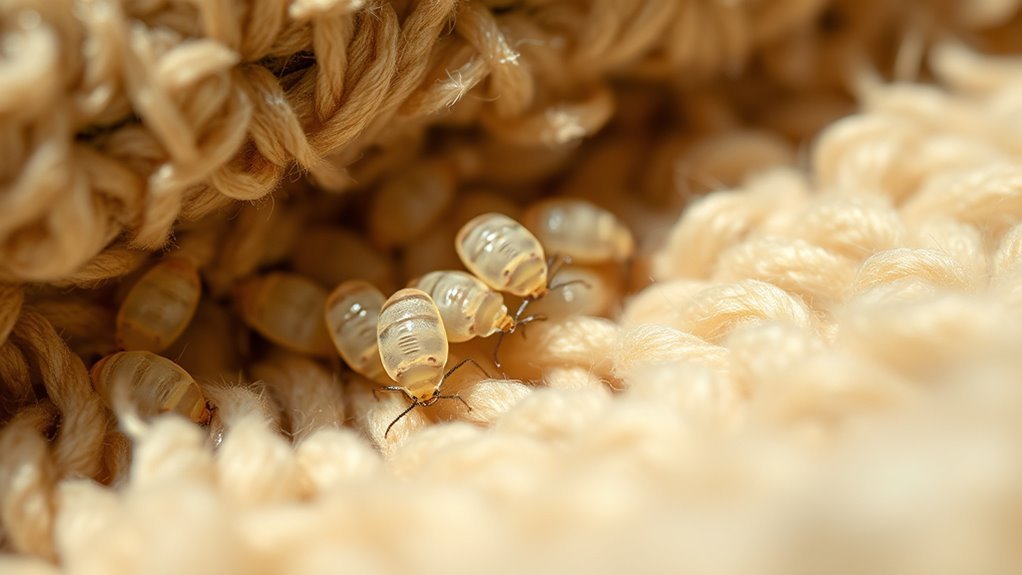
Carpet bugs, especially their larvae, are known for feeding on natural fibers like wool, silk, and leather. This feeding behavior causes holes and damage in your carpets, clothing, and upholstery. These pests can be quite a nuisance if left unchecked.
The good news is, carpet bugs don’t bite you or your pets. However, the tiny hairs on the larvae can sometimes cause itchy skin irritation or trigger allergies.
You might notice signs such as shed skins, frass (bug droppings), and small holes appearing in your fabrics.
If you’re wondering how to spot these pests, prevent infestations, and control them effectively, keep reading. Understanding these details will help you protect your home and belongings from carpet bug damage.
Key Takeaways
- Carpet bugs primarily feed on natural fibers like wool, silk, and feathers. This causes holes and fabric damage in carpets and clothing.
- Only the larvae damage fabrics by chewing. Adult carpet bugs do not feed on textiles or bite humans.
- Carpet bugs do not bite humans or animals. Any skin irritation is caused by tiny hairs on the larvae, not by bites.
- When you’re exposed to larvae hairs, it can trigger allergic reactions and dermatitis. This results in red, itchy bumps and skin irritation.
- Signs of an infestation include holes in fabrics, shed larval skins, frass, and adult beetles near windows or dark areas. Keep an eye out for these clues!
Identification and Characteristics of Carpet Bugs
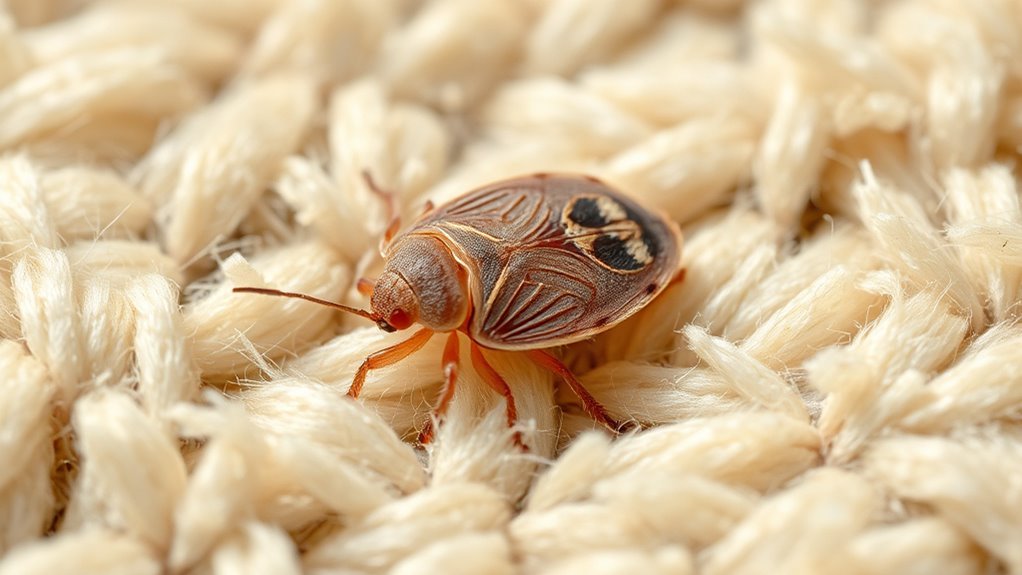
Although carpet bugs include different pests like carpet beetles and bed bugs, you can identify them by their unique shapes and behaviors.
Carpet bugs, including beetles and bed bugs, can be identified by their distinct shapes and behaviors.
When it comes to carpet beetles, adult beetles are small, oval-shaped, and less than 5 mm long, often showing colors like black, white, yellow, or orange.
Their larvae appear elongated and bristly, measuring between 1/8 to 1/4 inch, and are covered in tufts of hair.
For effective beetle identification, focus on these physical traits.
Carpet beetle larvae are the main culprits behind beetle damage, as they feed on natural fibers in carpets and other household items.
Understanding these differences helps you spot carpet beetles early and address any infestations before significant beetle damage occurs.
Feeding Habits and Damage Caused by Carpet Bugs
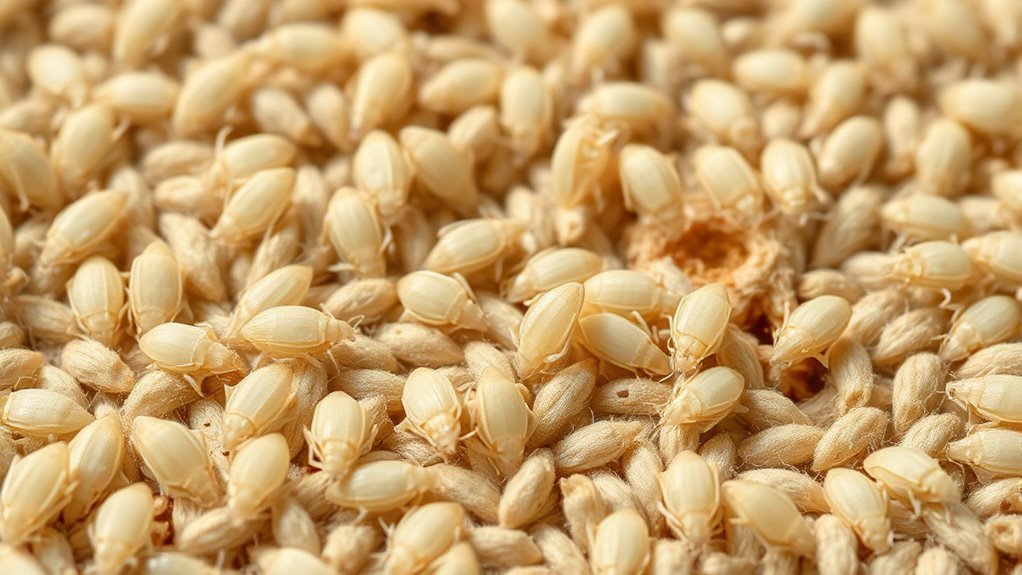
You’ll find that carpet bug larvae prefer natural fibers like wool, silk, and feathers. They chew through these materials relentlessly.
This feeding habit leads to noticeable damage, such as holes and frayed edges on your clothing, carpets, and upholstery.
Understanding their preferences helps you spot and prevent the destruction they cause. It’s pretty handy to know what they like!
Larval Feeding Preferences
When carpet beetle larvae settle in your home, they target natural fibers like wool, silk, fur, and leather for food. Their feeding preferences focus on organic materials rich in protein, which makes your stored fabrics and upholstery ideal food sources.
Besides natural fibers, larvae also consume pet hair, human hair, and dead skin debris. This is why you might find them in various household areas.
You might not notice them feeding because larvae work silently, but they cause damage by chewing irregular holes in your carpets and clothing. These holes often appear along edges or folds.
While they don’t bite humans, their feeding habits can lead to costly damage if left unchecked. Watching for signs like shed skins and frass can help you identify larvae infestations early and protect your belongings.
Fabric and Material Damage
Since carpet bugs mainly feed on natural fibers like wool, silk, and leather, they can cause noticeable damage to your carpets, clothing, and upholstery. The larvae cause most of the harm by chewing irregular holes in infested fabrics, leading to significant damage to textiles over time.
You might not spot the larvae immediately, but you’ll notice signs like shed skins and frass—tiny droppings they leave behind. This carpet beetle damage often develops silently, so catching it early is imperative to protect your belongings.
While adult carpet beetles don’t feed on fabrics, their larvae’s feeding habits can ruin your favorite items if left unchecked. Keeping an eye out for these warning signs can help you manage and prevent further damage to your home’s textiles.
Do Carpet Bugs Bite Humans?
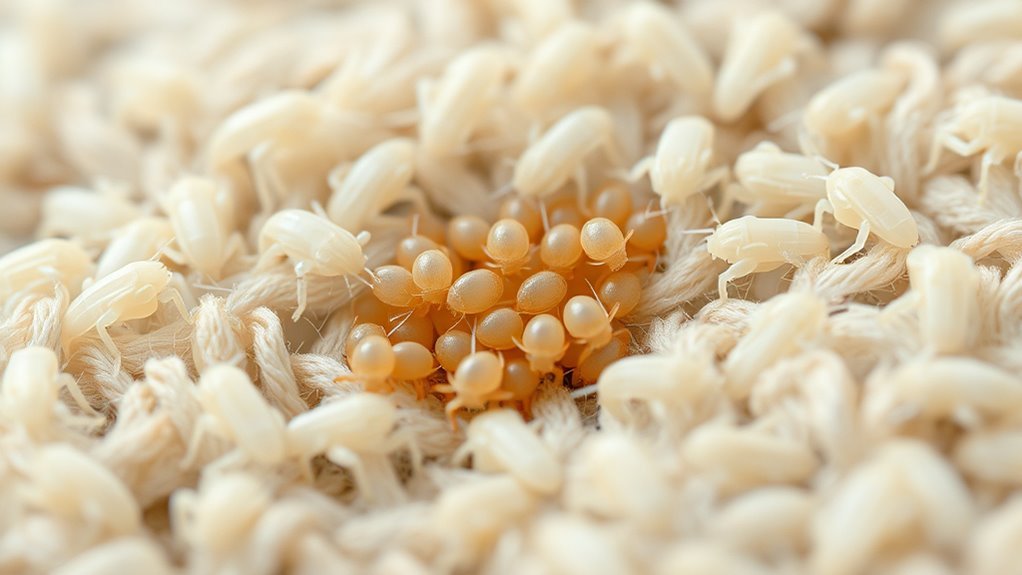
Although carpet bugs don’t bite humans, their tiny hairs can cause skin irritation and allergic reactions. Carpet beetles, especially their larvae, have fine hairs that may lead to itchy bumps or rashes when they come into contact with your skin.
These aren’t beetle bites since carpet bugs don’t feed on human blood or skin. Instead, it’s the larvae’s hairs that trigger allergic reactions in sensitive individuals.
Adult carpet beetles focus on pollen and nectar, so they won’t bite you. If you notice bites or wounds, they’re likely from other pests, not carpet bugs.
For effective pest control, it’s important to identify the source correctly to avoid unnecessary treatments. Understanding this helps you manage infestations without worrying about beetle bites or direct harm.
Allergic Reactions and Skin Irritations From Carpet Bugs
If you come into contact with carpet beetle larvae or their shed skins, you might experience red, itchy bumps and skin irritation due to their tiny, irritating hairs. These bristly hairs can trigger allergic reactions and dermatitis, especially if you’re sensitive.
Though carpet bugs don’t bite, their hairs cause skin irritations that feel like bites. You should be aware that:
- Carpet beetle larvae’s bristly hairs cause allergic reactions, not bites.
- Shed skins left behind can continue to irritate your skin.
- Prolonged exposure may worsen dermatitis or cause more severe rashes.
- People with allergies or asthma are more vulnerable to skin and respiratory issues.
Understanding these reactions helps you protect your skin from carpet bug-related irritations. It’s good to keep an eye out and take precautions if you notice any signs.
Common Signs of Carpet Bug Infestation in Homes
When you notice small holes in your carpets or clothing, it’s a strong sign that carpet beetle larvae are feeding nearby. You might also find larvae shed skins scattered around, which clearly indicate a carpet beetle infestation.
Pay close attention to signs of damage on natural fiber materials like upholstery or stored fabrics. Fecal stains from larvae may appear as tiny dark spots in hidden areas such as closets or under furniture.
Look for tiny dark fecal spots on natural fibers in hidden areas like closets or under furniture.
Spotting adults near light sources, like windowsills, is another clue that these pests are active in your home. Because larvae often crawl in bedding or clothing, regularly inspect these spots to catch an infestation early.
Recognizing these signs helps you identify carpet bugs before they cause extensive damage. So, keep an eye out and act quickly if you notice anything suspicious!
Effective Prevention and Control Methods for Carpet Bugs
You’ll want to start by inspecting your home carefully to spot any signs of carpet bugs early. Regular cleaning and vacuuming play a vital role in keeping these pests at bay.
If the problem persists, don’t hesitate to explore professional treatment options to protect your space effectively. It’s always better to act sooner rather than later when dealing with these bugs.
Inspection and Identification
How can you spot carpet bugs before they cause significant damage? Regular inspection is key to catching carpet beetles early.
Focus on areas where larvae hide, like bedding, clothing, and stored fabrics. Watch for signs like shed skins or small holes in natural fibers such as wool or silk. Here’s your checklist:
- Identify adult carpet beetles by their oval shape, 2-5 mm size, and varied colors—from black to speckled patterns.
- Inspect cracks, crevices, and dark corners where larvae often dwell.
- Look for visible damage on carpets and fabrics made from natural fibers.
- Check around windows, vents, baseboards, and behind furniture for beetles or larvae.
Cleaning and Maintenance
Although carpet bugs can be persistent, regular cleaning and maintenance play a crucial role in keeping them at bay. You should vacuum and steam clean carpets, upholstery, and storage areas frequently to remove larvae, eggs, and organic debris that attract these pests.
Make sure to seal entry points like cracks and crevices to block adult beetles from entering and laying eggs inside your home. Use airtight storage containers or vacuum-sealed bags for vulnerable textiles, clothing, and bedding to prevent infestations.
Additionally, removing pet hair, dead insects, and plant matter eliminates food sources for carpet bug larvae. While these steps help prevent infestations, combining them with professional pest control treatments ensures thorough eradication and long-term protection against carpet bugs.
Professional Treatment Options
When tackling carpet bugs, relying on professional treatment options can make a significant difference in eliminating infestations effectively. A professional pest team uses proven methods tailored to your situation, ensuring larvae are covered and no stage is missed.
Here’s what you can expect:
- Licensed technicians identify specific pest species, such as carpet beetles, to customize carpet beetle control.
- Advanced detection, including K9 services, helps locate hidden bugs.
- Treatments combine insecticides, heat, and environmental changes to eradicate pests.
- Experts inspect, clean, and seal entry points to prevent reinfestation.
Frequently Asked Questions
What Are Carpet Beetles Attracted To?
You’re attracted to carpet beetles if you have natural fibers like wool, silk, or leather around.
They also go for light, warmth, pollen, pet hair, feathers, and old clothing or furniture with organic materials.
I Found Larvae in My Bed. What Should I Do?
You should carefully remove the larvae using gloves. Then, vacuum your mattress and the surrounding areas thoroughly.
Make sure to wash all your bedding in hot water to kill any remaining larvae or eggs. After that, inspect the area for more signs of infestation.
If the problem keeps happening, it might be a good idea to contact a pest control professional. They can help get rid of the larvae for good.
Do Bugs Live in Your Carpet?
Yes, bugs can live in your carpet, especially if it’s made of natural fibers. They hide in dark, undisturbed areas, feeding on organic material.
Regular cleaning helps keep them away and protects your carpet. So, it’s a good idea to vacuum often and maybe even get a deep clean now and then.
Do Carpet Beetles Bite?
Carpet beetles don’t bite you—they’re like tiny fiber-eating gardeners in your home.
Though their larvae’s hairs might irritate your skin, causing rashes, you won’t feel any actual bite or sting from these harmless critters.
Conclusion
Now that you know what carpet bugs do and whether they bite, you can tackle them head-on. Remember, “a stitch in time saves nine”—catching an infestation early prevents bigger problems later.
By recognizing the signs and taking quick action to prevent and control these pests, you’ll protect your home and skin from irritation. Stay vigilant, keep your spaces clean, and don’t let carpet bugs take over your comfort.
Managing carpet bugs means regular cleaning and checking for any signs of these tiny pests. Using preventive measures can save you time, money, and discomfort.
So, be proactive! Understanding carpet bugs and their habits helps you keep your living space safe and bug-free.