Do Carpet Beetles Bite People and How to Identify Bites
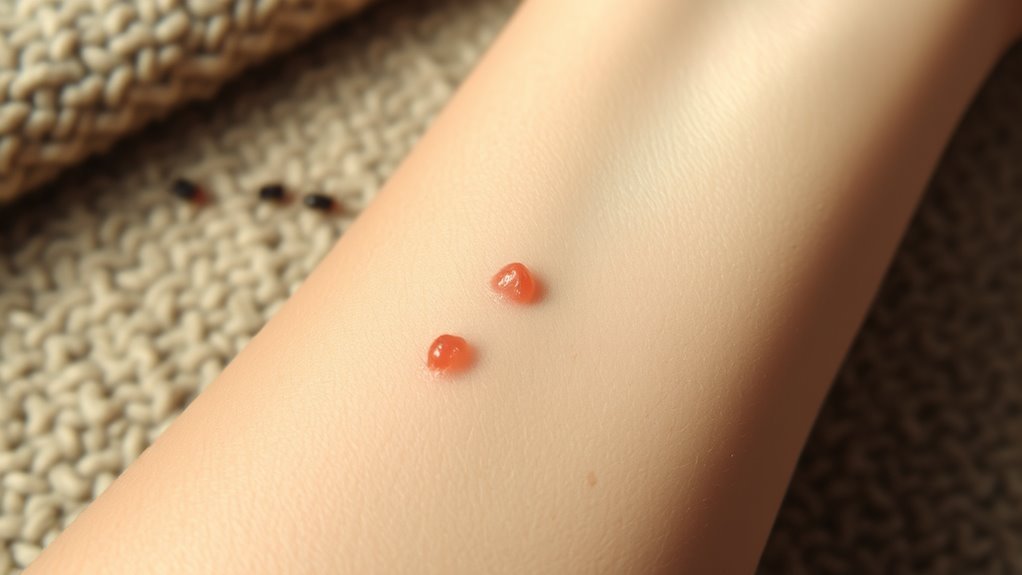
You won’t get bitten by carpet beetles because their larvae don’t bite people. Instead, the tiny bristles on larvae can irritate your skin and cause red bumps or itchy patches that look like bites. These reactions differ from bed bug bites, which leave puncture marks.
If you notice unexplained skin irritation or damaged fabrics, you might have an infestation. Carpet beetle larvae can be sneaky, often hiding in carpets, furniture, or clothing. So, it’s important to know how to spot these pests and tell their “bites” apart from other insect bites.
Keep reading if you want to find out how to tell the difference and handle these pests effectively.
Understanding carpet beetle bites versus other bug bites will help you protect your home and skin.
Key Takeaways
- Carpet beetle larvae do not bite people; instead, they cause skin irritation through tiny bristles. These bristles can produce red bumps or itchy patches.
- Adult carpet beetles do not bite and are mostly harmless. But their larvae can cause allergic reactions from contact.
- Skin reactions from carpet beetles often show up as clusters or lines of red bumps. These are caused by bristle irritation, not actual bites.
- Bed bug bites leave distinct puncture marks, while carpet beetle larvae irritation comes from hairs and shed skins. So, it’s important to know the difference.
- To identify carpet beetle irritation, look for larvae presence and fabric damage. And if you’re unsure, it’s best to consult medical experts for an accurate diagnosis.
Appearance and Behavior of Carpet Beetles
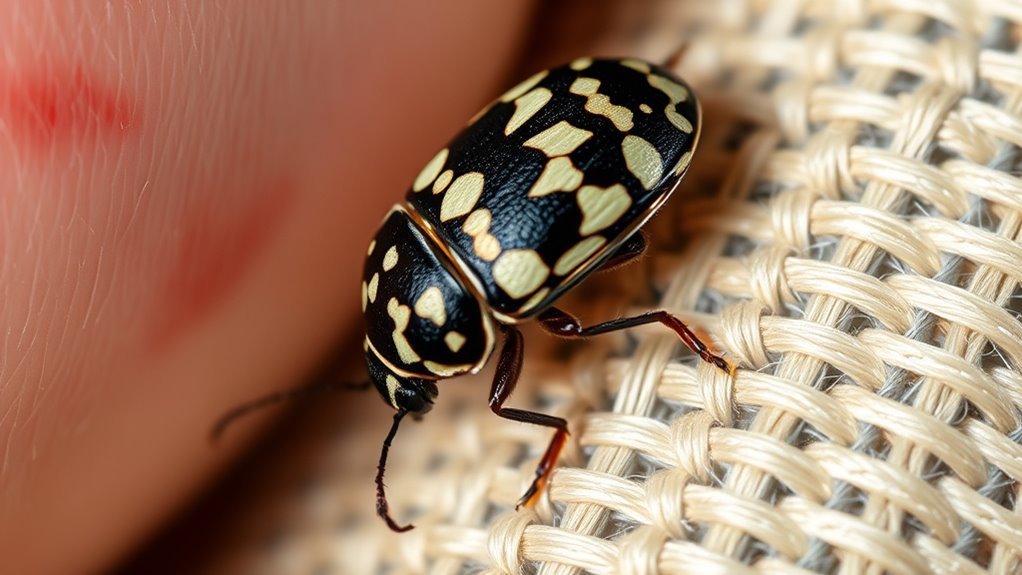
Although carpet beetles are small, you can easily spot their distinctive features if you look closely. Adult beetles are tiny, round-bodied insects, about 1/8 to 1/10 inch in size, and come in various colors like black, white, brown, yellow, or orange.
Their larvae are longer and fuzzy, kind of like tiny caterpillars. They have an alligator-like look because of the bristles covering their bodies, which is pretty unique. These larvae can grow up to 5/16 inch and often leave behind shed skins.
You’ll notice damage to fabrics like wool or silk during an infestation since larvae feed on natural fibers. While adult beetles are attracted to light, it’s the larvae that really cause the trouble. They not only damage your belongings but can also irritate your skin with their bristles.
Differences Between Carpet Beetle Reactions and Bed Bug Bites
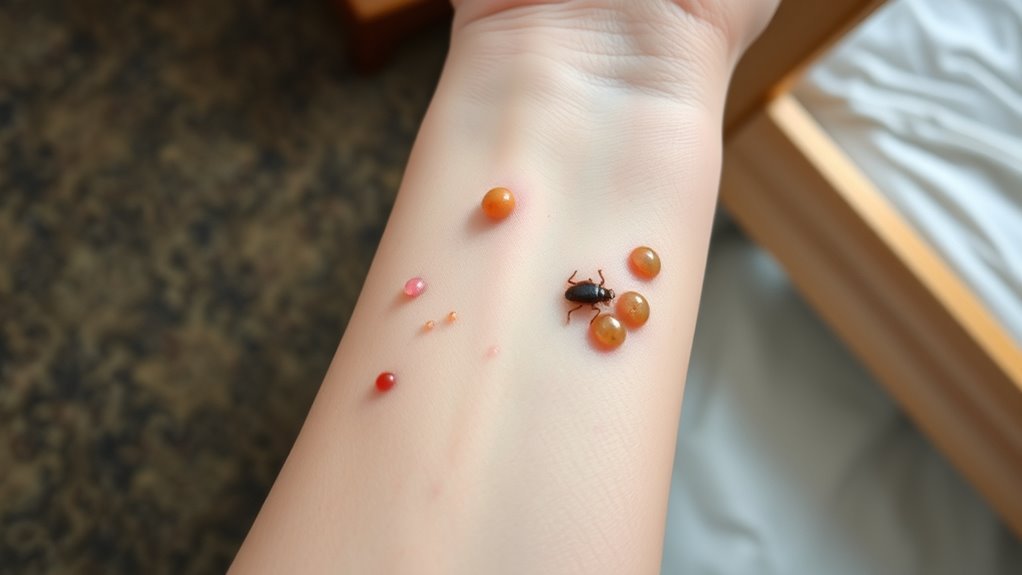
While carpet beetle larvae don’t actually bite, their tiny hairs can irritate your skin and cause small, line-shaped bumps. These skin reactions come from bristle irritation or contact with shed skins, not from bites.
On the other hand, bed bug bites usually show up as red, itchy bumps that are often clustered or lined. They’re typically accompanied by swelling and itching right at the bite sites.
When trying to figure out what’s causing the bites, you’ll notice that reactions from carpet beetle larvae lack the direct bite marks that bed bugs leave behind. But keep in mind, just looking at the bites can be tricky.
It’s really important to check out any infested items and maybe even get advice from a pest professional. Allergic reactions to carpet beetle larvae hairs can look a lot like bed bug bites, so having an expert take a look is the best way to make sure you get the right treatment and pest control.
Identifying Skin Reactions Caused by Carpet Beetle Larvae
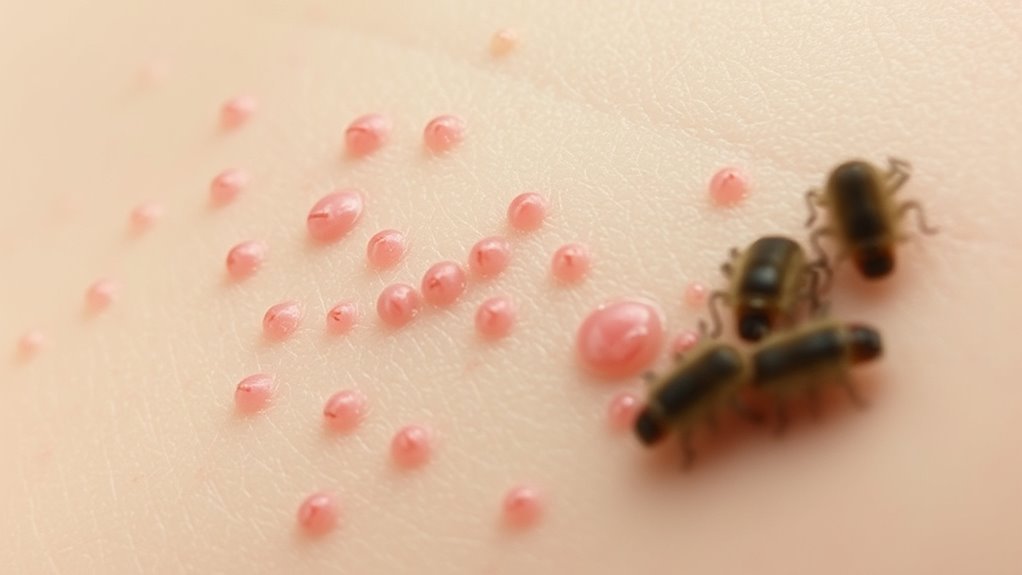
When you come into contact with carpet beetle larvae, their tiny hairs can irritate your skin and cause red bumps or itchy patches that often look like insect bites.
These skin reactions arise from the larvae’s bristles, not from actual bites. You’ll usually notice the rash in lines or clusters where infested items or fabrics touched your skin.
It’s important to differentiate these from other insect bites, as medical professionals can help identify the cause and suggest proper treatment.
| Symptom Type | Cause | Appearance |
|---|---|---|
| Skin Irritation | Bristles on larvae | Red bumps, itchy patches |
| Insect Bites | Actual biting insects | Single or grouped puncture marks |
| Larvae Contact | Shed skins, hairs | Rash in lines or clusters |
Common Signs of Carpet Beetle Infestations in Homes
If you notice tiny bristly larvae or shed skins in your closets or under furniture, you likely have a carpet beetle infestation. Larvae cause damage by feeding on natural fibers, leaving holes in carpets, clothing, and upholstery.
Look closely for webbing and small fecal pellets, which are clear signs of infestation. Adult carpet beetles often come into contact with windows or light sources, so spotting them near these areas suggests larvae are nearby.
Damaged fabrics and unexplained rashes or skin irritation may result from contact with larvae or their shed hairs. By recognizing these key signs—bristly larvae, webbing, damaged fabrics, and adult carpet beetles—you can confirm a carpet beetle problem in your home and take appropriate action.
Effective Prevention and Control Measures for Carpet Beetles
Noticing signs of carpet beetle activity means it’s time to act quickly to protect your home and belongings. Since larvae feed on natural fibers, regular vacuuming of carpets, upholstery, and hidden inhabited areas removes larvae, eggs, and shed skins, cutting infestation risks.
Store vulnerable fabrics in airtight containers to block beetle access. Also, seal cracks around doors and windows to prevent entry.
Washing infested textiles at high temperatures kills larvae and eggs effectively.
| Prevention Step | Target Area | Purpose |
|---|---|---|
| Vacuuming | Carpets, upholstery | Remove larvae and eggs |
| Airtight containers | Clothing, fabrics | Block beetle access |
| Seal cracks | Windows, doors | Prevent beetle entry |
| High-temp washing | Infested textiles | Kill larvae and eggs |
| Insecticide use | Inhabited areas | Control active infestation |
Frequently Asked Questions
Do Carpet Beetles Bite?
No, carpet beetles don’t bite you. However, their larvae’s tiny hairs can irritate your skin, causing red bumps or itching.
I Found Larvae in My Bed. What Should I Do?
You should wash all bedding and linens in hot water. Vacuum your mattress and surroundings thoroughly to get rid of any larvae or eggs.
Seal any cracks near your bed to prevent more insects from coming in. You might want to consider using insecticide or calling a pest control professional to handle the problem effectively.
What Kills Carpet Beetles Immediately?
You want instant results, not slow fixes. Use fast-acting pyrethrin sprays or freeze infested items at -18°F for two weeks.
Heat treatments or silica aerogel dust also kill carpet beetles immediately and effectively. These methods work quickly, so you can see the difference right away.
How Do I Know I Have Carpet Beetles?
You’ll know you have carpet beetles if you spot tiny brown shed skins, bristly hairs near fabrics, or notice small holes and thinning patches on clothing or carpets.
Adults may appear near windows or flowers too. Keep an eye out for these signs to catch them early!
Conclusion
If you notice itchy, red bumps after spotting tiny beetles or their larvae, don’t panic—you’re likely dealing with carpet beetle bites, not bed bugs. For example, Sarah found small welts after cleaning her closet and identified carpet beetle larvae as the culprit.
By thoroughly vacuuming and storing clothes properly, she stopped the bites. Taking quick action helps protect your skin and home from these pesky insects.
Remember, carpet beetle bites can be irritating but are usually not dangerous. Identifying the tiny beetles or their larvae early on is key to preventing more bites. Keep your living space clean, focus on areas where carpet beetles like to hide, and use proper storage methods for clothes and fabrics. Stay vigilant, and you’ll keep your space bite-free and comfortable.