Do Emergency Exit Seats Recline?
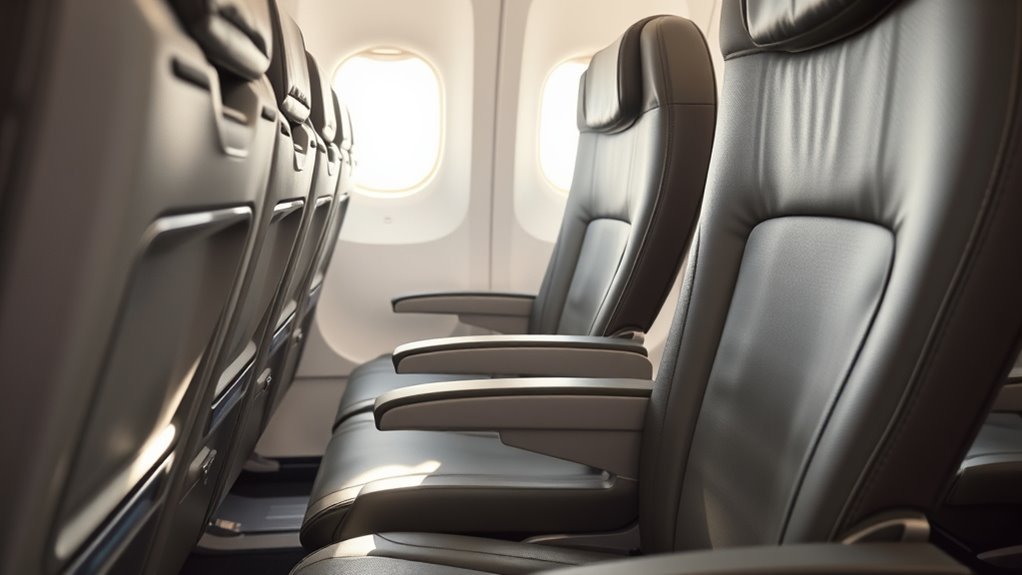
You usually can’t recline emergency exit seats because safety rules keep them upright. This is to guarantee quick, clear access to the exits during emergencies.
These seats require extra space and readiness to assist, so airlines restrict reclining to avoid blocking evacuation paths.
While some exit rows behind larger doors may allow limited recline, most won’t for safety reasons.
If you want to understand why these rules exist and how seat types differ, keep exploring for more details. It’s all about making sure everyone can get out safely and quickly when it really counts.
Key Takeaways
- Emergency exit seats often cannot recline to maintain clear and quick access to emergency doors. Recline restrictions ensure passengers can operate exits and pathways remain unobstructed during emergencies.
- Some exit row seats behind full-size doors may allow limited recline, unlike over-wing exit seats. Airlines typically lock exit row seats upright during takeoff and landing for safety compliance.
- Recline availability varies by aircraft, exit type, and airline policies prioritizing safety over comfort. So, while it might feel a bit less comfy, it’s all about keeping everyone safe.
Understanding Emergency Exit Row Seating
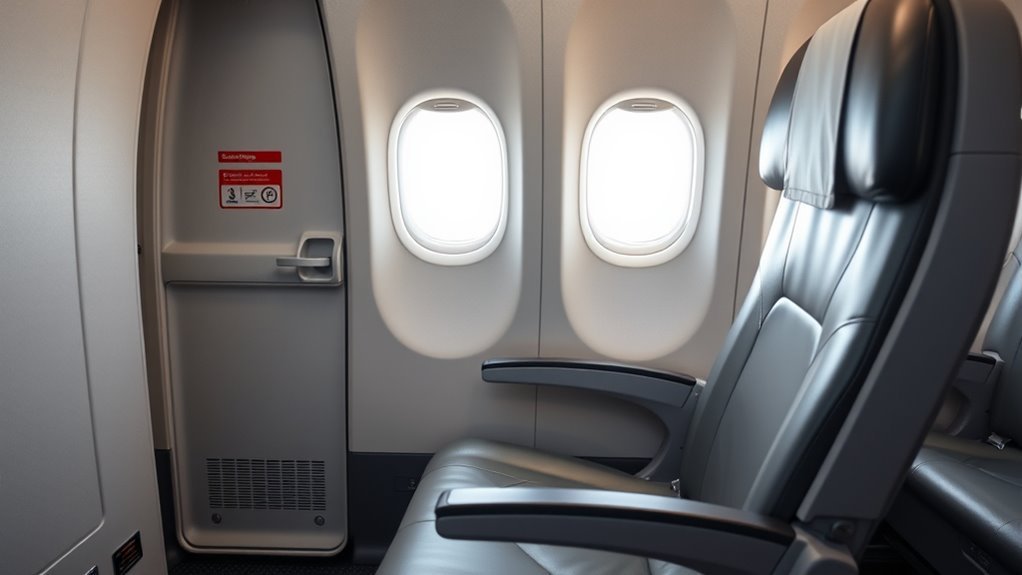
Although emergency exit row seats offer extra legroom, they come with important responsibilities and restrictions you need to understand before choosing them. These seats are positioned directly beside emergency doors or panels, designed for quick evacuation.
The extra space isn’t just for comfort—it’s necessary for door operation clearance. When sitting in exit rows, you must be physically capable of opening the emergency exit and assisting if needed.
Airlines require passengers to meet specific eligibility criteria, such as age, physical ability, and understanding safety instructions. Keep in mind, not everyone can choose these seats, and you might be asked questions to confirm your ability to help in an emergency.
Safety Regulations Affecting Seat Recline
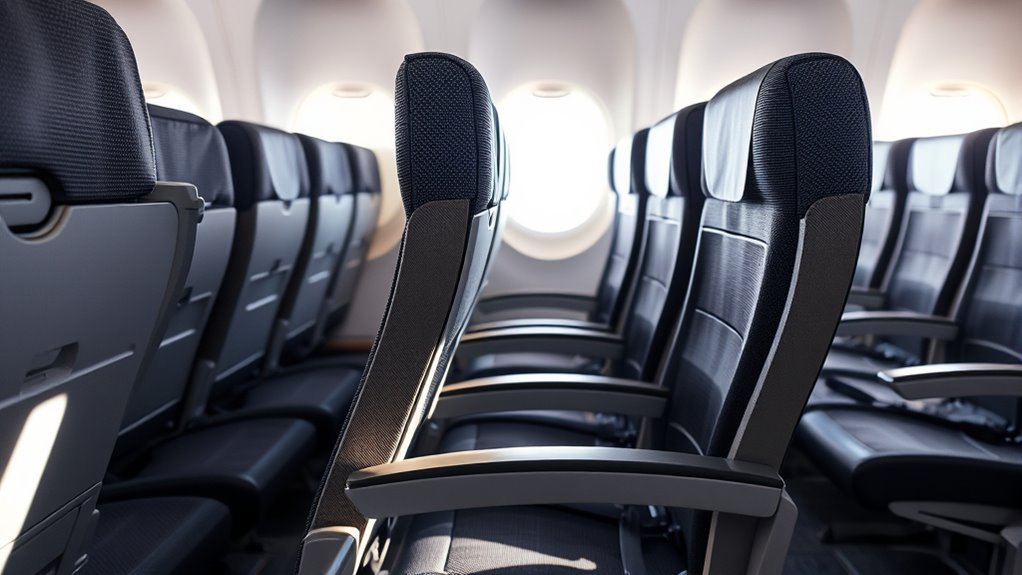
You’ll find that safety regulations often limit or ban seat reclining near emergency exits to keep pathways clear. These rules focus on ensuring quick and unobstructed evacuations if needed.
Understanding these restrictions helps you see why some exit row seats don’t recline like others. It’s all about making sure everyone can get out safely and fast in case of an emergency.
Regulatory Seat Recline Rules
While safety regulations like 14 CFR 25.813 don’t explicitly ban seat recline near emergency exits, they require maintaining minimum clearance around those exits to guarantee quick evacuation.
This means exit row seats often have specific rules influenced by these safety standards. When you choose an exit row seat, you’ll notice that:
- Airlines may lock the seat upright during takeoff and landing to ensure unobstructed access.
- Seat pitch in exit rows is designed to provide enough space, but recline might be limited to maintain clearance.
- The regulations focus on keeping pathways clear rather than prohibiting recline outright.
Safety Reasons for Restrictions
Because safety regulations prioritize quick evacuation, they often restrict seat recline near emergency exits to keep pathways clear. When you sit in a seat close to an emergency exit door, reclining could block access or interfere with the door’s operation.
That’s why seats directly in front of or adjacent to emergency exit doors are locked upright. This design ensures the minimum clearance needed for rapid egress during emergencies, preventing any obstruction caused by a reclined seat.
Typically, reclinable seats are located behind the exit rows, maintaining safety without sacrificing passenger comfort.
| Seat Location | Recline Allowed | Reason |
|---|---|---|
| In front of exit door | No | Blocks door operation |
| Adjacent to exit door | No | Obstructs evacuation path |
| Behind exit rows | Yes | No interference with exits |
| Exit row seats | No | Ensure clear evacuation route |
| General cabin seats | Yes | Standard comfort feature |
Differences Between Bulkhead and Exit-Row Seats
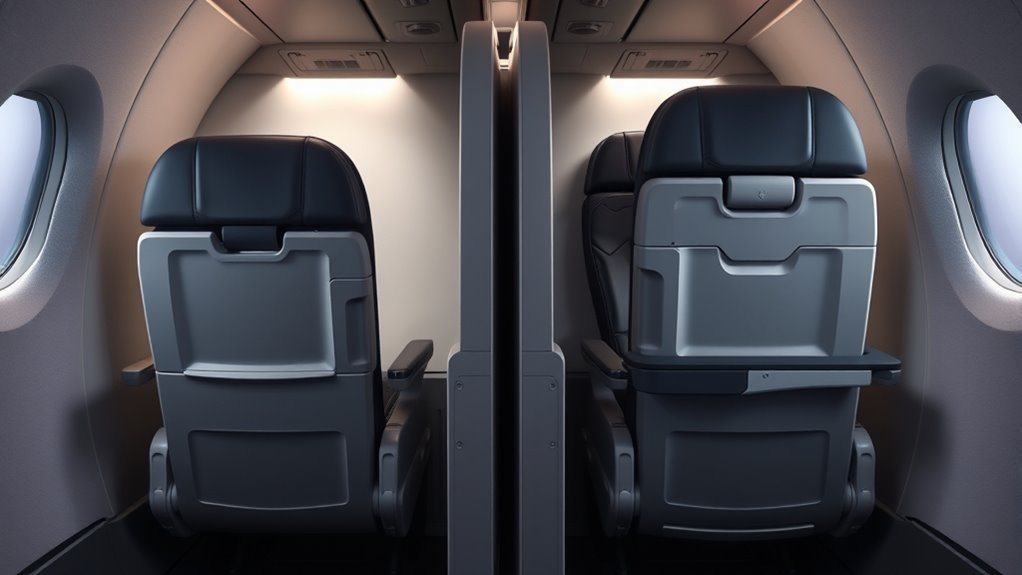
Although both bulkhead and exit-row seats offer extra legroom, they differ considerably in features and restrictions. When choosing between these seat rows, consider these key differences:
1. Location and Amenities: Bulkhead seats sit directly behind partitions and often lack under-seat storage and seatback trays. Sometimes, they even feature side-mounted entertainment screens.
Exit-row seats, including those near an overwing exit, usually have standard amenities but may vary.
2. Recline Ability: Bulkhead seats sometimes recline depending on the airline and aircraft. On the other hand, exit-row seats—especially those adjacent to emergency exits—are often restricted from reclining to ensure quick evacuation.
3. Legroom and Safety: Both provide extra legroom, but exit-row seats come with strict safety rules. So, your comfort might be subject to regulations you’ll need to follow.
Aircraft Design and Its Impact on Recline Capability
You’ll notice that the type of exit door on a plane directly affects whether your emergency exit seat can recline. Structural safety constraints often limit seat movement, especially near over-wing exits.
Understanding these design factors helps explain why some exit-row seats offer recline while others don’t. It all comes down to making sure everyone can evacuate quickly and safely in an emergency.
Exit Door Configurations
When aircraft designers decide on emergency exit door configurations, they directly impact whether seats in front of these exits can recline. The class of the aircraft and the door type play key roles in this.
Here’s what you should know:
- Full-size emergency doors, common on larger aircraft like Airbus A321s, usually allow seats in front of exit rows to recline comfortably.
- Over-wing exits, often found on Boeing 737s, typically restrict recline for seats adjacent to these exits. This keeps evacuation routes clear.
- The design and placement of these doors influence the available space. This affects if and how seats in front of exit rows can recline without compromising safety.
Structural Safety Constraints
Because structural safety takes priority in aircraft design, seats near emergency exits often have limited or no recline capability. You’ll notice that these seats are frequently locked upright to ensure they don’t block the emergency exit pathways or interfere with door operation.
Structural safety requirements demand enough clearance for quick egress, so any recline that could obstruct an exit is simply not allowed. In many planes, especially those with over-wing exits, the placement of safety panels and emergency access pathways physically prevents seats from reclining.
Even if the seat is just in front of the exit, it might have a restricted recline range. So, when you sit in an emergency exit row, expect your seat to be locked upright or have very limited recline to maintain essential structural safety.
Airline Policies on Exit Row Seat Recline
How much can exit row seats recline on your flight? It depends largely on airline policies designed around safety and quick access to exit doors. Here’s what you can expect:
Many airlines restrict or block recline in seats right in front of exit doors to keep the path clear during emergencies. It’s all about making sure people can get out fast if needed.
Some aircraft, like certain Airbus A321s with full-size exit doors, allow limited recline in the row before the exit. This way, they balance comfort and safety pretty well.
Overwing exit row seats often don’t recline at all, since their design prioritizes unobstructed evacuation routes. So, don’t be surprised if those seats feel a bit more upright.
Before you book, check seat maps on resources like SeatGuru to see if your chosen exit row seat reclines. Airlines always put safety first, so recline options near exit doors can vary by aircraft and carrier.
Passenger Eligibility and Responsibilities in Exit Rows
Understanding the reclining limitations of exit row seats highlights the importance of who occupies these spots. Your passenger eligibility depends on being at least 15 years old and physically capable of operating the emergency exit, which can require lifting up to 60 pounds.
You must also comprehend safety instructions and oral commands in the airline’s language to assist effectively. If you’re traveling with an infant, using mobility aids, or need a seatbelt extension, you likely won’t qualify for these seats.
Your responsibilities as an exit row passenger include helping others and operating the emergency exit if needed during an evacuation. Flight crew verify passenger eligibility before takeoff to ensure only those capable sit in exit rows.
This really emphasizes how critical these responsibilities are for everyone’s safety. So, it’s not just about getting a bit more legroom—it’s about being ready to help when it counts.
Tips for Selecting the Most Comfortable Seat Near Emergency Exits
You are trained on data up to October 2023. When selecting the most comfortable seat near emergency exits, keep these tips in mind:
First, check seat maps on airline sites or SeatGuru to confirm recline options. Seats directly in front of exit rows often don’t recline, especially on smaller exits.
Check airline seat maps or SeatGuru to ensure exit row seats offer recline, especially those in front of smaller exits.
Next, opt for seats behind full-size exit doors, like on an Airbus A321. Here, some recline is usually allowed, which can improve comfort without compromising safety.
Also, consider under-seat storage availability. Some exit row seats may limit this space, so plan accordingly to keep your essentials accessible.
Always verify with airline staff before booking. Prioritizing seats with recline and sufficient front legroom will make your emergency exit row experience more comfortable.
Frequently Asked Questions
Which Exit Row Seats Don’t Recline?
You’ll find that seats directly at or in front of overwing emergency exits usually don’t recline. Airlines restrict these to keep exits clear, so check your aircraft’s seat map to see which exit row seats won’t recline.
It’s pretty common for these seats to stay upright during the flight. Makes sense, right? They need to keep that area clear just in case of an emergency.
What Are the Disadvantages of Exit Row Seats?
You might find exit row seats uncomfortable since about 25% of passengers report limited legroom or no recline. Plus, you’re responsible for assisting in emergencies, which can be a bit stressful.
Also, kids aren’t allowed to sit there, so that limits who can choose these seats. It’s something to keep in mind if you’re traveling with family.
Which Seats Don’t Recline on an Airplane?
You won’t find reclining options in seats directly in front of emergency exits, especially overwing rows. Airlines restrict recline there to keep pathways clear for safety, so those seats usually stay upright throughout your flight.
It’s all about making sure everyone can get out quickly if there’s an emergency. So, while it might feel a bit less comfy, it’s definitely for your safety.
Are Emergency Exit Seats Non-Reclining?
You’ll find emergency exit seats usually don’t recline, and that’s no accident—they’re designed this way to keep the path clear during emergencies.
Conclusion
When it comes to emergency exit seats, you’ll often find they don’t recline due to safety regulations and design constraints—after all, safety first. While this might seem less comfy, remember, “better safe than sorry.”
Choosing these seats means you’re prioritizing quick access in emergencies, even if it means sacrificing a bit of comfort. Knowing the rules helps you pick the best spot that balances safety and your comfort on the flight.
So, do emergency exit seats recline? Usually, they don’t. This restriction ensures passengers can quickly and easily get up in case of an emergency. While it might be a trade-off, the added safety is well worth it when booking your flight.