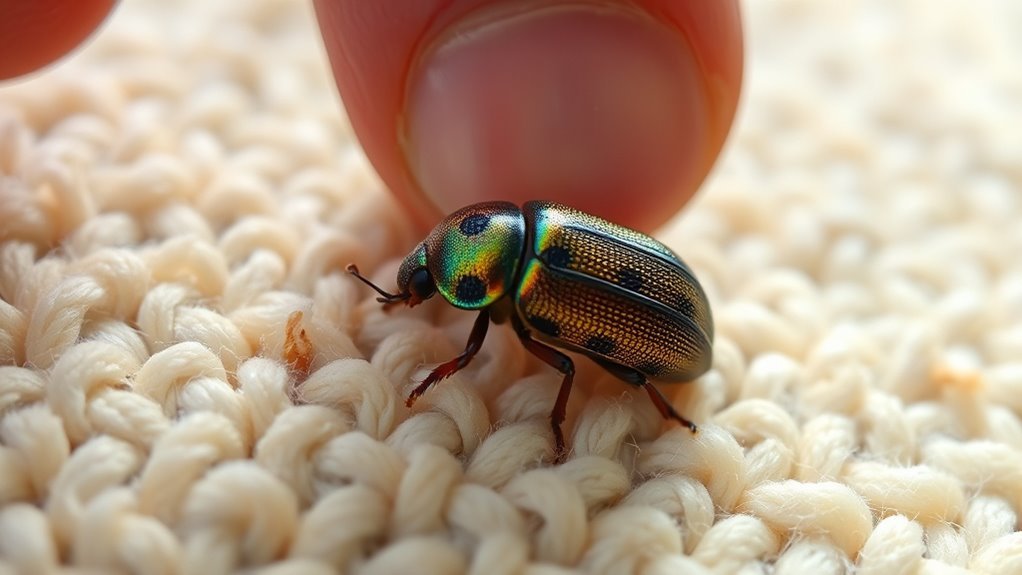
Do Varied Carpet Beetles Bite Humans and How to Protect Yourself
Varied carpet beetles don’t bite humans, but their larvae can cause skin irritation. These tiny hairs on the larvae can trigger itching or rashes, which can be quite uncomfortable. So while the adults are harmless to your skin, it’s those little larvae you want to watch out for.
To protect yourself, try to avoid direct contact with the larvae as much as possible. Keeping your home clean is key—regular vacuuming helps get rid of those pesky critters and their eggs.
Also, store your textiles properly in sealed containers to keep the larvae away from your clothes and furniture.
Keep an eye out for signs like small holes in fabrics or shed larval skins around your home. If you spot these, it’s important to act quickly to control any infestation.
Want to learn more about fully safeguarding your home and health? Keep exploring for tips and tricks!
Key Takeaways
- Varied Carpet Beetle adults do not bite humans; larvae do not bite either. However, their hairs can cause skin irritation or allergic reactions.
- When larvae hairs irritate the skin, you might see itchy red welts or rashes. It’s important to know these are not actual bites.
- To prevent contact, try not to handle infested items directly. Wearing protective clothing when cleaning can also help a lot.
- Regular vacuuming is key, and washing fabrics at high temperatures helps kill any larvae or eggs. Sealing entry points in your home stops them from coming inside.
- If you keep having infestations or if your skin reactions get worse, it’s a good idea to call in professional pest control. Also, don’t hesitate to seek medical advice if needed.
Understanding Varied Carpet Beetles
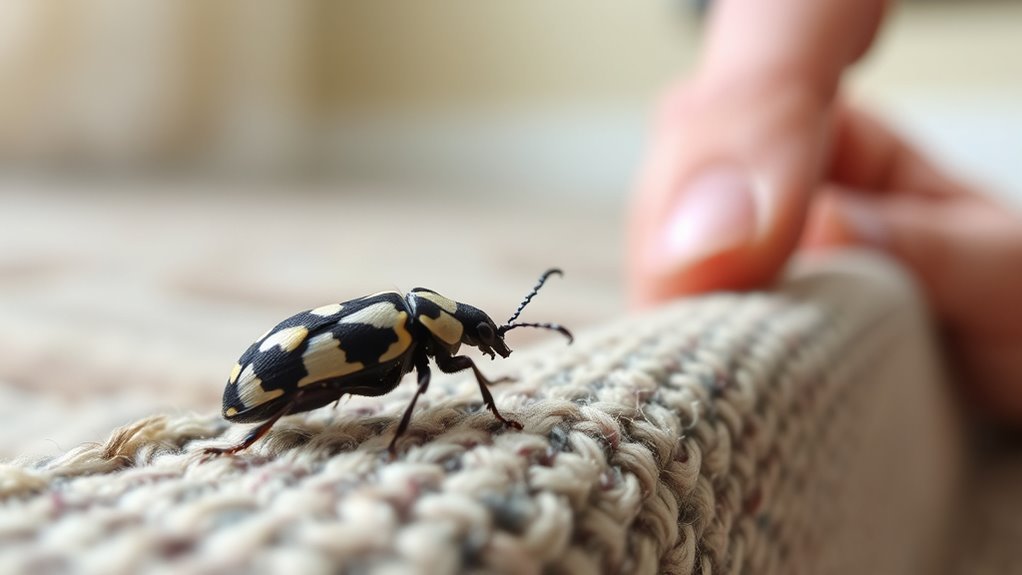
What exactly are varied carpet beetles, and why should you care? These tiny insects, about 1/16 to 1/8 inch long, often sneak into your home unnoticed.
Adults mainly feed on pollen and nectar outdoors, but it’s the larvae that cause trouble inside. The larvae are small, bristly, and resemble fuzzy grains of rice.
Adults dine on pollen outside, but larvae—tiny, bristly, rice-like—are the real indoor troublemakers.
They love to munch on natural fibers like wool and silk, which can lead to a serious infestation if left unchecked. While adults are drawn to light and enter through open windows or gaps, the larvae are the real culprits for damage.
Plus, those tiny hairs on larvae can cause skin irritation, so it’s smart to know how to spot and manage them before the problem grows.
Do Carpet Beetles Bite Humans?
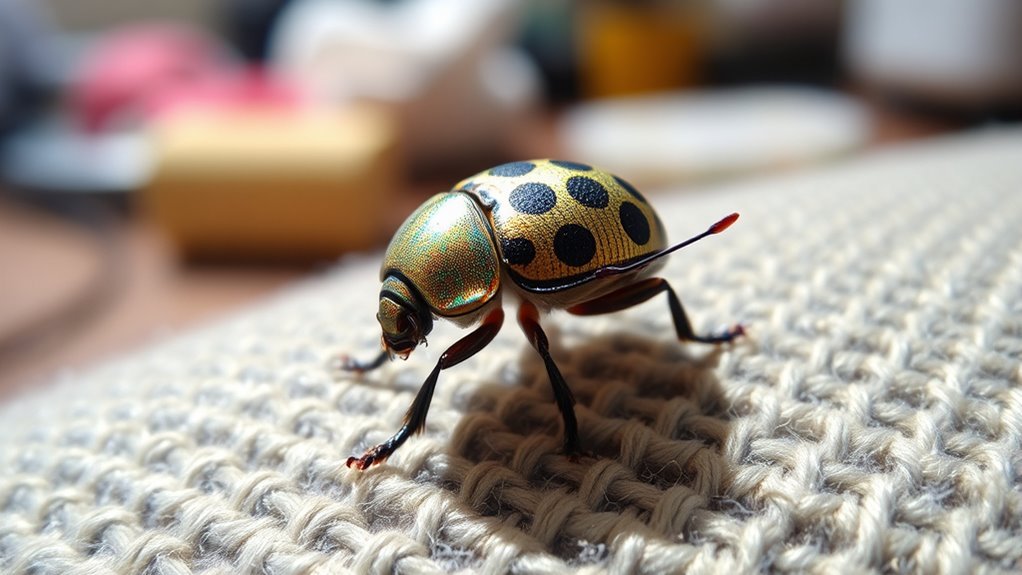
How can you tell if those tiny pests in your home are actually biting you? Carpet beetles, including their larvae, don’t bite humans or feed on blood. Instead, they target natural fibers and organic materials.
Any skin irritation you experience usually comes from contact with larvae hairs, not from human bites. Misidentifying bites can delay proper pest control for your infestation.
| Aspect | Facts |
|---|---|
| Adult Carpet Beetles | Do not bite; prefer pollen/nectar |
| Larvae | Cause skin irritation, no bites |
| Skin Reactions | From larvae hairs, not biting |
Understanding this helps you focus on effective pest control without unnecessary worry about bites.
Allergic Reactions and Skin Irritations From Carpet Beetle Larvae
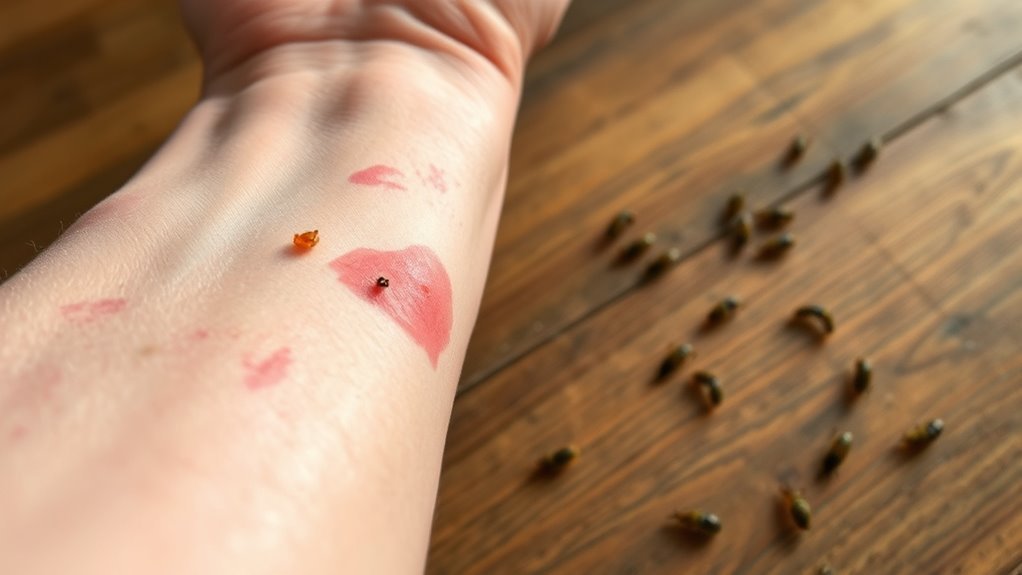
You might notice itchy welts or a rash after coming into contact with carpet beetle larvae, even though they don’t bite. The tiny hairs they shed can trigger allergic reactions, especially if you have sensitive skin or allergies.
These irritations can last for days and often look like bites or dermatitis. It’s pretty common to mistake them for bug bites, but they’re actually a reaction to those hairs. So, if you’re dealing with unexplained itching or rashes, carpet beetle larvae might be the culprit.
Larvae Hair Irritation
Although carpet beetle larvae don’t bite, their tiny hair-like filaments can cause significant skin irritation and allergic reactions when they come into contact with your skin. These household pests shed hairs that, when disturbed, may become airborne and trigger itchy welts, rashes, or dermatitis.
You might experience these reactions especially after handling infested fabrics or furniture. Even without direct bites, contact with larvae is enough to provoke discomfort.
To protect yourself, it’s essential to regularly clean and vacuum your home, focusing on natural fiber materials where larvae tend to reside. Proper storage of clothing and textiles also reduces exposure to these irritating hairs.
Allergic Reaction Symptoms
When carpet beetle larvae shed their tiny hairs, they can trigger allergic reactions that cause red, itchy welts or rashes on your skin. These carpet beetle hairs often lead to an allergic response, even if you don’t have previous sensitivities.
You might notice skin irritation resembling bites, but it’s actually contact dermatitis caused by contact with the larvae’s shed hairs or skins. This allergic reaction tends to develop after repeated exposure, so ongoing contact increases your risk.
The red, itchy welts are a clear sign your body is reacting to these tiny hairs. To reduce skin irritation, it’s vital to clean thoroughly, vacuum regularly, and remove infested materials from your home.
Doing this helps prevent further allergic responses and keeps your skin safe from carpet beetle larvae hairs. It’s all about staying on top of cleaning to keep those pesky hairs at bay!
Identifying Signs of Carpet Beetle Presence
You can spot carpet beetle presence by checking for small holes in your wool or silk items and looking for tiny, bristle-covered larvae or shed skins. Keep an eye out for adult beetles near windows or light sources, especially in spring and summer.
Also, watch for skin reactions that might signal larvae bites, linking both visible signs and symptoms to confirm an infestation. It’s a good idea to stay alert because catching them early can save your clothes and home!
Visual Infestation Indicators
Because carpet beetles often target hidden or low-traffic areas, you might first notice small holes in wool, silk, or felt items. These tiny damages are clear infestation signs.
To spot a carpet beetle problem early, watch for:
- Small holes and localized damage on clothing or upholstery made of natural fibers.
- Shed larval skins—tiny, brittle brown shells—that accumulate along baseboards or in closets.
- Live larvae or adult beetles crawling near windows, light sources, or inside storage boxes.
Adult beetles often have patterned or solid dark coloration, making them easier to identify.
Checking these visual indicators helps you catch an infestation before it worsens, protecting your belongings from further damage.
Skin Reaction Symptoms
Although carpet beetles don’t bite, their larvae can still cause uncomfortable skin reactions that might make you think otherwise. When their tiny insect hairs come in contact with your skin, you may experience allergic skin reactions such as itchy welts, dermatitis, or rashes.
These symptoms often appear after touching infested fabrics or furniture and are common if you’re sensitive to these hairs.
To help you identify signs of carpet beetle presence, here’s a quick overview:
| Symptom | Description |
|---|---|
| Itchy welts | Raised, red bumps causing itchiness |
| Dermatitis | Inflamed, irritated skin patches |
| Rashes | Red, blotchy areas on contact zones |
Spotting larvae or their shed skins in your belongings can confirm these skin reactions relate to carpet beetles.
Larvae and Damage
When carpet beetle larvae infest your home, they feed on natural fibers like wool, silk, and leather, causing noticeable damage.
You can identify an infestation by spotting:
- Small, irregular holes in woolen or silk items caused by carpet beetle larvae feeding on natural fibers.
- Shed larval skins, often found along baseboards, in closets, or near storage areas where larvae hide.
- Live larvae hiding under furniture, inside wool carpets, or stored textiles, appearing as tiny fuzzy grains of rice.
The damage these larvae cause can ruin your clothes and upholstery.
While adult beetles don’t harm fabrics, their presence near windows often signals a larval infestation nearby.
Catching these signs early helps you control the problem before serious damage occurs.
Effective Cleaning and Prevention Strategies
To keep carpet beetles from invading your home, you should regularly vacuum carpets, furniture, and baseboards to remove larvae, eggs, and adults. Effective cleaning targets all signs of infestation early.
Washing or dry-cleaning natural fibers at 120°F helps kill hidden larvae and eggs. Also, sealing cracks and gaps blocks entry points. You might want to try natural repellents like peppermint or clove oils to keep beetles away.
| Prevention Tip | Description |
|---|---|
| Vacuum Regularly | Removes larvae, eggs, and adults |
| Wash at High Temperatures | Kills larvae and eggs on fabrics |
| Seal Entry Points | Blocks adult beetles from entering |
| Store in Airtight Containers | Protects natural fibers from infestation |
| Use Natural Repellents | Deters beetles and monitors populations |
When to Seek Professional Pest Control Assistance
If you’ve tried multiple treatments and still see carpet beetle larvae or damage, it’s time to call in professional pest control. Persistent signs of carpet beetle infestation, especially when larvae hide in hard-to-reach areas like attics or wall voids, require expert attention.
Don’t wait if infestations recur across rooms or storage spaces despite your efforts.
Here’s when to seek professional help:
- After multiple treatments fail to eliminate larvae and damage continues.
- If infested items are difficult to treat or larvae hide in inaccessible spots.
- When you notice recurring signs of carpet beetle infestation over several months.
Professional pest control specialists provide thorough inspections and targeted treatments to handle stubborn infestations effectively.
They’ve got the know-how to get into those tricky spots and make sure the problem is really gone. So, if you’re feeling stuck, don’t hesitate to reach out for expert help!
Frequently Asked Questions
Can Carpet Beetles Bite Humans?
Carpet beetles don’t bite you, but their larvae’s tiny hairs can irritate your skin or cause allergic reactions.
You’ll want to keep your home clean and store natural fibers properly to avoid any issues. It’s a good idea to stay on top of this to keep those little irritations at bay.
Do Carpet Beetles Live in Your Bed?
Carpet beetles don’t live in your bed, but larvae might show up if there are natural fibers or debris nearby.
So, it’s a good idea to keep your bedding clean. Also, store your clothes properly to avoid any infestations.
Doing this will help keep these pests away and give you peace of mind.
Can I Spread Carpet Beetles?
Imagine tiny hitchhikers hidden in your clothes or furniture—you can spread carpet beetles without knowing it.
To stop them, regularly clean, inspect secondhand items, and store fabrics properly so you don’t invite these pests into your space.
How Do I if I Have Carpet Beetles?
You’ll know you have carpet beetles if you spot tiny larvae, shed skins, or small holes in natural fiber fabrics.
Check clothing, carpets, and stored textiles near windows or light sources for these signs regularly.
It’s a good idea to keep an eye out because these little guys can be sneaky!
If you notice any of these clues, it’s time to take action.
Conclusion
While varied carpet beetles might not be the guests you want, their tiny presence can sometimes cause unexpected discomfort. You don’t have to let these uninvited visitors disrupt your peace.
By staying vigilant and keeping your space clean, you can reduce the chances of these beetles making your home their own. It also helps to know when to call in the experts if things get out of hand.
Remember, a little care goes a long way in keeping your home a haven. Protect yourself from varied carpet beetle bites by maintaining cleanliness and addressing infestations early. With some attention and the right steps, you can gently show these pests the door before they become a bigger problem.