Do Bed Bugs Stay in Carpet?
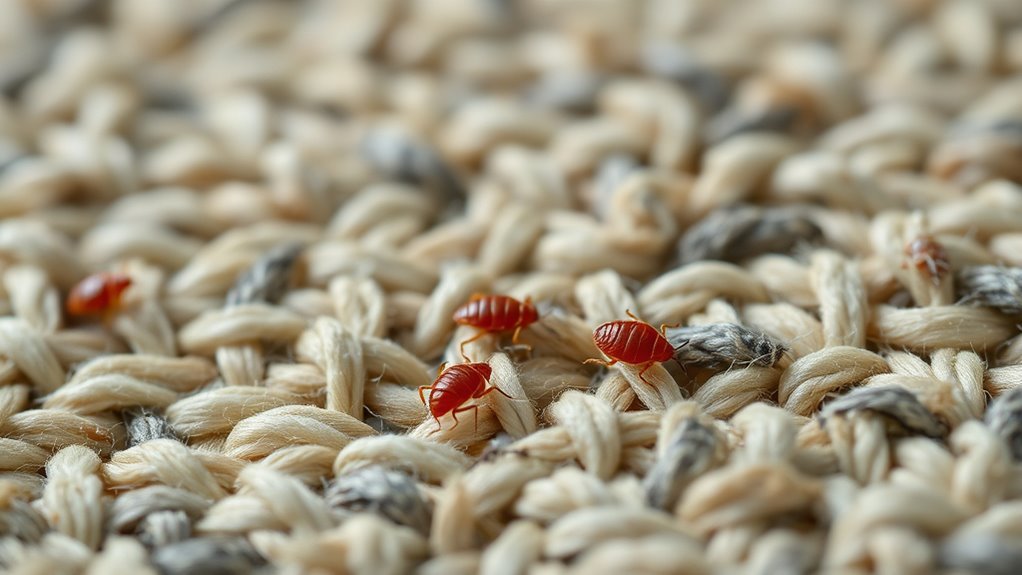
Yes, bed bugs can stay in carpets, especially if you have thick, plush, or natural fiber ones like wool. These little pests love to hide deep within carpet fibers and crevices, often close to your bed or seating areas. That makes them tricky to spot and even harder to get rid of.
Regular vacuuming and steam cleaning can help reduce their numbers, but if your carpet is dense, infestations might be stubborn and tough to eliminate.
Wondering how different carpet types affect bed bug hiding spots and what you can do to keep them away? Keep reading to find out more!
Key Takeaways
- Bed bugs can hide and live in carpets, especially thick, plush, or natural fiber types like wool with dense, shaggy textures. They really like these kinds because they offer lots of tiny spots to squeeze into.
- You’ll often find them in carpets near beds or seating areas since they want to stay close to their feeding sources at night. It makes sense—they’re just trying to be near where they can feed easily.
- These little critters can squeeze deep into carpet fibers and crevices, which makes spotting and getting rid of them pretty tricky. You might not even realize they’re there at first.
- Regular vacuuming and steam cleaning can help you detect and reduce bed bug populations hiding in your carpets. It’s a good way to keep them in check if you suspect an infestation.
- On the other hand, synthetic, low-pile carpets aren’t as inviting for bed bugs. Plus, they’re easier to maintain and inspect, so you might want to consider those if you’re worried about bugs.
Understanding Bed Bugs and Their Behavior
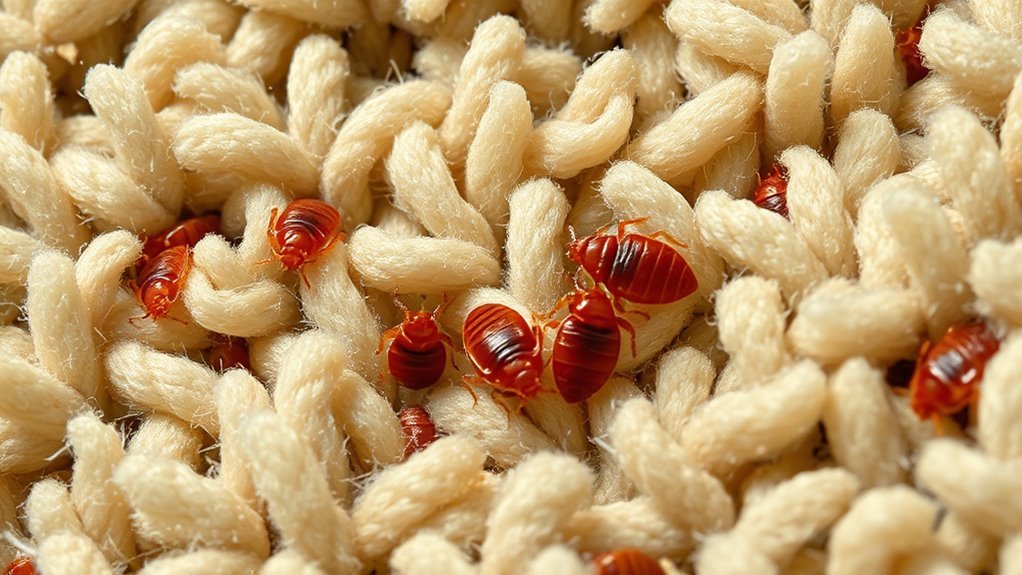
Although bed bugs are commonly associated with mattresses and furniture, they can also live in carpets. Especially thick or plush ones where they find plenty of hiding spots.
These small, flat insects hide in cracks and dark areas during the day. Their tiny size lets them slip easily between carpet fibers. You’ll find bed bugs hiding close to where people rest, so carpets near beds or seating areas are prime spots.
They can survive months without feeding, making carpets a stubborn refuge. To manage this, you’ll need to vacuum regularly to reduce their hiding places.
However, if the infestation is heavy, professional treatment becomes necessary. Since bed bugs in carpets are tough to eliminate on your own.
Signs of Bed Bug Infestation in Carpets
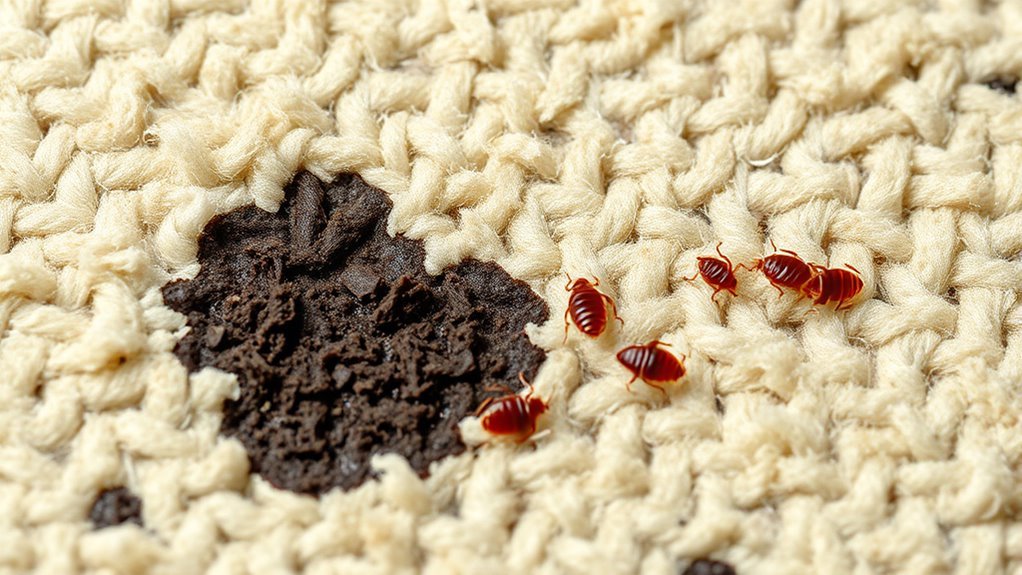
You might notice tiny dark spots on your carpet or wake up with itchy skin bites that weren’t there before. Bed bugs can hide deep within carpet fibers, especially in thicker or shaggy rugs, making them tough to spot.
Keep an eye out for these signs to catch an infestation early. It’s better to be safe than sorry when it comes to bed bugs!
Visible Dark Spots
How can you tell if your carpet harbors bed bugs? One clear sign is the presence of visible dark spots. These spots, often small and irregular, are actually bed bug fecal matter.
You’ll find dark, reddish-brown stains on your carpet that might smear if you press on them. Pay close attention to seams, tufts, and hidden crevices within the carpet fibers. These areas are common hiding places for bed bugs to leave their droppings.
Spotting these tiny dark spots is vital because they indicate an active or previous infestation. Regularly inspecting your carpet for these marks helps you catch bed bug activity early. That way, you can take immediate action before the problem escalates.
Itchy Skin Bites
When bed bugs infest carpets, they often leave behind itchy, red bites that appear in clusters or lines, especially on skin exposed during sleep. You might notice these bed bug bites more frequently or in specific patterns matching where you rest.
However, bites alone don’t confirm a carpet infestation since similar marks can result from other causes. Bed bugs tend to hide deep between carpet fibers or near baseboards, making bites a possible but not definitive sign.
Also, itchy bumps may take days to develop, which can delay your awareness. To be sure, you’ll need a thorough inspection beyond just spotting bites.
Still, if you’re waking up with unexplained itchy skin and you have carpeted floors, it’s wise to contemplate bed bugs as a potential cause.
Carpet Fiber Hiding
Although bed bugs are small, they can easily hide deep within the fibers of shaggy or dense carpets, making infestations hard to spot. These pests squeeze between carpet fibers, especially in dark, plush areas where they find shelter.
When checking for signs, look closely for small blood spots or dark, dried blood-like stains on your carpet. You might also notice shed skins or tiny fecal spots, indicating their presence.
Eggs and nymphs can be hidden in heavily infested carpets, often requiring careful inspection to detect. Carpets with tightly woven fibers are less likely to harbor bed bugs, but shaggy or thick pile carpets provide ideal hiding spots.
Regular vacuuming with a HEPA filter helps remove bed bugs and their eggs from carpet fibers, reducing infestation risks. It’s a simple step that can really make a difference in keeping these pests at bay.
How Bed Bugs Hide and Thrive in Carpet Fibers
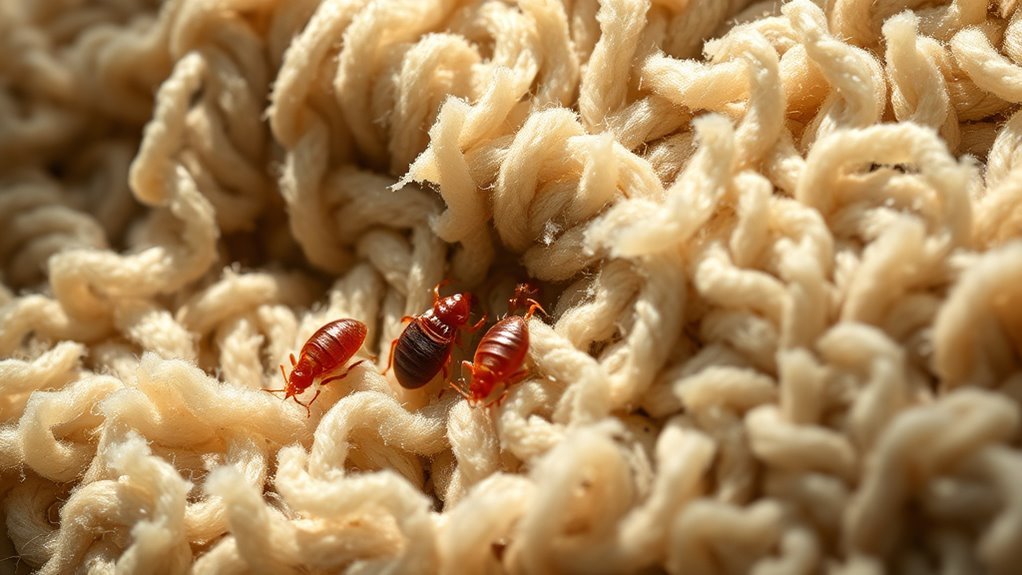
You’ll find bed bugs hiding deep within dense carpet fibers, especially in thick or shaggy textures where they fit snugly between strands. Their ability to thrive in these tight spaces lets them stay close to your bed or furniture.
They mostly come out at night to feed, which makes them tricky to spot during the day. Understanding how fiber density affects their hiding spots can really help you target your cleaning and treatment efforts more effectively.
Carpet Hiding Spots
Because bed bugs are small and flexible, they easily squeeze deep into shaggy or densely woven carpet fibers, especially those made from natural materials like wool. These carpets provide ideal hiding spots, with countless cracks and crevices where bed bugs can shelter during the day.
You’ll find they not only hide but also lay eggs within these fibers, making infestations tougher to detect and eliminate. The eggs blend into the carpet’s texture, so you might miss them without close inspection.
To combat this, you need to focus on regular vacuuming and deep cleaning to remove both the bugs and their eggs effectively. Understanding these carpet hiding spots helps you stay vigilant and take timely action against bed bug infestations.
Fiber Density Impact
When carpet fibers grow denser and more irregular, bed bugs find plenty of spots to hide and thrive. The fiber density in carpets plays a vital role in creating ideal hiding spots for these pests.
Thick, shaggy carpets with high fiber density offer many crevices where bed bugs can settle, lay eggs, and leave behind shed skins and fecal matter. In contrast, low-pile, tightly woven carpets reduce these opportunities.
You can imagine how bed bugs use carpet fibers to their advantage:
- Nesting between thick fiber bundles
- Concealing eggs deep in irregular crevices
- Avoiding detection by hiding in plush carpet loops
- Using dense fiber mats as protection from vacuuming
Understanding fiber density helps you identify potential infestation sites and improve treatment effectiveness. It’s a key factor to keep in mind when dealing with bed bugs.
Nighttime Feeding Behavior
Although bed bugs remain hidden during the day, they emerge at night to feed, using carpet fibers as perfect hiding spots nearby. You’ll find these pests snugly hiding in the dark crevices of shaggy or densely woven carpet fibers.
The carpet acts as a shield, letting bed bugs hide undisturbed until they come out to feed. Regular vacuuming disrupts this cycle by removing bed bugs and their eggs from the carpet.
Understanding how carpet type affects their hiding ability can help you target them better.
| Carpet Type | Hiding Ability | Inspection Difficulty |
|---|---|---|
| Shaggy | High | Difficult |
| Densely Woven | Moderate | Moderate |
| Tightly Woven | Low | Easier |
Comparing Carpet Types and Their Susceptibility to Bed Bugs
If you want to minimize bed bug hiding spots, choosing the right carpet type is essential. Not all carpets are equally prone to infestation, so knowing their characteristics helps you make a better decision.
Consider these carpet types:
- Shaggy or high-pile carpets – dense fibers create many hiding spots, increasing infestation risk.
- Low-pile, tightly woven carpets – fewer crevices make them less attractive to bed bugs.
- Natural fiber carpets like wool – more inviting for bed bugs than synthetic, smooth ones.
- Thickly padded carpets – easier for bed bugs to hide, complicating eradication efforts.
Effective Cleaning and Vacuuming Techniques for Carpets
Vacuuming your carpets regularly plays an essential role in removing bed bugs at every stage, from eggs to adults. Focus your vacuuming on seams, edges, and hidden spots where bed bugs tend to hide within carpet fibers.
Use a vacuum with a HEPA filter to effectively capture bed bugs and their eggs. A brush attachment is especially helpful for dislodging bed bugs from dense or shaggy carpets, making removal easier.
Be consistent—vacuum at least once a week to reduce bed bug populations and monitor for signs of infestation. After vacuuming, immediately seal and dispose of the vacuum contents in a plastic bag to prevent trapped bed bugs from escaping and re-infesting your home.
Following these steps will improve your efforts in controlling bed bugs in carpets. Keep at it, and you’ll notice the difference!
Professional Pest Control Options for Carpet Infestations
When bed bugs hide deep within carpet fibers, professional pest control treatments become essential for thorough eradication. Experts use high-temperature heat treatments reaching at least 140°F to kill bed bugs and their eggs effectively.
They combine these heat treatments with targeted insecticide applications and nonchemical methods like steaming and vacuuming. Here’s what you can expect from professional carpet pest control:
- High-heat treatments that penetrate carpet fibers
- Application of specialized insecticidal dusts and powders
- All-encompassing vacuuming and steaming to remove bugs and eggs
- Sealing cracks and installing encasements to prevent re-infestation
Carpet Replacement and Prevention Strategies
Although bed bugs can hide deep within carpet fibers, replacing your carpet with hard flooring like laminate or hardwood can greatly reduce their hiding spots. Before you replace the carpet, it’s a good idea to schedule professional pest control treatments to make sure those bed bugs are fully gone.
Once you remove the carpet, sealing cracks around the flooring and baseboards really helps prevent new infestations. Not quite ready to replace your carpet? No worries—regularly vacuuming and inspecting your carpet is a must. Also, sealing cracks around existing carpets helps limit bed bug movement.
Combining these prevention strategies with pest control boosts your chances of keeping bed bugs at bay. Taking these steps creates a less hospitable environment for bed bugs and protects your home much better.
Choosing the Right Carpet to Minimize Bed Bug Risks
Since bed bugs prefer hiding in dense, natural fibers, you should choose tightly woven, low-pile carpets made from synthetic materials to minimize their risks. These carpets reduce the number of hiding spots and make detection easier compared to plush or shaggy options.
When selecting carpets, keep in mind:
- Opt for synthetic fibers like nylon or polyester instead of wool.
- Choose a low-pile style to limit bed bug harboring areas.
- Make certain the weave is tight to prevent insects from nesting deep.
- Consider regular vacuuming and steam cleaning to maintain control.
Frequently Asked Questions
Is It Hard to Get Rid of Carpet Beetles?
Yes, it’s hard to get rid of carpet beetles because their larvae hide deep in fibers and resist many insecticides.
You’ll need thorough cleaning, vacuuming, and often professional treatments to fully eliminate them and prevent damage.
It can feel like a bit of a battle, but with persistence, you can get them under control. Just don’t skip any steps!
How to Tell if Bedbugs Are in Your Clothes?
If your clothes whisper dark secrets—tiny reddish bugs, white eggs, or dark stains—you’re likely hosting bed bugs. Check seams closely, spot shed skins, then wash everything hot to silence their hidden invasion.
Sounds scary, right? But catching them early can save you a lot of hassle. Just take a good look at your clothes, especially in the seams and folds.
If you see anything suspicious, don’t panic. Wash your clothes in hot water and dry them on high heat. That usually does the trick to get rid of those pesky invaders.
What Is the Life Cycle of a Bed Bug?
The bed bug life cycle starts with eggs hatching in 10-15 days. You’ll see five nymph stages before adulthood, each requiring a blood meal.
This process takes 5 weeks to 4 months, depending on conditions. So, it really depends on the environment and available food sources.
How to Avoid Spreading Bed Bugs?
To avoid spreading bed bugs, you should seal and sanitize, stay vigilant with vacuuming, and scrutinize suitcases and shoes.
Don’t drag infested items; instead, treat them thoroughly to stop sneaky stowaways from sneaking into new spaces. It’s all about being careful and proactive. Keep an eye out so those little pests don’t hitch a ride!
Conclusion
So, if you’re dreaming of a cozy carpet that doubles as a five-star bed bug hotel, go ahead and ignore these tips. But if you’d rather not share your floors with tiny, uninvited roommates, it’s time to act.
Remember, bed bugs love hiding in carpet fibers—your vacuum is their worst nightmare. Don’t wait for an infestation to throw a wild party under your feet; clean, treat, and maybe swap that carpet before you’re hosting the creepiest house guests ever.
In short, yes, bed bugs can stay in carpet, making it a common hiding spot. Regular vacuuming and proper treatment are essential to keep these pests at bay. Taking quick action can prevent a full-blown infestation and keep your home bed bug-free.