How to Choose the Right Support: Do You Need a Box Spring for a Memory Foam Mattress?
You don’t need a box spring for your memory foam mattress since box springs are designed for innerspring beds and can actually cause sagging. Instead, it’s best to choose a firm, flat foundation or a slatted base with slats no more than 3 inches apart.
This kind of support provides the proper foundation your memory foam mattress needs to stay comfortable and last longer.
Using the right support not only keeps your mattress in great shape but also helps maintain its comfort and durability over time. Plus, it ensures you meet any warranty requirements.
Keep exploring to find out which frame options work best for your mattress and how to get the most from your sleep setup.
Key Takeaways
- Memory foam mattresses need firm, flat support like solid platforms or slatted bases with slats no more than 3 inches apart. This kind of support helps keep the mattress in great shape.
- Traditional box springs aren’t the best choice because they provide too much give. That can actually damage your memory foam mattress over time.
- Instead, you might want to consider alternatives like platform beds, plywood sheets, metal grid foundations, or adjustable bases. These options offer the stable support memory foam needs.
- Proper support prevents sagging and helps maintain the mattress’s shape. Plus, it improves comfort and can extend the mattress’s lifespan quite a bit.
- Always check the manufacturer’s guidelines for specific support requirements. That way, you’ll ensure your warranty stays valid and your mattress performs at its best.
Understanding Memory Foam Mattress Support Needs
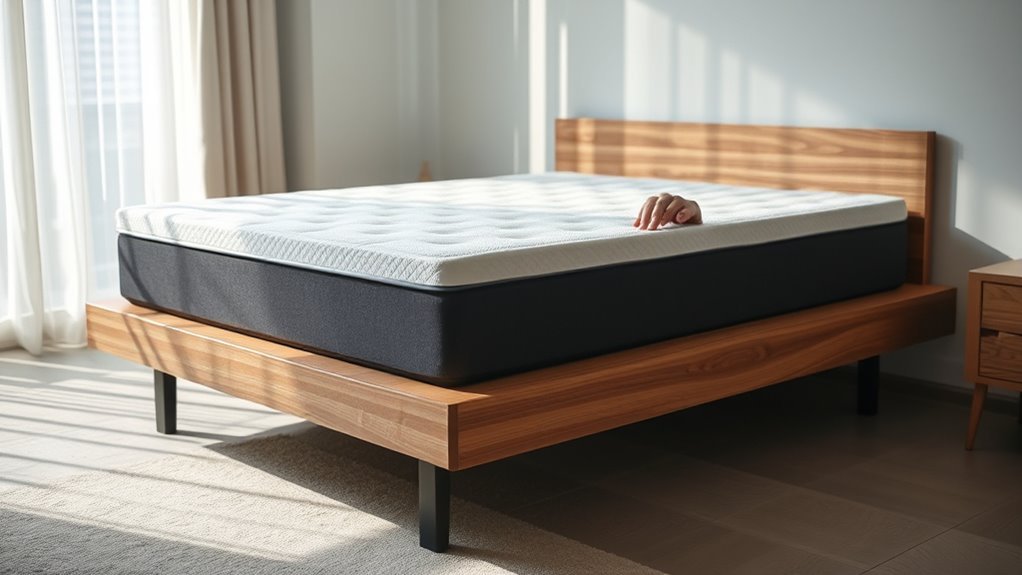
When you choose a memory foam mattress, you need a firm, flat surface to keep it from sagging and losing shape. Memory foam mattresses rely heavily on proper support to maintain their structure and provide the comfort you expect.
A solid platform or a foundation with closely spaced slats—no more than 3 inches apart—is ideal to ensure even weight distribution. Avoid traditional box springs, as they often have too much give, which can cause uneven support and damage the mattress over time.
Always check your mattress manufacturer’s guidelines since some specific support types are required to keep your warranty valid. By giving your memory foam mattress the right support, you’ll prolong its life and enjoy consistent comfort every night.
What Is a Box Spring and How Does It Work?
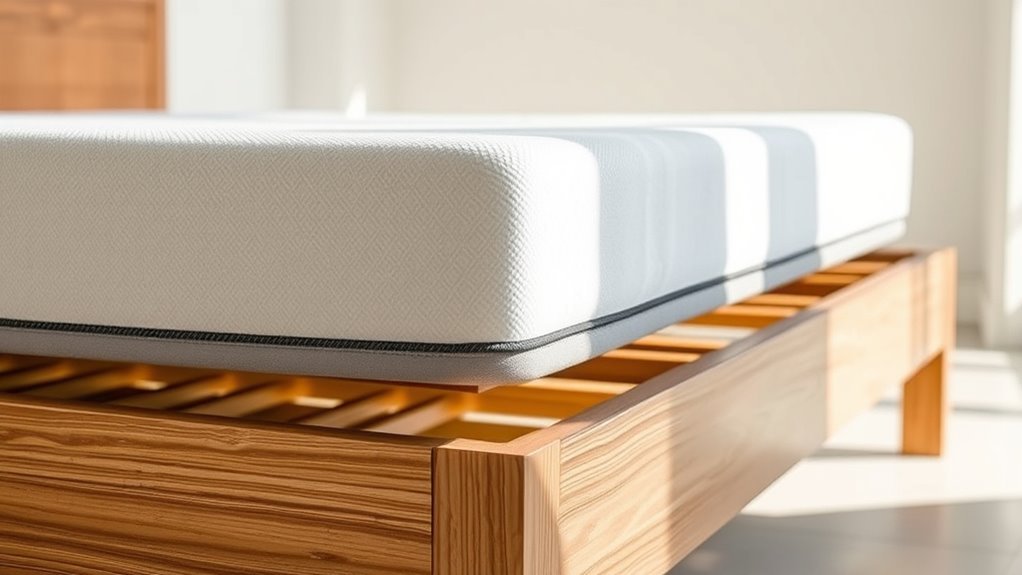
How does a box spring support your mattress and improve your sleep? A box spring is a foundation made of a wooden frame filled with coils or springs, covered in fabric. It works by absorbing shock and distributing your body weight evenly across the mattress, which helps maintain comfort and durability.
By raising the mattress height, a box spring also improves airflow and makes getting in and out of bed easier.
Raising mattress height with a box spring boosts airflow and simplifies getting in and out of bed.
Here’s what a box spring does for you:
- Provides sturdy support under your mattress
- Absorbs shock to reduce wear and tear
- Distributes weight evenly for comfort
- Raises mattress height for better airflow
- Enhances ease of getting in and out of bed
This foundation is especially designed for traditional innerspring mattresses. So, if you have one, a box spring can be a great addition to your sleep setup.
Differences Between Box Springs and Foundations
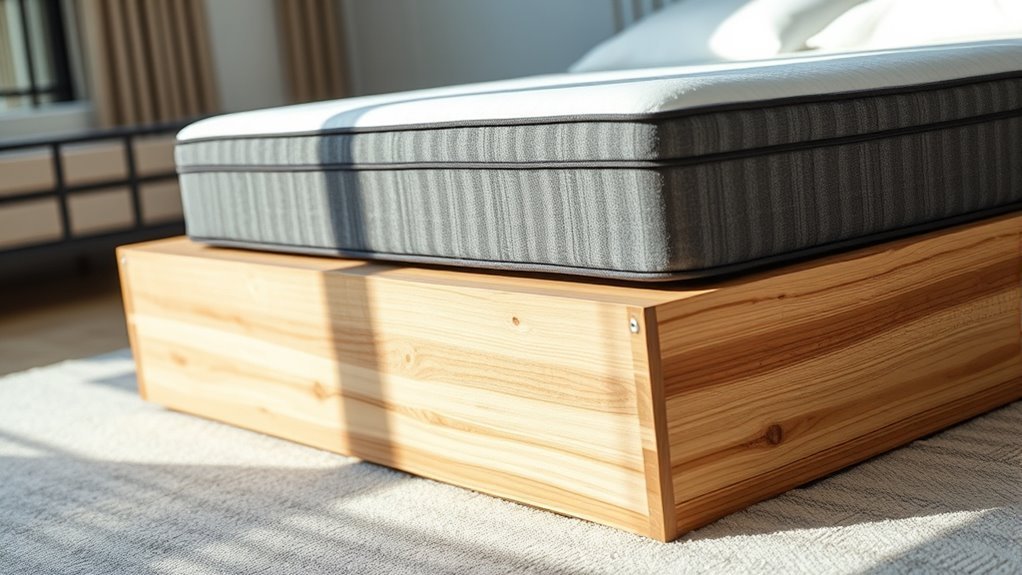
You’ll notice that box springs have coils inside to absorb shock and add support, while foundations are usually solid or slatted platforms without springs.
Foundations work well with various mattress types, especially memory foam, providing a stable base.
Understanding these key differences will help you pick the right support for your mattress.
Box Spring Characteristics
Although both box springs and foundations serve as mattress supports, they differ markedly in construction and function.
A box spring features metal coils or springs inside a wooden frame, designed to compress and flex. This helps absorb shock and evenly distribute weight, making it ideal for traditional innerspring mattresses.
In contrast, a foundation offers a rigid, flat surface without springs, often using solid or slatted support.
Here’s what sets a box spring apart:
- Contains internal metal springs or coils
- Built within a wooden frame
- Provides shock absorption
It compresses and flexes under weight. This makes it better at supporting innerspring mattresses than foundations.
Understanding these characteristics helps you decide if a box spring suits your mattress type.
Foundation Features
While box springs use internal coils to absorb shock and support traditional innerspring mattresses, foundations offer a different approach. A foundation is typically a flat or slatted platform made from wood or metal, designed to provide firm, even support without springs.
Unlike box springs, foundations create a stable base perfect for memory foam, latex, or hybrid mattresses, ensuring they maintain their shape and comfort. If you use a box spring with these mattress types, you might face instability or uneven support.
Many mattress manufacturers recommend using a slatted or solid foundation to keep your warranty valid and optimize mattress performance. So, when choosing between the two, consider that a foundation’s consistent support complements modern mattress materials better than the shock-absorbing design of box springs.
Alternatives to Box Springs for Memory Foam Mattresses
How should you support a memory foam mattress if not with a traditional box spring? You’ll want a firm, even surface that preserves the mattress’s structure and comfort.
Support memory foam mattresses with a firm, even surface to maintain comfort and structure, not a traditional box spring.
A solid platform or a foundation with closely spaced slats works best. These options prevent sagging and extend the mattress’s lifespan, unlike box springs, which can cause uneven support and motion transfer.
Consider these alternatives:
- Platform bed with a solid, flat surface
- Foundation with slats spaced no more than 3 inches apart
- Plywood sheet placed over bed frame for extra firmness
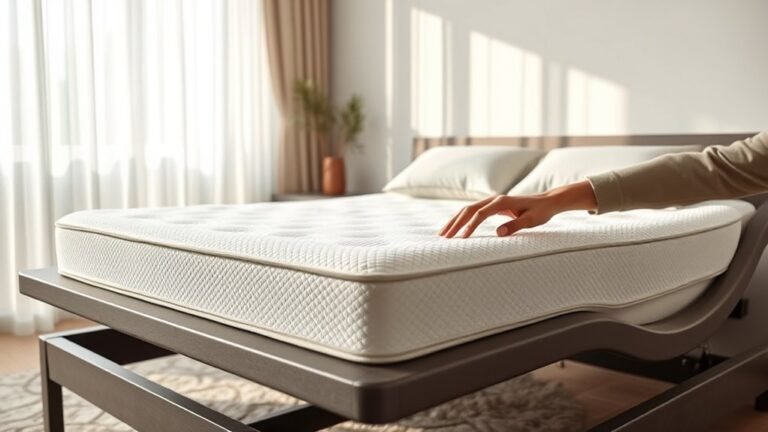
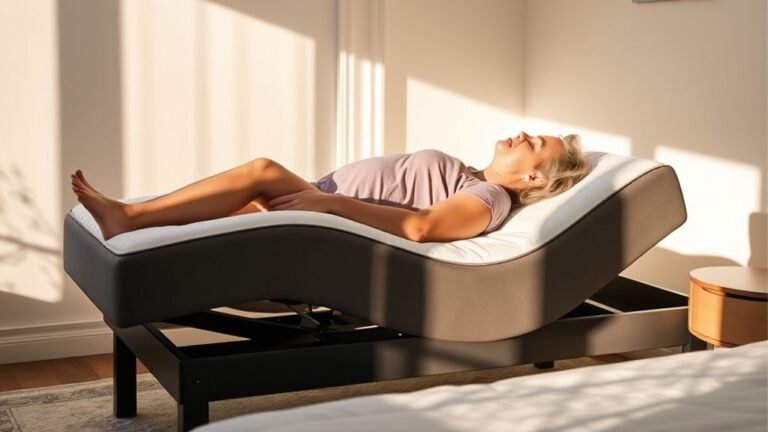
- Adjustable bed bases designed for memory foam
- Metal grid foundations offering stable, even support
Choosing the right platform or foundation ensures your memory foam mattress stays comfortable and durable. It really makes a difference!
How Mattress Type Influences Support Choices
Because each mattress type demands different support, choosing the right foundation is essential for comfort and durability. Memory foam mattresses require a firm, even surface to maintain their shape and provide proper support.
Unlike innerspring mattresses, which often work well with box springs, memory foam performs best on a solid foundation, platform, or slatted base spaced no more than three inches apart. Using a traditional box spring can make your memory foam mattress too soft and cause premature sagging.
If you’ve got a memory foam mattress, opt for a low-profile foundation or sturdy platform instead. Understanding your mattress’s specific support needs guarantees you select the right foundation or platform that keeps your mattress comfortable and extends its lifespan.
Impact of Support on Mattress Durability and Comfort
You’ll want to compare different support types to see which best preserves your mattress’s durability and comfort. Understanding how factors like foundation strength and airflow influence wear helps you make a smart choice.
Striking the right balance between comfort and support ensures better sleep and a longer-lasting mattress. It’s all about finding what works best for you!
Support Types Comparison
Although memory foam mattresses offer exceptional comfort, they demand specific support types to maintain their durability and performance. Choosing the right support affects how well your mattress holds up and how comfortable it feels.
Traditional box springs often provide uneven support, which can lead to sagging and reduce your mattress’s lifespan. Instead, consider options that offer firm, flat surfaces to evenly distribute weight and keep your mattress in shape.
Here’s a quick support types comparison:
- Platform beds provide solid, flat support ideal for memory foam.
- Slatted bases work well if slats are no more than 3 inches apart.
- Traditional box springs may cause uneven support and premature wear.
- Solid foundations enhance mattress longevity and comfort.
- Uneven or old supports can drastically shorten mattress life.
Durability Factors Explained
When you provide your memory foam mattress with proper support, it resists uneven compression that leads to sagging and discomfort. This firm, stable foundation plays a vital role in maintaining your mattress’s durability by preventing premature wear and tear.
With the right support, your mattress experiences less motion transfer and keeps its shape longer, ensuring consistent comfort. Inadequate support, on the other hand, increases pressure points, which can cause damage and reduce lifespan.
Additionally, a supportive base enhances airflow, helping regulate temperature and preserving mattress integrity. Ultimately, the support you choose directly impacts both the durability and overall performance of your memory foam mattress.
Comfort and Support Balance
Since memory foam mattresses depend heavily on a firm, flat foundation, choosing the right support directly affects both comfort and durability. To maintain overall support and prolong your mattress’s lifespan, make sure you avoid foundations that cause sagging or uneven weight distribution, like traditional box springs.
Proper support reduces pressure points and keeps the foam’s contouring properties intact, ensuring consistent comfort over time.
Make sure your foundation:
- Offers firm, flat support (platform beds or slatted bases work best)
- Promotes even weight distribution
- Prevents sagging and indentations
- Helps preserve mattress shape and feel
- Extends durability by up to 30%
Manufacturer Recommendations for Memory Foam Support
To keep your memory foam mattress in top shape, you should always follow the manufacturer’s support guidelines. Most manufacturers recommend a firm, flat surface—like a solid platform or a slatted foundation with slats no more than 3 inches apart—to prevent sagging and maintain support.
Using a box spring might raise your mattress too high or create instability, potentially compromising support and voiding your warranty. So, it’s a good idea to avoid box springs unless the manufacturer specifically says they’re okay.
Always check your mattress’s specific manufacturer recommendations to make sure you’re meeting their support requirements. This helps your mattress perform well and keeps your warranty valid.
Choosing the Best Bed Frame for Your Memory Foam Mattress
Although selecting the right bed frame might seem straightforward, choosing one that properly supports your memory foam mattress is crucial for its durability and comfort.
Opt for a platform bed or a sturdy wooden frame with a solid or closely spaced slatted base to prevent sagging. Avoid traditional box springs, as they don’t provide even support.
Here’s what to consider:
- Ensure slats are no more than 3 inches apart
- Choose a solid platform bed for maximum stability
- Verify compatibility if using an adjustable bed frame
- Select a durable wooden frame to enhance mattress lifespan
- Avoid frames with springs that cause uneven support
The right bed frame keeps your memory foam mattress comfortable and long-lasting. So, take your time choosing—it really makes a difference!
Frequently Asked Questions
Does a Memory Foam Mattress Need a Special Box Spring?
No, you don’t need a special box spring for a memory foam mattress. Instead, use a solid platform or slatted foundation with gaps no wider than 3 inches to guarantee proper support and extend your mattress’s lifespan.
This setup helps keep your mattress in good shape and ensures you get the best comfort possible. So, no need to stress about finding a special box spring! Just stick to a sturdy base and you’re good to go.
Is Springs or Memory Foam Better?
Choosing between springs and memory foam is like picking between a lively dance and a gentle hug; you’ll prefer springs for bounce and support, but memory foam molds to you, offering soothing comfort and pressure relief every night.
Springs give you that responsive feel, keeping things lively and supportive. Memory foam, on the other hand, cradles your body, adapting to your shape for a cozy, pressure-free sleep.
How Many Inches Is Best for a Memory Foam Mattress?
You want a support platform about 4 to 6 inches tall for your memory foam mattress. Around 5 inches offers stability and airflow, preventing sagging while keeping your bed comfortable and easy to get in and out of.
This height strikes a great balance. It’s not too high or too low, so your mattress stays in good shape and feels just right every night.
What Is the Best Way to Support a Mattress?
You should support your mattress with a sturdy, flat surface like a platform bed or solid foundation.
Make sure slats are no more than 3 inches apart to prevent sagging. This will keep your mattress comfortable and lasting longer.
Conclusion
Choosing the right support for your memory foam mattress isn’t just about structure—it’s about comfort and longevity. You might think a box spring is the answer, but sometimes, a sturdy foundation or platform bed works better.
Remember, your mattress deserves a strong partner to keep it feeling like new. So, don’t settle for less; give your sleep the support it craves.
Because a well-supported mattress is the key to sweet, restorative nights. Whether you choose a box spring or a solid platform, the right base ensures your memory foam mattress maintains its shape and comfort for years to come. Ultimately, selecting the right support is essential for enhancing your sleep quality and protecting your investment.