Do You Need a Boxspring With a Memory Foam Mattress?
You don’t need a boxspring with a memory foam mattress because it requires firm, flat support to maintain its shape and durability. Boxsprings are designed for traditional spring mattresses and can actually cause uneven support.
This can lead to damage over time for your foam mattress.
Instead, go for a solid platform or a bed frame with closely spaced slats. These options provide proper stability and allow for good airflow underneath.
Keeping your mattress well-supported helps it last longer and stay comfortable.
If you want to keep your memory foam mattress in top condition, choosing the right foundation is key. There’s plenty more helpful info ahead to guide you on the best support options.
Stick around to learn how to get the most out of your mattress investment!
Key Takeaways
- Memory foam mattresses need firm, flat support. This means traditional boxsprings usually aren’t the best choice for them. They can affect how well your mattress performs and lasts.
- Boxsprings might cause uneven support and could even damage your memory foam mattress over time. That’s because they can create instability and sagging.
- Better options for support include platform beds or slatted bases. Just make sure the slats are no more than 3 inches apart to keep your mattress in shape.
- Using a boxspring can also reduce airflow and increase moisture buildup. Plus, it might void your mattress warranty if you don’t follow the support guidelines.
- Instead, consider alternatives like solid foundations, bunkie boards, or adjustable bases. These give your mattress the support and elevation it needs without any risk.
What Is a Boxspring?
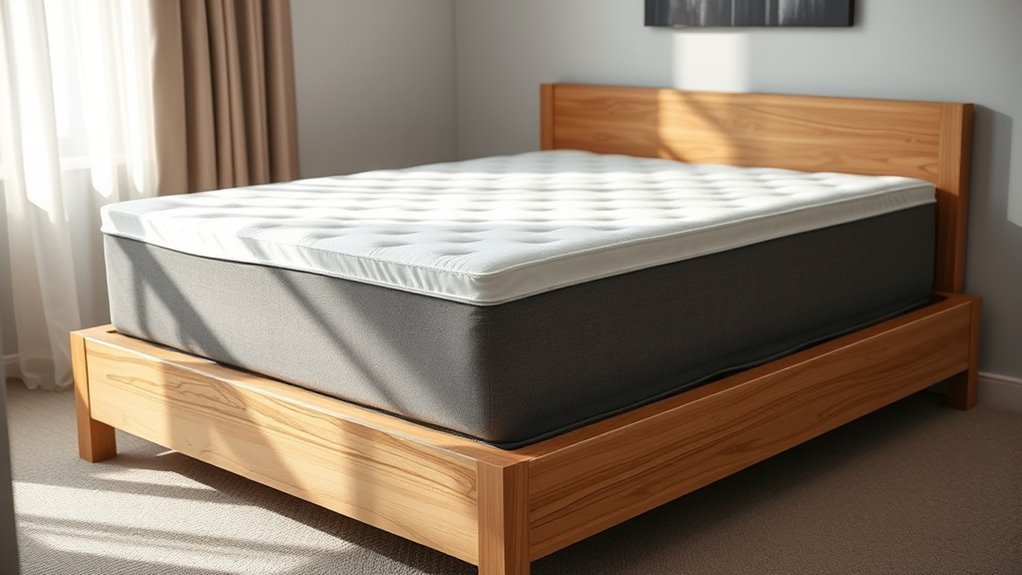
What exactly is a boxspring, and why might you need one? A boxspring is a supportive foundation for your mattress, built with a wooden or metal frame that contains interior springs or slatted panels covered in fabric. It provides vital support by absorbing impact and distributing your weight evenly across the mattress surface.
This support helps prevent sagging and extends your mattress’s lifespan. Besides support, a boxspring elevates your mattress, making it easier to get in and out of bed. It also encourages airflow beneath the mattress, which aids in temperature regulation and moisture control.
Whether you’re setting up a new bed or upgrading your foundation, a boxspring plays a pivotal role in enhancing comfort and protecting your mattress investment. It’s definitely something to consider if you want your bed to feel just right and last longer.
How Memory Foam Mattresses Differ From Traditional Mattresses
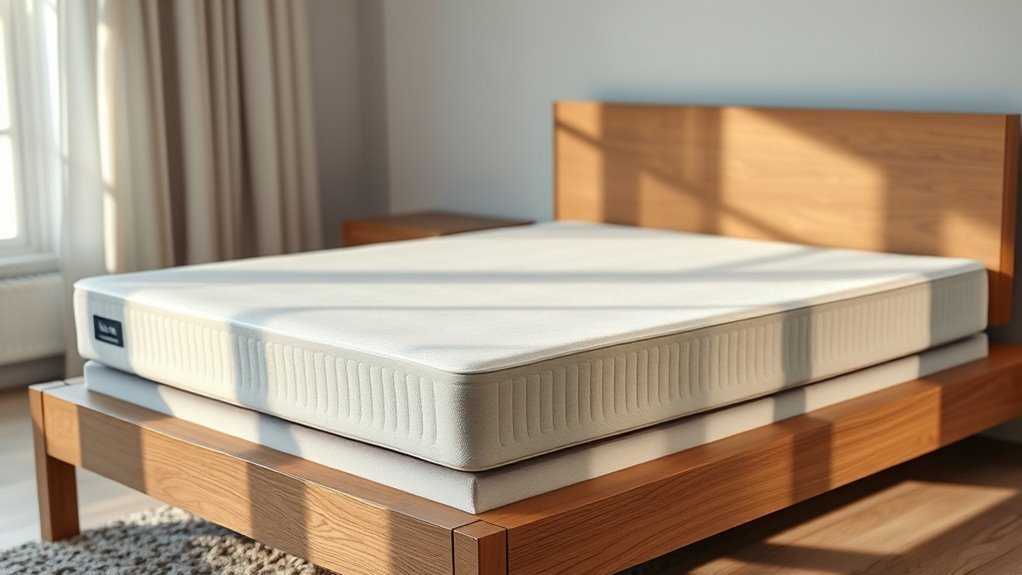
You’ll notice memory foam mattresses mold to your body, unlike traditional innerspring mattresses that rely on coil support and bounce. Because of this, they need a solid, firm base rather than a flexible box spring.
Understanding these differences helps you pick the right foundation to keep your mattress comfortable and durable. It’s all about giving your mattress the support it needs to last longer and feel better every night.
Foam vs. Innerspring
Although both memory foam and innerspring mattresses serve the same purpose, they differ considerably in construction and support needs. Memory foam mattresses rely on solid foundations or flat, slatted bases to provide stable support.
In contrast, traditional mattresses with innerspring systems need box springs to absorb shock and maintain bounce. It’s kind of like how different shoes need different types of socks, you know?
| Mattress Type | Support System | Ideal Foundation |
|---|---|---|
| Memory Foam | Foam layers, no coils | Solid foundations |
| Innerspring | Steel coil system | Box spring |
| Traditional | Coil-based | Flexible support |
Using a box spring for memory foam can cause instability and damage. On the flip side, innerspring mattresses depend on flexible box springs to prevent sagging and keep things comfy. So, it really pays to use the right foundation!
Support and Flexibility
Because memory foam mattresses lack the coils found in traditional innerspring models, they depend heavily on a firm, flat foundation to provide consistent support and maintain their shape. Unlike innerspring beds, memory foam offers less flexibility, making the quality of your support surface vital.
Using a boxspring can create uneven support, causing sagging and shortening your mattress’s lifespan. Instead, opt for a solid platform or a slatted frame with minimal gaps to guarantee even support. This foundation preserves memory foam’s contouring properties and prevents damage.
Why Memory Foam Mattresses Usually Don’t Need a Boxspring
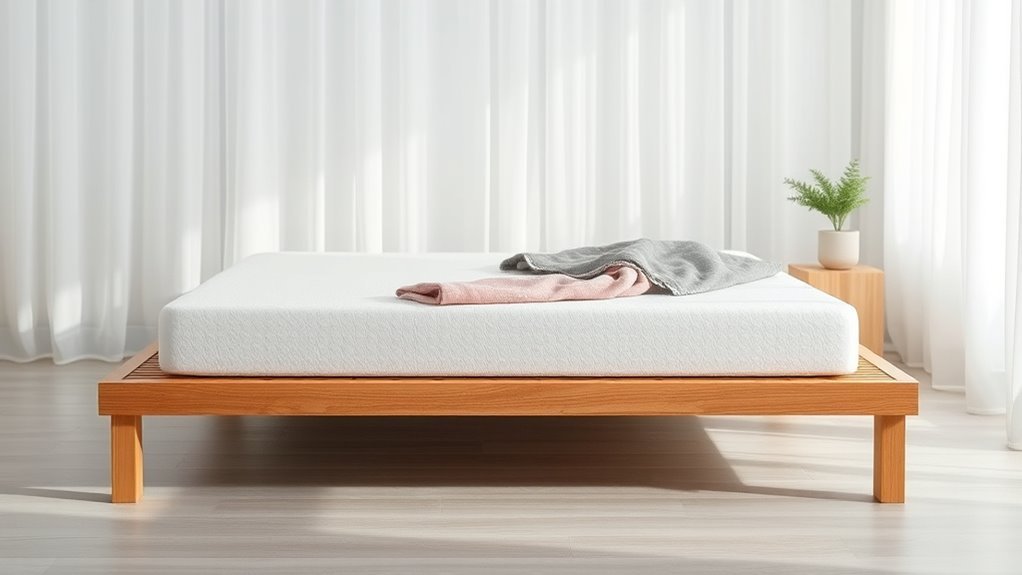
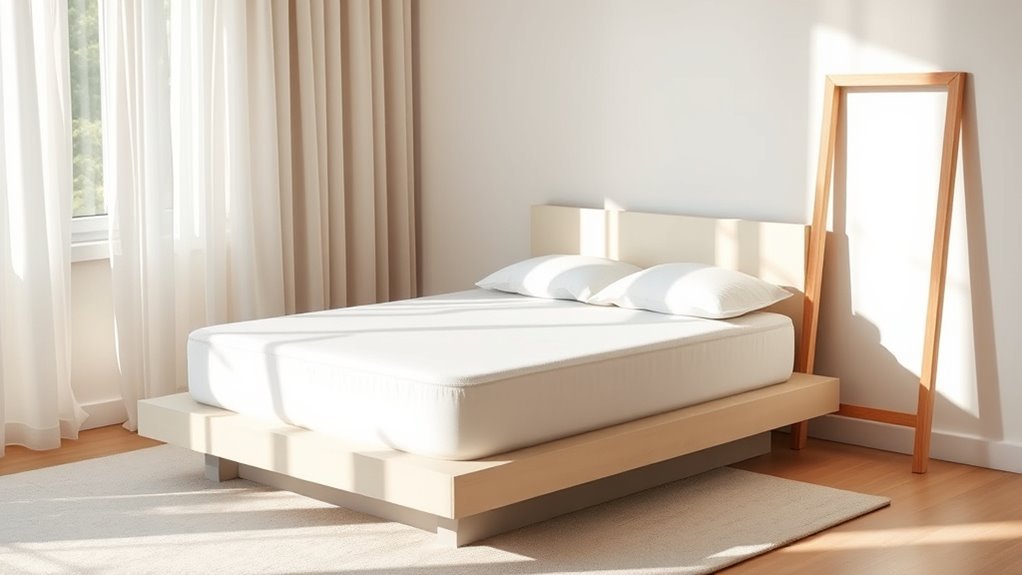
When you choose a memory foam mattress, you don’t usually need a boxspring since these mattresses perform best on firm, flat surfaces like platform beds or solid foundations. Memory foam mattresses rely on a sturdy support surface to evenly distribute your weight and maintain their shape.
Using a traditional boxspring can cause uneven support, leading to sagging and shortening your mattress’s lifespan. Many manufacturers recommend a solid or slatted foundation, which also promotes better airflow, preventing heat buildup and enhancing comfort.
Because memory foam molds to the support surface, a non-springy foundation guarantees maximum durability and comfort. In contrast, a boxspring’s springs interfere with proper support and airflow, making it less suitable for memory foam mattresses.
Suitable Foundations for Memory Foam Mattresses
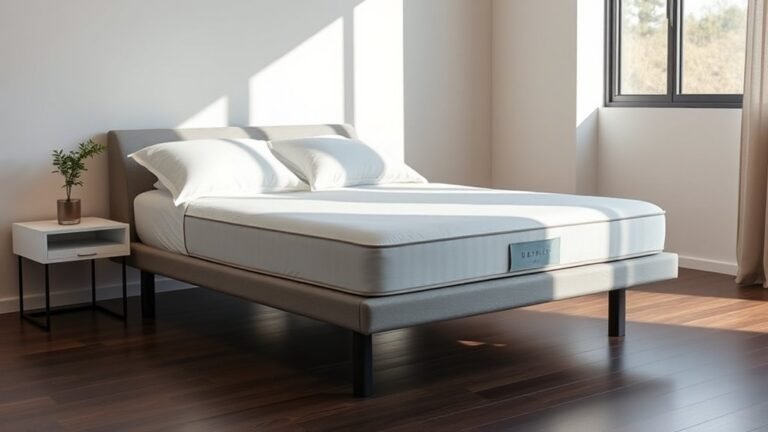
To get the most out of your memory foam mattress, you’ll want to choose a firm, flat foundation that supports its structure properly. Avoid traditional boxsprings with coils, as they provide uneven support and can shorten your mattress’s lifespan.
Instead, opt for a rigid foundation or a bunkie board. These offer a stable base that maintains the mattress’s integrity.
If you prefer slats, make sure they’re no more than 3 inches apart. This prevents sagging and provides consistent support.
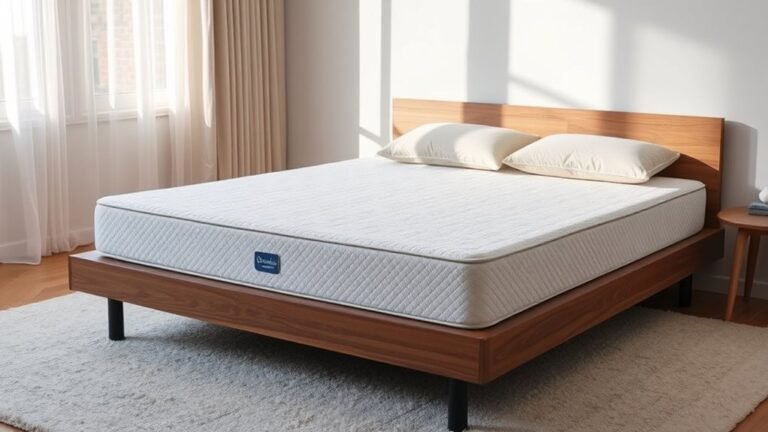
Platforms or solid foundations also work well. They give your memory foam mattress the firm, even surface it needs.
Always check your mattress manufacturer’s guidelines. That way, you can pick the best foundation type and keep your mattress comfortable and durable.
Importance of Proper Support for Memory Foam Mattresses
Ensuring your memory foam mattress has proper support plays an essential role in maintaining its comfort and durability. You need a flat, firm support surface to prevent sagging and avoid unnecessary wear and tear.
A solid foundation or slatted base with slats no more than 3 inches apart provides the ideal support. This proper support helps your mattress contour to your body evenly, promoting better spinal alignment and comfort.
Using an unsuitable foundation, like a boxspring made for innerspring mattresses, can cause uneven support. That leads to premature indentations and potential warranty issues.
Risks of Using a Boxspring With a Memory Foam Mattress
If you use a boxspring with your memory foam mattress, you risk causing uneven support that leads to sagging and premature damage. This mismatch can also block airflow, which may result in moisture buildup and mold growth.
Plus, ignoring the manufacturer’s recommended support can void your warranty, leaving you unprotected. So, it’s really best to follow their guidelines to keep your mattress in good shape.
Potential Mattress Damage
Although boxsprings offer traditional support for many mattresses, using one with a memory foam mattress can cause uneven pressure and sagging, which leads to premature wear. When the boxspring’s springy structure doesn’t provide consistent support, it creates pressure points that prevent your mattress from properly conforming to your body.
This mismatch in compatibility can accelerate mattress damage by compromising its internal structure. Additionally, the boxspring may restrict airflow beneath the mattress, increasing moisture buildup that further harms the foam over time.
The added flexibility and height of a boxspring can also strain your memory foam, reducing its lifespan and comfort. So, to protect your investment, it’s vital to choose a foundation that complements your mattress’s design and support needs.
Warranty and Support Issues
Because box springs often provide uneven support, using one with your memory foam mattress can void the manufacturer’s warranty if it leads to sagging or damage. Most manufacturers require a firm, flat foundation—like a slatted base or solid platform—to guarantee proper support.
Using a box spring, which is too springy, risks increased sagging and reduces the mattress’s lifespan. This improper foundation compromises the even distribution of weight, accelerating wear and tear.
If sagging occurs due to inadequate support, your warranty might not cover repairs or replacements. So, to protect your investment and maintain warranty coverage, always use the recommended foundation type.
Following the manufacturer’s guidelines ensures your memory foam mattress remains comfortable and durable for years to come. It’s definitely worth the extra care!
Alternatives to Boxsprings for Memory Foam Mattresses
When you choose a memory foam mattress, you’ll want a firm, flat surface like a platform bed or a well-spaced slatted foundation to support it properly. A slatted foundation with slats no more than 3 inches apart offers excellent memory foam support while promoting airflow.
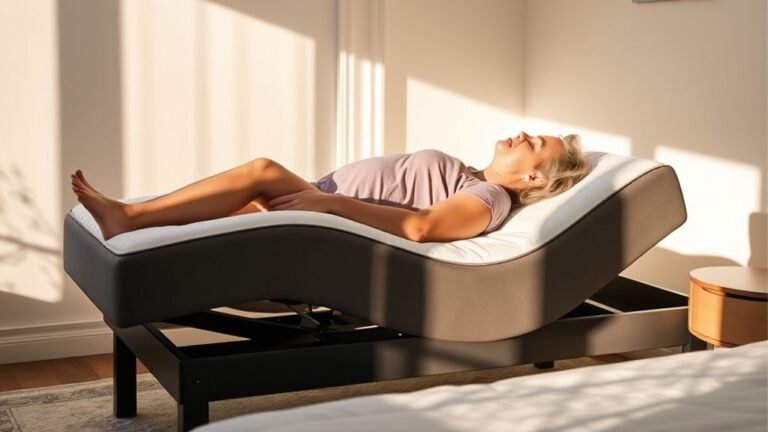
If your bed frame has widely spaced slats, adding a bunkie board can create a sturdy, flat layer without needing a boxspring. Alternatively, an adjustable base provides customizable support and elevation, making it a smart, supportive bed base for memory foam mattresses.
Solid foundations or specially designed memory foam foundations also prevent sagging and extend mattress life. These alternatives ensure your mattress stays comfortable and durable without relying on a traditional boxspring.
How to Check if Your Bed Frame Supports Memory Foam Mattresses
Choosing the right foundation is key to getting the most from your memory foam mattress, but it’s equally important to confirm that your bed frame can provide proper support.
First, check if your frame has a solid surface or a slatted bed with slat spacing no wider than 3 inches. Make sure the slats are sturdy, rigid, and securely fixed.
Also, the bed frame itself must be stable and free from wobbling. Always review your mattress’s manufacturer guidelines to identify compatible support bases.
Use the table below to quickly assess your bed frame’s suitability:
| Feature | Ideal Condition | Why It Matters |
|---|---|---|
| Slat Spacing | ≤ 3 inches | Prevents mattress sagging |
| Surface Type | Solid surface or sturdy slats | Ensures even weight distribution |
| Frame Stability | No wobble or creak | Maintains mattress integrity |
How Boxsprings Affect Mattress Longevity and Comfort
Although memory foam mattresses offer excellent comfort on their own, using a boxspring can substantially enhance their longevity and support. A supportive boxspring acts as a solid foundation, distributing weight evenly and helping to prevent sagging.
This even support reduces pressure points and uneven wear, which in turn extends your mattress’s lifespan. Without proper support, your memory foam mattress can deteriorate faster, compromising comfort and durability.
Additionally, a boxspring often provides extra cushioning and height, improving your overall sleeping experience. Many manufacturers recommend using a compatible foundation to maintain mattress integrity and ensure long-term comfort.
Tips for Elevating Your Bed Without a Boxspring
If you want to raise your bed without a boxspring, consider alternatives like bed risers or solid foundations for extra height and support. You’ll want to make sure any method keeps your mattress flat and firm to avoid sagging.
Using bed risers safely can improve accessibility while protecting your memory foam’s durability. It’s all about finding the right balance between height and stability so your bed stays comfy and secure.
Alternative Bed Elevation Methods
When you want to elevate your bed without relying on a traditional boxspring, several effective options are available. You can choose platform beds or slatted frames with slats spaced less than 3 inches apart to guarantee proper support for your memory foam mattress.
Adding a sturdy foundation or a Bunkie board beneath the mattress also provides extra height and stability without compromising comfort. Bed risers offer a simple way to boost your bed’s height by lifting the legs or platform.
This gives you more under-bed storage or easier access. Combining these methods with your memory foam mattress helps maintain proper support and airflow, so you enjoy both elevation and comfort without needing a boxspring.
These alternatives are practical and customizable to your space and needs. Plus, they’re easy to mix and match depending on what works best for you.
Using Bed Risers Safely
Since bed risers can effectively elevate your bed without a boxspring, you need to use them safely to prevent accidents. Proper use guarantees stability and safe elevation, protecting both your bed frame and floor.
Here’s how to use bed risers effectively:
- Place bed risers under each leg of the bed frame, matching their weight capacity to your mattress and occupants.
- Use support pads with the risers to avoid damage to the bed frame and floor surfaces.
Make sure the risers are stable and evenly positioned to prevent wobbling or tipping. Avoid stacking multiple risers unless the manufacturer specifies it’s safe.
It’s also a good idea to regularly inspect your risers for wear or instability. Replace them as needed to keep your bed secure and safely elevated.
Frequently Asked Questions
Are All Box Springs the Same Height?
No, box springs aren’t all the same height. They usually range from 7 to 9 inches, but some models vary.
You should check measurements carefully to guarantee your box spring matches your mattress and bed frame perfectly. It’s always a good idea to double-check before you buy!
Do Kids Beds Need a Box Spring?
You don’t need a box spring for kids’ beds. A sturdy slatted foundation or platform works better.
It keeps the bed lower, which makes it easier and safer for your child to get in and out comfortably. Plus, it feels more stable overall.
Does a Hybrid Mattress Need a Bunkie Board?
You don’t usually need a bunkie board with a hybrid mattress unless your bed frame’s slats are spaced wider than 3 inches.
If they are, adding one helps provide better support and prevent sagging. It’s a simple way to make sure your mattress stays in great shape.
What Are the Key Differences Between a Hybrid Mattress in a Box and Memory Foam Mattress?
You’ll notice hybrid mattresses combine coils and foam for support and airflow. This mix helps keep you cooler at night.
Memory foam mattresses, on the other hand, rely solely on foam. They offer deep body contouring but tend to have less breathability and firmer support compared to hybrids.
Conclusion
Think of your memory foam mattress as a tree—it needs the right soil, not just any support, to truly thrive. A boxspring is like planting it in rocky ground; it might not give the steady foundation your mattress requires.
Instead, choose a solid, flat base to let your mattress grow strong and comfortable. By offering proper support, you’re not just elevating your bed—you’re nurturing restful nights that stand the test of time.
When deciding if you need a boxspring with a memory foam mattress, remember that this type of mattress performs best on a firm, stable surface. Using a boxspring can sometimes cause uneven wear and reduce the mattress’s lifespan. So, for the best comfort and durability, opt for a platform bed or a slatted base designed to support memory foam evenly. This way, you can enjoy the full benefits of your memory foam mattress—deep comfort, pressure relief, and long-lasting support—night after night.