Do You Need a Box Spring With a Memory Foam Mattress?
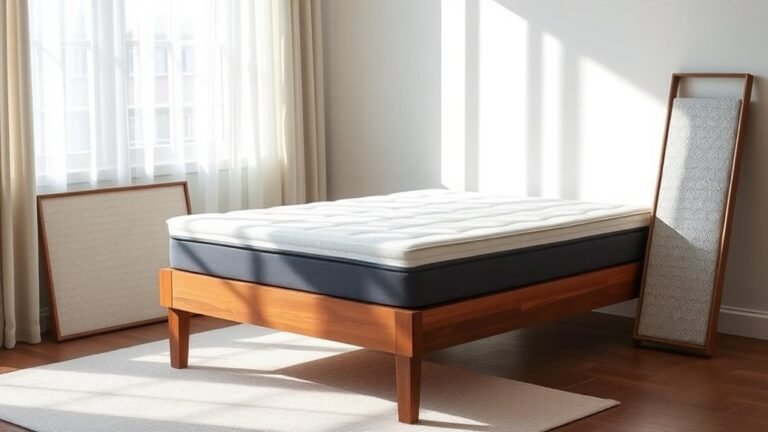
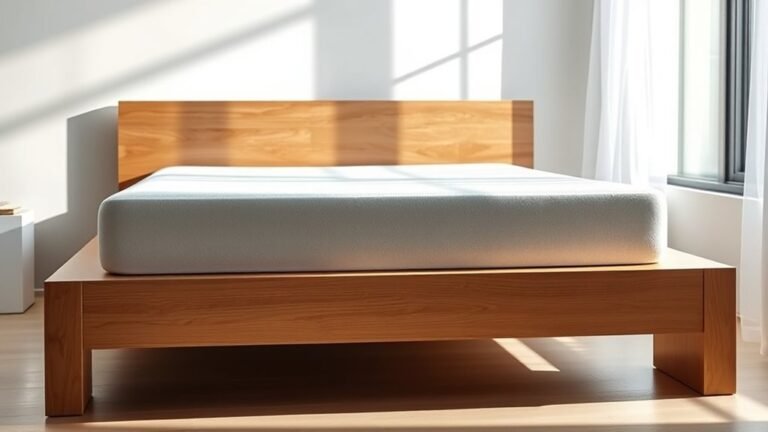
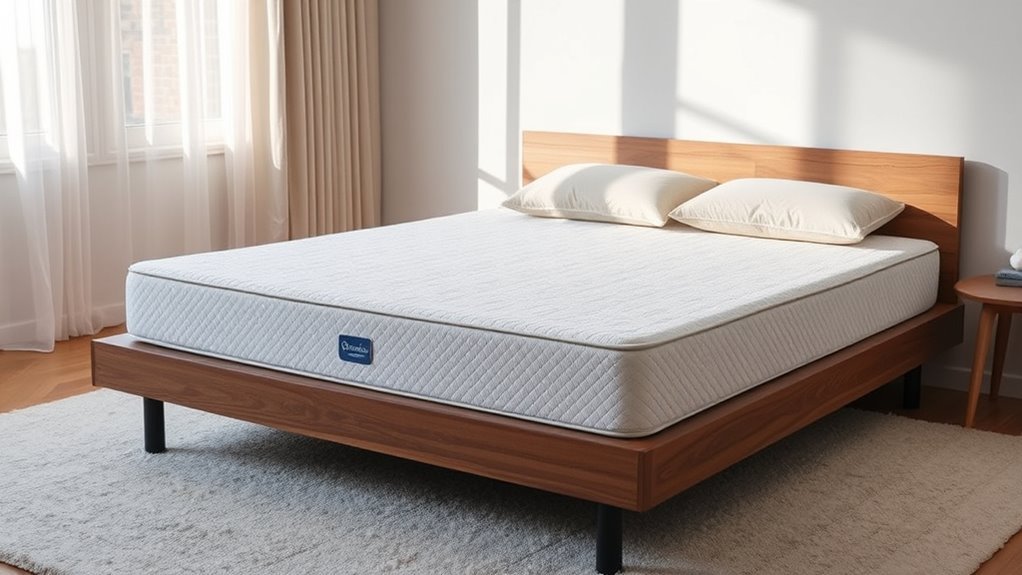
You don’t usually need a box spring with a memory foam mattress if you have a flat, solid support like a platform bed or a foundation with closely spaced slats.
Memory foam mattresses require firm, even support to keep their shape and comfort. Box springs are mainly designed for innerspring mattresses, so they’re not always necessary here.
If your bed frame doesn’t provide that kind of support, a box spring might come in handy to prevent sagging and extend the life of your mattress.
But before you decide, always check your mattress warranty to see what’s recommended.
Remember, the right setup can make a big difference in how comfortable and supportive your bed feels. Keep exploring to find the best setup for lasting support and comfort.
Key Takeaways
- Most memory foam mattresses do not require a box spring for proper support and comfort.
- However, a box spring is needed if the bed frame has wide slats or lacks a solid, flat surface.
- Also, be sure to check manufacturer guidelines because they may require a box spring to keep your warranty valid.
- If you want alternatives, platform beds or solid foundations work great since they provide firm, even support.
- Just keep in mind that using improper support like flexible box springs can cause sagging and reduce your mattress’s lifespan.
Understanding Memory Foam Mattresses
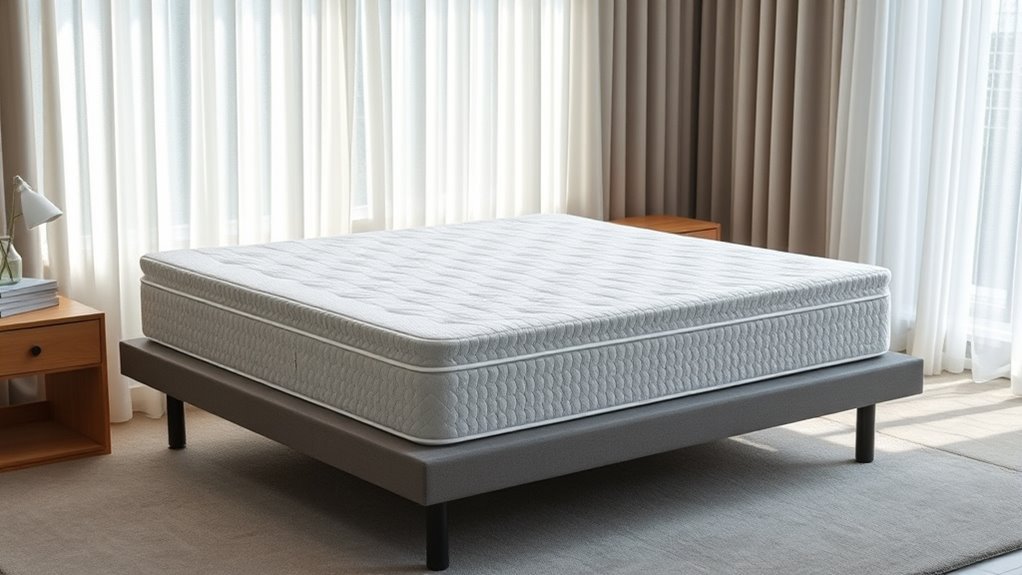
Although memory foam mattresses differ from traditional innerspring beds, they offer unique comfort by conforming to your body’s shape. Memory foam mattresses use dense, viscoelastic foam that reacts slowly to pressure, providing tailored support and pressure relief.
To get the best from your mattress, you need proper support. Unlike innerspring beds, memory foam doesn’t rely on coils but on its foam layers, so it performs best on flat support surfaces.
A solid support system, like a sturdy foundation or platform, helps maintain your mattress’s shape and longevity. Whether you choose a foundation or platform, make sure it offers solid support with evenly spaced slats or a firm base.
Supporting your mattress correctly prevents sagging and keeps it comfortable for years. So, investing in the right base really pays off in the long run!
Traditional Box Springs and Their Role
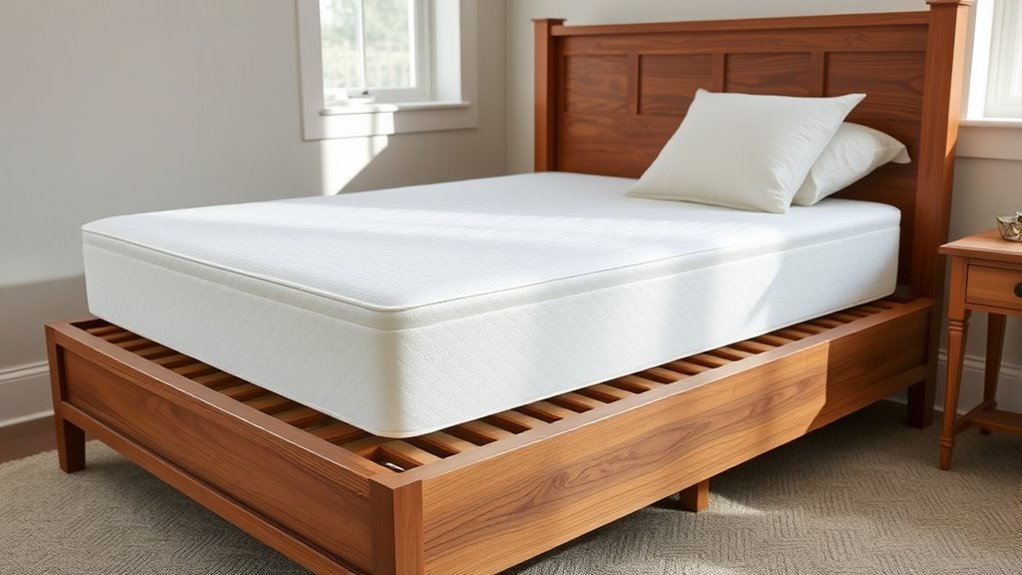
When you think of traditional box springs, picture a wooden frame filled with coils that flex under your mattress to provide extra support and absorb movement. This coil unit serves as a mattress foundation designed to support the mattress while preventing sagging over time.
A traditional box spring enhances overall bed support by offering a malleable base that adjusts with your mattress’s weight and movement. It also raises the bed height, making it easier to get in and out.
However, unlike a solid surface, the coil unit provides flexibility rather than firmness. While traditional box springs excel at supporting innerspring mattresses, many modern memory foam mattresses don’t require this type of mattress support to maintain durability and comfort.
When a Box Spring Is Necessary for Memory Foam
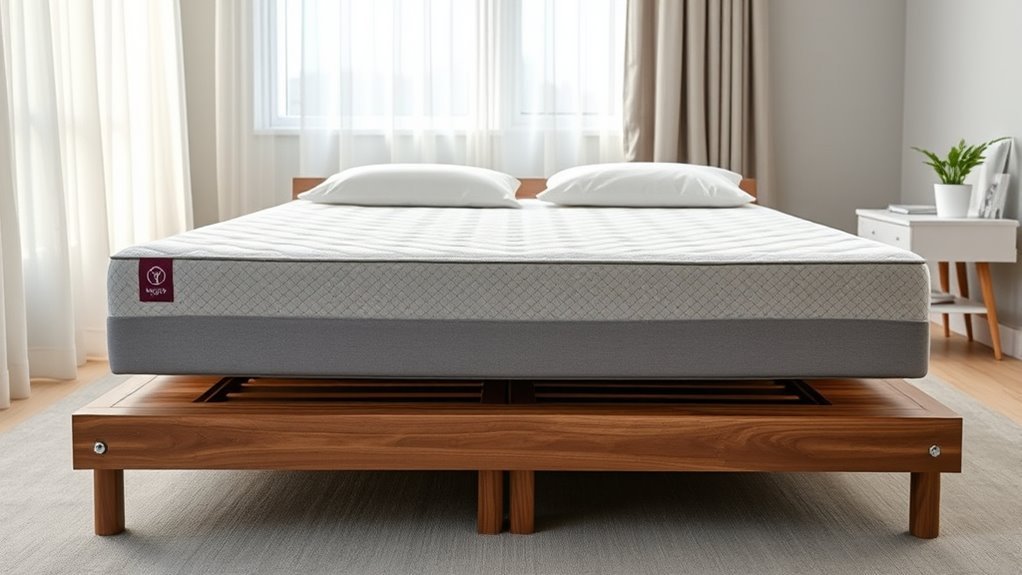
Even if you might be tempted to use a box spring with your memory foam mattress, most models don’t need one and actually benefit more from a solid, flat surface.
However, there are exceptions when a box spring becomes necessary. Always check the manufacturer recommendations first to ensure your mattress gets the proper support system.
You might need a box spring if your bed frame lacks a solid support or slat foundation, or if the slat spacing is too wide to provide flat support.
Also, if your mattress is designed for use with a traditional mattress setup, or the manufacturer explicitly requires a box spring for warranty validity, then it’s best to use one.
Using the right support prevents sagging, extends mattress life, and keeps your memory foam comfortable.
Alternative Support Systems for Memory Foam Mattresses
Choosing the right support for your memory foam mattress goes beyond just box springs. Many alternative support systems like platform beds, solid foundations, and adjustable bases provide the firm, even support memory foam needs.
Slat foundations work well too, but make sure the slats are spaced no more than three inches apart to prevent sagging and protect your mattress warranty. Unlike traditional box springs, these support systems maintain your mattress’s durability and comfort.
When selecting bed frames, verify the manufacturer’s recommendations to ensure compatibility with your memory foam mattress. Avoid unsupported or improperly spaced slats, as they can damage the mattress.
Choosing the Right Bed Frame for Your Mattress
Because your bed frame directly affects mattress support and longevity, you’ll want to pick one that complements your memory foam mattress.
Choosing the right bed frame ensures your mattress stays comfortable and durable without needing a box spring. Consider these options for ideal bed support:
- Platform beds offer a sturdy, flat surface that usually eliminates the need for a box spring.
- Slat foundations with slats spaced less than four inches apart provide excellent support for your mattress.
- Adjustable frames support memory foam mattresses directly, adding flexibility and comfort.
- Avoid frames that lack proper support systems, as they can cause sagging and void your mattress warranty.
Selecting the right support system guarantees your memory foam mattress performs at its best and lasts longer. So, take your time choosing—it really pays off!
Signs It’s Time to Replace Your Box Spring
If your box spring shows visible sagging, broken parts, or creaks frequently, it’s a clear sign you should replace it. Sagging compromises the supportive structure, reducing the support system your mattress relies on.
Without a supportive base, your mattress won’t evenly support your body, leading to discomfort. Over time, the support of a box weakens, especially if it’s older than 8-10 years or has suffered damage from moving or accidents.
This deterioration means your box spring no longer provides the supportive foundation necessary for your memory foam mattress. Also, if you’ve switched to a new mattress type or bed frame, an incompatible box spring might fail to support your body properly.
Replacing it ensures your mattress gets the support it needs for ideal comfort and durability. So, don’t wait until it’s too late—give your bed the foundation it deserves!
Tips for Maximizing Mattress Longevity and Comfort
To get the most from your memory foam mattress, you need to provide it with proper support and care. Choosing the right foundation—whether a box spring or a solid support system—ensures stability and prevents sagging.
Proper support and care keep your memory foam mattress stable and sag-free for lasting comfort.
A flat surface maintains the mattress’s shape, reducing wear and tear and boosting longevity. Plus, adequate airflow underneath helps keep moisture and mold at bay.
Keep these tips in mind:
- Use a stable foundation or platform bed instead of flexible supports.
- Ensure your support system allows for good airflow beneath the mattress.
- Regularly check and replace worn or damaged box springs or foundations.
- Avoid uneven surfaces that can cause indentations and discomfort.
With proper care, your memory foam mattress will stay comfortable and supportive for years. It’s really worth the effort!
Frequently Asked Questions
Why Are People No Longer Using Box Springs?
You’re no longer using box springs because modern bed frames and mattress technologies provide better, more durable support. They add unnecessary height, reduce airflow, and aren’t needed for memory foam or hybrid mattresses.
What Are the Disadvantages of a Memory Foam Mattress?
Oh, you’ll just love feeling like you’re stuck in quicksand all night! Memory foam traps heat and sags over time.
It also smells like a new car and weighs a ton—perfect if you enjoy wrestling your mattress daily.
What Is the Best Thing to Put Under a Memory Foam Mattress?
You should put a solid platform, slatted foundation with slats under 4 inches apart, or a bunkie board under your memory foam mattress.
These options provide firm, even support and help prevent sagging, extending your mattress’s lifespan.
Basically, you want something sturdy that keeps your mattress from dipping or bending. That way, you get the best comfort and durability out of your memory foam.
Why Are People No Longer Buying Memory Foam Mattresses?
Imagine you tried a memory foam mattress but woke up sweaty and uncomfortable. You’re not alone—people avoid them because they trap heat, emit chemicals, and prefer newer, breathable hybrids or eco-friendly options that offer better comfort and health.
It’s like, who wants to sleep hot or worry about off-gassing smells? These days, folks are all about mattresses that keep them cool and use natural materials. So, memory foam is kind of losing its charm in the mattress world.
Conclusion
You don’t always need a box spring with a memory foam mattress, but you do need proper support, stability, and ventilation. Whether you choose a solid platform, slatted frame, or a traditional box spring, make sure it fits your mattress’s needs.
Protect your investment, enhance your comfort, and extend your mattress’s life. Remember, the right foundation brings better sleep, better health, and better mornings—so choose wisely and sleep soundly every night.
When it comes to memory foam mattresses, the foundation matters a lot. Proper support prevents sagging, improves comfort, and maintains the mattress’s shape over time. Good ventilation is also key because memory foam can trap heat, so a breathable base helps keep you cool.
In short, you don’t necessarily need a box spring, but you do need a supportive, stable, and well-ventilated foundation. Whether that’s a platform bed, slatted frame, or box spring depends on your setup and personal preference. Choosing the right base not only protects your mattress but also enhances your quality of sleep and overall health. So pick the foundation that suits your memory foam mattress best and enjoy those restful nights!