Does a Memory Foam Mattress Require a Boxspring?
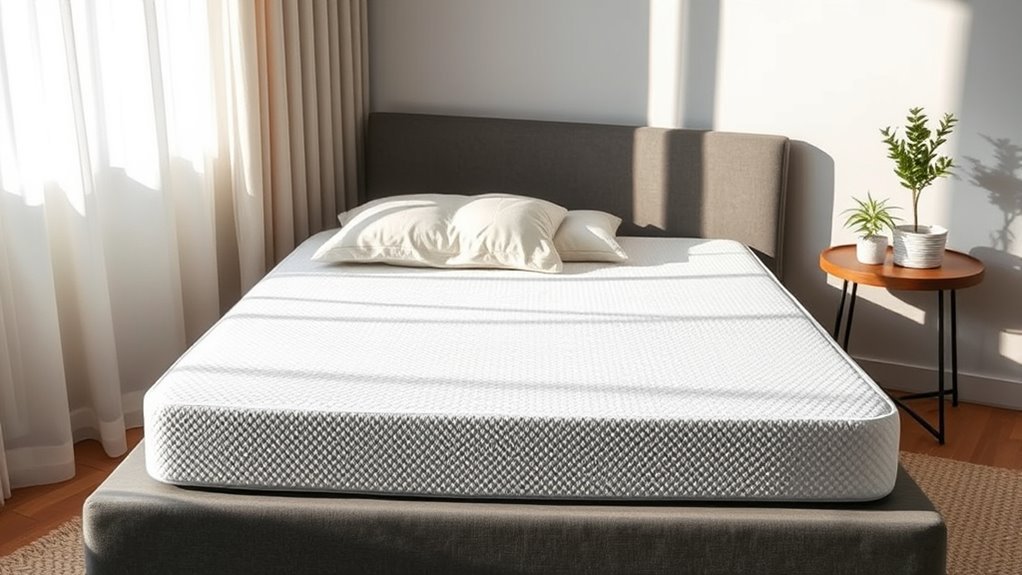
You don’t need a box spring for a memory foam mattress, but you do need a firm, flat foundation to keep it supported and in good shape.
A solid platform, adjustable base, or foundation with closely spaced slats works best.
Using a traditional box spring can cause sagging or damage, potentially voiding your warranty.
If your frame isn’t providing proper support, a box spring might help.
Keep going to find out how to choose the right foundation and protect your mattress investment.
Key Takeaways
- Memory foam mattresses need firm, flat support, not traditional box springs, to maintain shape and comfort. Solid platforms, adjustable bases, or foundations with slats less than 4 inches apart are ideal supports.
- Using box springs can cause uneven support and may void the mattress warranty. So, it’s usually best to avoid them.
- If the bed frame has widely spaced or damaged slats, a box spring or additional support might be necessary.
- Choosing the right foundation prevents sagging, extends your mattress’s lifespan, and helps keep your warranty valid. It’s all about giving your mattress the support it needs!
Understanding Memory Foam Mattress Support Needs
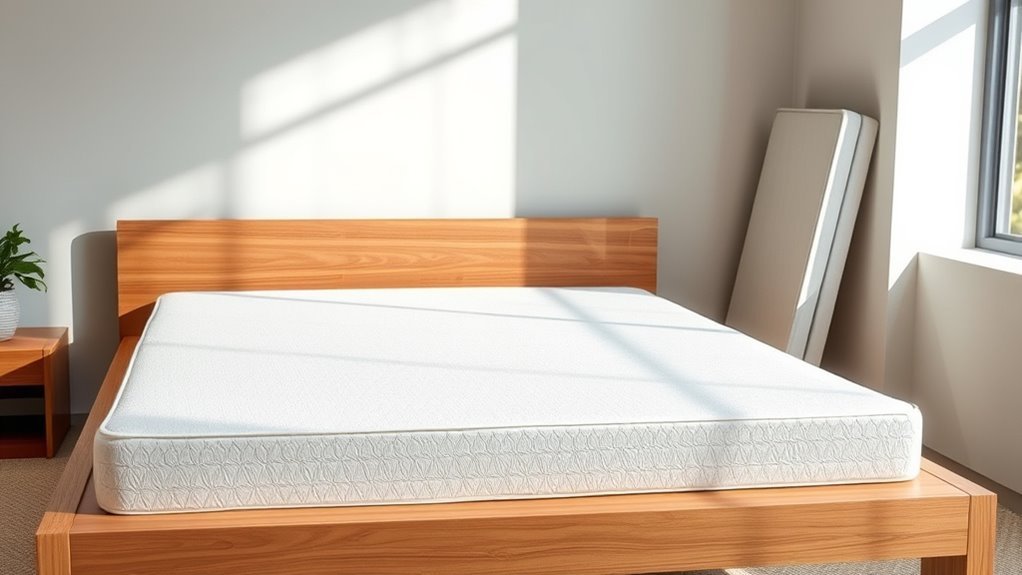
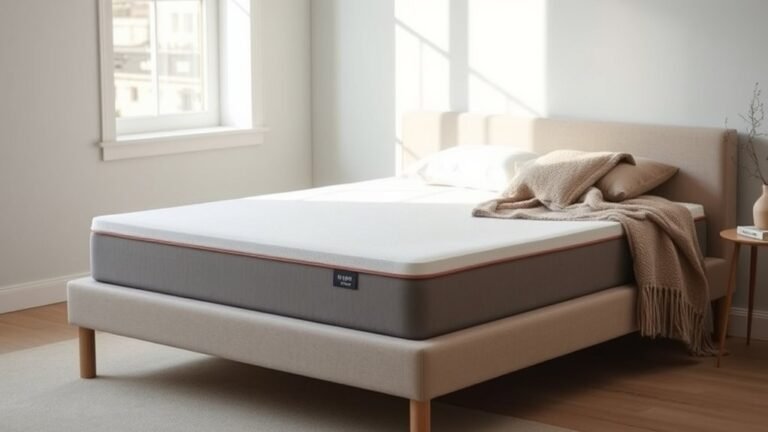
Although you might be used to traditional box springs, memory foam mattresses don’t need them. Instead, they require proper support from a firm, flat foundation to maintain their shape and comfort.
Using a box spring can cause uneven support, leading to sagging or damage. Many memory foam mattresses work well on slatted foundations if the slats are spaced less than four inches apart, ensuring even weight distribution.
A solid surface or platform bed also provides excellent support. It’s essential to check your mattress manufacturer’s recommendations to guarantee you’re using the right foundation and to keep your warranty valid.
Providing proper support not only prevents damage but also extends the lifespan of your memory foam mattress. So, giving your mattress the right base really pays off in the long run!
Types of Bed Frames Compatible With Memory Foam Mattresses
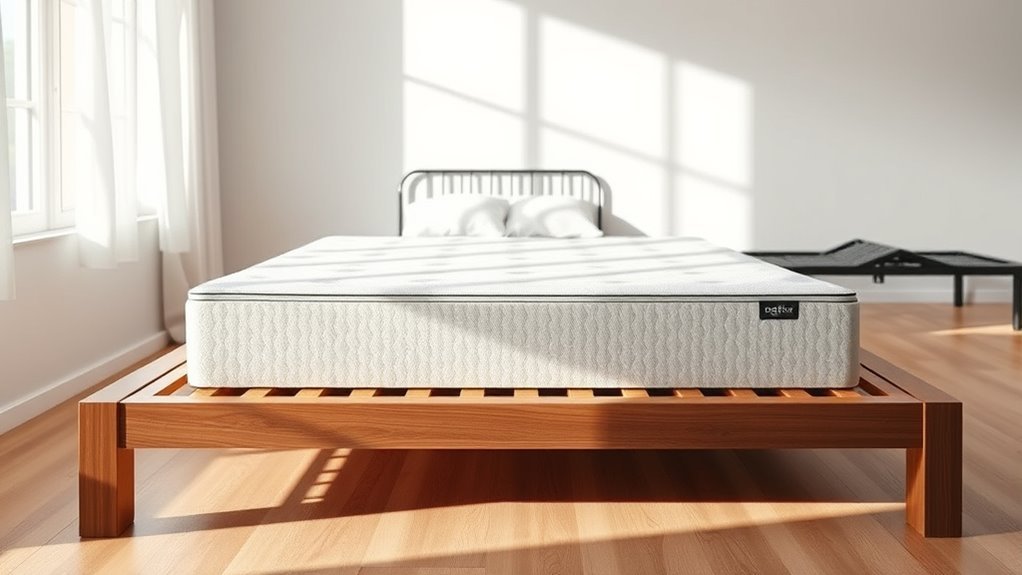
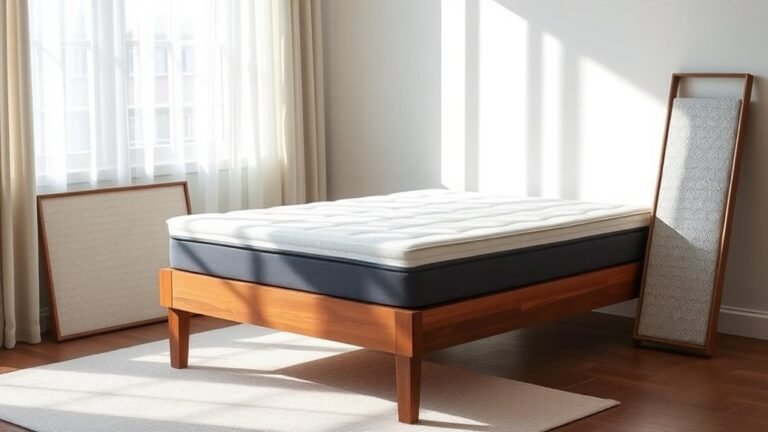
When selecting a bed frame for your memory foam mattress, you’ll want to focus on options that provide firm, flat support without relying on traditional box springs. Platform beds are an excellent choice, offering a sturdy foundation or platform that evenly supports your mattress.
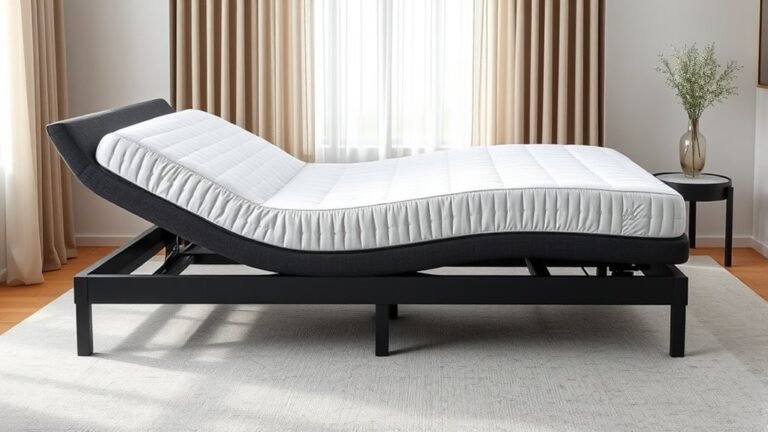
Slat foundations also work well, but make sure the slats are no more than 4 inches apart to prevent sagging and maintain proper mattress support. Adjustable bases provide customizable positioning and are fully compatible with memory foam mattresses, eliminating the need for a box spring.
Solid foundations and reinforced metal bed frames can also serve as reliable mattress support, ensuring durability and comfort. Choosing the right bed frame guarantees your mattress performs at its best over time. So, it’s really worth taking the time to pick the one that suits you best!
When a Box Spring Becomes Necessary
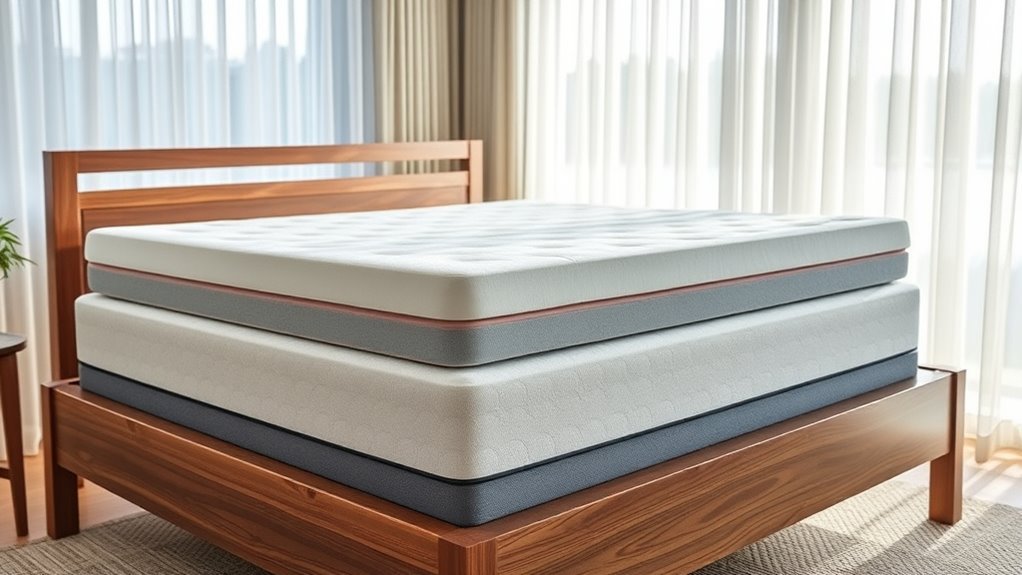
You’ll need a box spring if your bed frame has widely spaced slats or lacks firm support for your mattress. Pay close attention to how your mattress and frame work together, since improper support can damage your mattress or void the warranty.
Also, watch for signs like sagging or squeaking—these mean it’s time to replace your box spring. These little noises or dips shouldn’t be ignored because they can affect your sleep quality and the lifespan of your mattress.
Box Spring Usage Criteria
Since different mattress types require varied support, knowing when a box spring is necessary helps you protect your mattress and maintain comfort.
For memory foam mattresses, a solid support foundation or platform bed usually suffices, as these mattresses need firm, flat surfaces. However, if your bed frame’s foundation has fewer than six slats or shows signs of damage, adding a traditional box spring can provide the extra support needed.
While innerspring mattresses often demand a box spring to maintain warranty and support, memory foam beds can suffer from instability or uneven wear if placed on an unsuitable foundation or a box spring not designed for them.
Always check your mattress manufacturer’s guidelines to determine if a box spring or specific support system is recommended. It’s the best way to make sure your mattress lasts and feels great!
Mattress and Frame Compatibility
Although memory foam mattresses often don’t need a box spring, you must guarantee your bed frame provides the right support to avoid damage. Bed frame compatibility plays a vital role in maintaining your mattress’s integrity.
Memory foam mattresses require a solid foundation or platform bed with slats no more than four inches apart to properly support your mattress. If your bed frame type is designed for a traditional innerspring mattress, it may rely on a box spring to meet foundation requirements.
Using a box spring made for innerspring mattresses with memory foam can void your warranty and reduce mattress longevity. So, it’s really important to assess your bed frame type carefully to determine if a box spring is necessary or if a solid foundation will adequately support your mattress and preserve its lifespan.
Signs to Replace Boxspring
Three clear signs tell you it’s time to replace your box spring: sagging or soft spots, creaking noises, and visible structural damage like broken coils or warped frames. When your box spring can’t provide even support, your mattress sags, compromising how well it supports your body.
A damaged foundation also risks mattress harm and sleep discomfort. Look out for:
- Sagging areas or uneven mattress surfaces indicating poor support
- Creaking sounds that reveal worn-out internal components
- Visible structural damage such as broken coils or warped frames
Replacing your box spring guarantees proper support for your mattress, protects its warranty, and maintains a firm foundation that supports your body effectively throughout the night.
Alternatives to Box Springs for Memory Foam Mattresses
When you choose a memory foam mattress, you don’t have to rely on a traditional box spring for support. Instead, you can opt for a sturdy mattress foundation or a platform bed with slats spaced no more than 3 inches apart. This ensures a firm and even supporting surface.
A solid bed frame paired with a compatible mattress foundation also offers excellent stability. Another great alternative is an adjustable base, which not only provides firm support but also lets you customize your bed’s position without risking damage to your mattress.
Just make sure whichever option you pick aligns with your memory foam mattress manufacturer’s guidelines to maintain proper support and extend your mattress’s lifespan. Avoid soft or uneven surfaces, as memory foam requires firmness to perform well.
Signs You Should Replace Your Box Spring
If you notice your box spring sagging, making squeaking noises, or showing broken parts, it’s time to contemplate a replacement. A worn-out box spring won’t provide the supportive, even foundation your mattress needs, affecting comfort and durability.
Watch for these clear signs of structural wear or damage: visible sagging, soft spots, or broken components that compromise support. Also, listen for persistent squeaking or creaking sounds indicating internal damage.
And don’t forget about age—if your box spring is over 8-10 years old, it’s probably not as effective as it used to be. Ignoring these issues means your mattress won’t rest on a stable base, which can lead to discomfort and faster mattress wear.
Choosing the Right Foundation for Mattress Longevity
You’ll want to pick a foundation that offers firm, even support—like a platform bed with closely spaced slats or a solid surface—to keep your memory foam mattress in great shape.
Using the wrong base, such as an old boxspring or widely spaced slats, can cause sagging and shorten its lifespan.
Plus, choosing a foundation that matches your mattress warranty requirements helps you avoid voiding coverage and keeps your investment protected.
Foundation Types Explained
How do you guarantee your memory foam mattress lasts longer and performs at its best? Choosing the right mattress foundation is key. The foundation types you select provide the proper support and affect mattress durability.
Your mattress foundation should be firm and flat to prevent sagging and indentations. Consider these options:
- Solid platform: offers even weight distribution and a sturdy support system.
- Slatted base: ensure slats are less than 4 inches apart for proper support.
- Adjustable base: adapts to your comfort needs while maintaining mattress integrity.
Avoid widely spaced slats, which can reduce mattress lifespan and void warranties. Picking the correct foundation type ensures your memory foam mattress stays comfortable and durable over time.
Support Impact on Durability
Because your memory foam mattress relies heavily on proper support, choosing the right foundation directly influences its durability and comfort.
A sturdy support system, such as a solid platform or adjustable base, guarantees even weight distribution and prevents sagging. Avoid foundations with slats spaced more than four inches apart, as they cause support issues and premature wear.
Even if you prefer a boxspring, make sure it’s in good condition to maintain your mattress’s lifespan.
| Foundation Type | Impact on Durability |
|---|---|
| Solid Platform | Prevents sagging, extends lifespan |
| Boxspring (Old/Damaged) | Causes uneven support, reduces durability |
| Adjustable Base | Supports weight evenly, improves foam longevity |
Choosing the right foundation preserves your foam mattress’s structural integrity over time. It’s definitely worth paying attention to!
Warranty and Support Alignment
When you choose a foundation that meets your mattress manufacturer’s support guidelines, you keep your warranty intact and protect your investment. Many warranties require support with slats no more than 3-4 inches apart. Failing to use the right foundation—whether a boxspring or solid platform—can void your warranty coverage.
Proper support alignment prevents sagging and structural failure. These issues are common reasons for denied claims, so it’s important to get it right.
To maintain warranty coverage, make sure your foundation offers even support with slats spaced within manufacturer specifications. It should also be compatible with memory foam mattresses, like solid platforms or approved boxsprings.
Plus, choose a foundation with sturdy construction to avoid premature wear and structural failure. Picking the right foundation not only preserves your warranty but also helps your mattress last longer.
Frequently Asked Questions
Why Are People No Longer Buying Memory Foam Mattresses?
You’re seeing fewer memory foam mattress buyers because newer materials offer better cooling and support. Plus, people want more breathable, eco-friendly options.
Some folks also prefer innerspring or hybrid models for that classic feel and bounce. It’s all about finding what feels right and keeps you comfy throughout the night.
What Is the Best Thing to Put Under a Memory Foam Mattress?
Like Goldilocks choosing the perfect bed, you want a sturdy platform or slatted foundation with slats no more than 3-4 inches apart under your memory foam mattress.
This keeps support balanced, airflow steady, and comfort just right.
Is There a Memory Foam Mattress That Doesn’t Require a Box Spring?
Yes, many memory foam mattresses don’t require a box spring. You can place them on solid platforms, adjustable bases, or slatted frames with close spacing.
Just make sure the support is firm to keep your mattress lasting longer. It really helps maintain the comfort and durability of your mattress over time.
Can I Use a Regular Box Spring With a Memory Foam Mattress?
You shouldn’t use a regular box spring with your memory foam mattress because it can cause uneven support and damage.
Instead, opt for a solid platform or slatted foundation with closely spaced slats. This provides proper support and durability, keeping your mattress in great shape.
Conclusion
You might think a box spring is essential for your memory foam mattress, but that’s not always true. While traditional mattresses often rely on box springs, memory foam thrives on solid, flat support.
Using the wrong foundation can harm your mattress’s comfort and lifespan. But choosing the right frame or platform can actually enhance it.
So, don’t just grab a box spring out of habit. Consider what truly supports your mattress best for lasting comfort and durability. Remember, a sturdy platform or slatted base with close slats is often ideal for memory foam mattresses. This kind of support helps maintain the mattress’s shape and performance over time, giving you a better night’s sleep.