Do Memory Foam Mattresses Require a Boxspring?
You don’t need a boxspring for a memory foam mattress, but you do need firm, flat support like a platform bed or an adjustable base.
Slats should be no more than 4 inches apart to prevent sagging and keep your mattress comfortable. This kind of support is essential to keep your mattress in good shape.
Proper support not only extends your mattress’s life but also keeps your warranty valid.
Using the right foundation can improve your sleep quality and mattress durability. So, picking the right base really makes a difference for your setup.
If you want to make the best choice for your memory foam mattress, there’s more to think about. It’s worth considering all the options to ensure you get the most comfort and support possible.
Key Takeaways
- Memory foam mattresses typically do not require a boxspring for proper support and durability.
- Firm, flat surfaces like platform beds or adjustable bases are ideal foundations for memory foam mattresses. Support systems with at least five slats spaced no more than 4 inches apart can replace the need for a boxspring.
- Using improper support, such as widely spaced slats, can cause sagging and void the mattress warranty. So, it’s important to make sure your foundation is up to par.
- A boxspring may only be necessary if the existing support system is too weak or uneven for the mattress. Otherwise, you’re usually good to go without one.
Understanding Memory Foam Mattress Support Needs
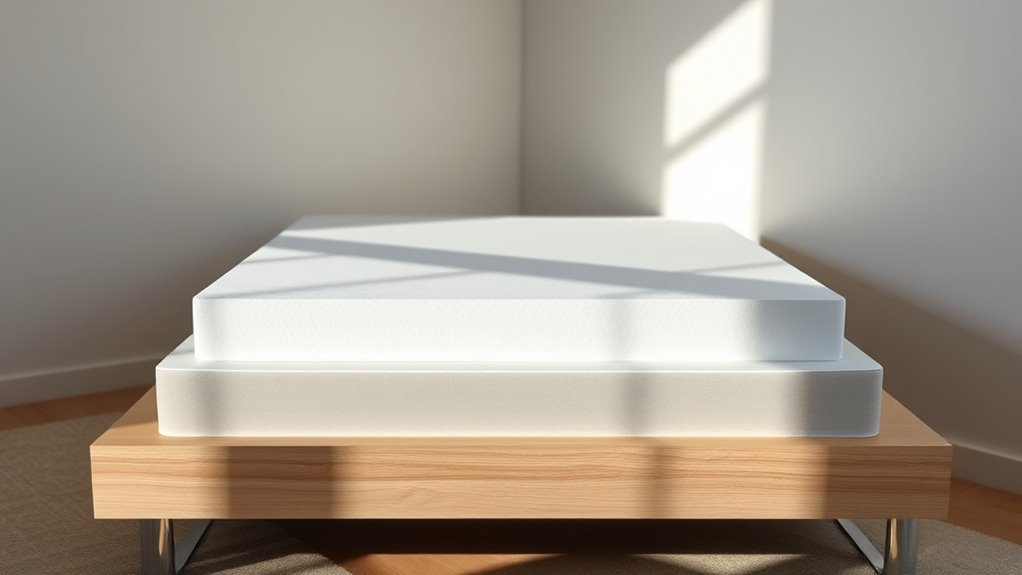
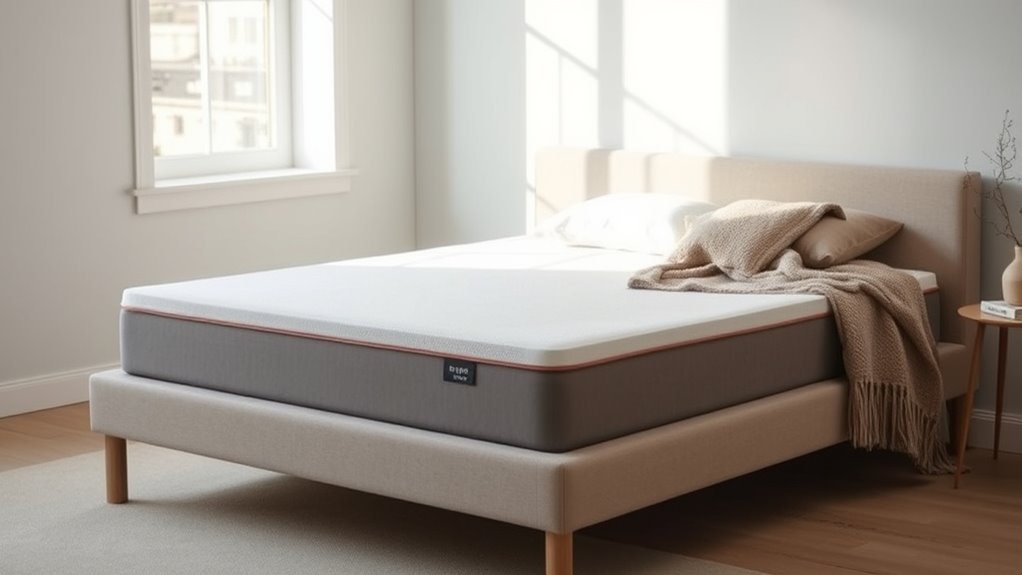
While memory foam mattresses don’t usually need a boxspring, you’ll want to place them on a firm, flat surface like a platform bed or adjustable base to keep them supported properly. Memory foam relies on a solid support system to prevent sagging and maintain its shape.
Platform beds with closely spaced slats—no more than 4 inches apart—provide the ideal foundation. This level of support not only enhances comfort but also helps preserve your mattress’s warranty.
Avoid flexible coil boxsprings or foundations with wide slats, as they can cause premature damage. Because memory foam conforms to the surface beneath it, a stable, sturdy base ensures even weight distribution and extends the mattress’s lifespan.
Choosing the right foundation is key to getting the most from your memory foam mattress. So, take your time picking the best support for your bed—it really makes a difference!
Bed Frame Options Compatible With Memory Foam Mattresses
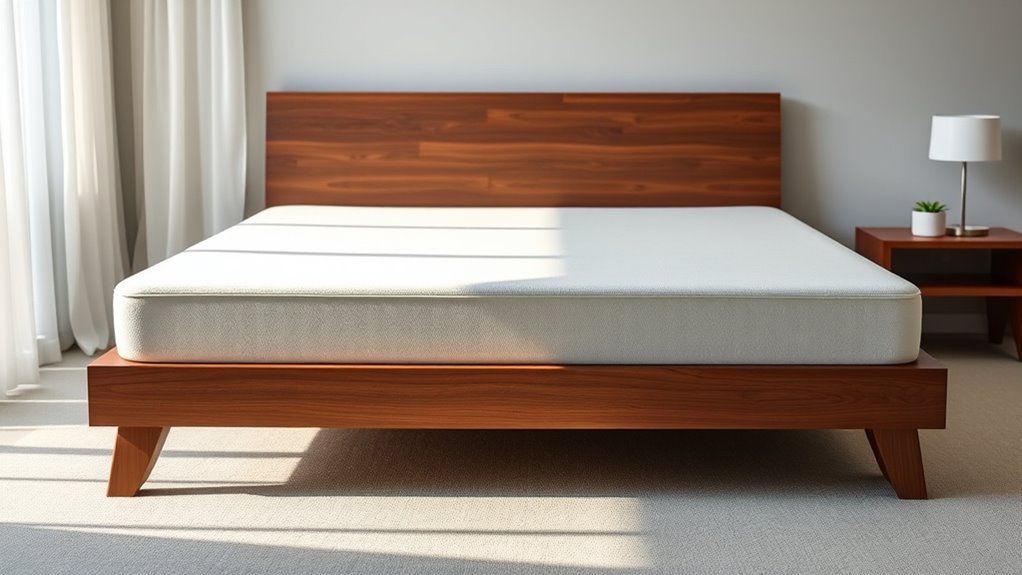
When choosing a bed frame for your memory foam mattress, you’ll want to think about platform beds and slat foundations. Platform beds offer a solid, even surface that supports your mattress without needing a box spring.
If you go with slats, make sure they’re no more than four inches apart to keep your mattress in great shape. This spacing helps your mattress stay supported evenly and last longer.
Platform Bed Benefits
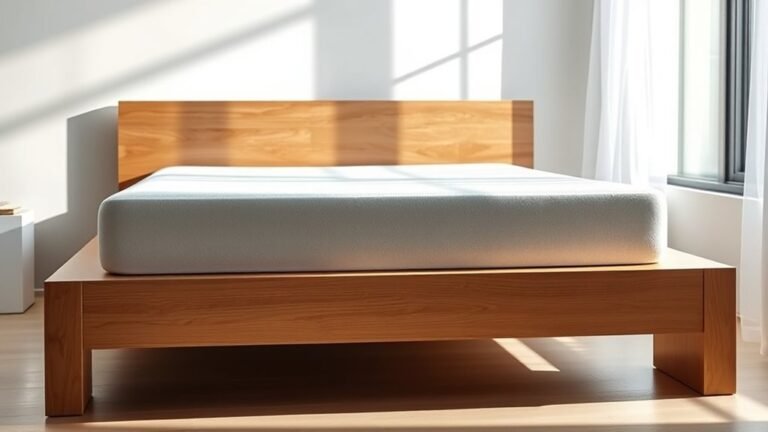
How do you guarantee your memory foam mattress gets the support it needs without extra hassle? Choosing a platform bed offers a solid surface that perfectly supports your mattress, eliminating the need for a boxspring.
These supportive platform frames provide a flat surface that evenly distributes weight, preventing sagging and prolonging your mattress’s life. A platform bed acts as a reliable mattress foundation, ensuring firm mattress support while simplifying setup.
With many models featuring low-profile designs, they not only support your mattress effectively but also promote a sleek, minimalist look. By using a platform bed, you get the mattress support you need with fewer components, making it easier to maintain comfort and durability throughout the years.
Slat Foundation Guidelines
To guarantee your memory foam mattress stays comfortable and durable, you need a slat foundation with slats spaced no more than 3 to 4 inches apart. Proper slats spacing is essential for consistent memory foam support and prevents sagging.
Foundation guidelines recommend using a support system with at least five slats, as fewer can reduce your mattress’s support lifespan. Metal slats generally provide more rigid support than wooden slats, enhancing durability.
However, both materials work well if the spacing and number of slats meet manufacturer requirements. Following these foundation guidelines ensures your mattress maintains its shape, comfort, and warranty.
Choosing the right slat foundation means you’ll protect your investment and enjoy ideal memory foam support for years to come.
When a Box Spring Is Necessary for Your Mattress
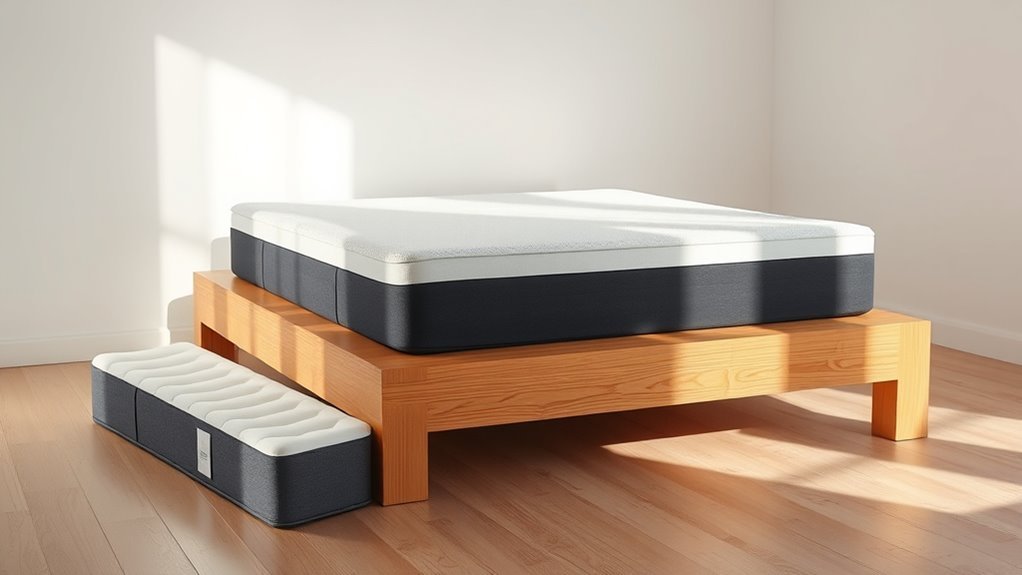
Although most memory foam mattresses don’t need a box spring, you’ll want to check your mattress’s support requirements carefully. If your bed frame or slat foundation doesn’t offer firm, even support—like slats spaced more than four inches apart—a box spring might be necessary to prevent sagging.
Traditional innerspring mattresses almost always require a box spring, but memory foam is different. Many memory foam manufacturers recommend avoiding box springs altogether because improper foundations can reduce mattress lifespan.
If you lack a sturdy platform bed or a reinforced slat foundation, using a box spring designed to provide consistent support can help. Always follow your mattress’s guidelines to ensure proper support, as a solid foundation is key to maintaining comfort and durability in your memory foam mattress.
Advantages of Using Platform and Adjustable Bed Frames
You’ll find that platform beds give your memory foam mattress solid, even support without needing a boxspring. Adjustable frames let you customize your sleeping position while providing direct support to the mattress.
Both options improve airflow and help keep your mattress in great shape longer. So, if you want a bed that’s both comfortable and durable, these frames are definitely worth considering!
Platform Bed Benefits
When you choose a platform bed, you get a flat, firm surface that supports your memory foam mattress perfectly without needing a boxspring. This type of mattress foundation offers solid bases or slats that evenly support the mattress and prevent sagging, extending its lifespan.
A platform bed provides an effective alternative support to the traditional support of a box, eliminating the extra bulk and cost. Plus, it allows for better airflow underneath, which helps regulate temperature and reduce moisture buildup.
Beyond functionality, platform beds often feature a low-profile, minimalist design that can make getting in and out of bed easier. Overall, platform bed foundations combine durability, breathability, and style, making them an excellent choice for memory foam mattress owners seeking reliable, boxspring-free support.
Adjustable Frame Features
Platform beds offer sturdy, flat support for your memory foam mattress, but adjustable frames take that support a step further by letting you customize your sleeping position. An adjustable frame is designed specifically for foam mattresses, providing even support that prevents sagging and extends mattress life.
With motorized components, you can smoothly elevate the head or foot of your bed, easing pressure points and enhancing comfort. This flexibility also improves airflow and temperature regulation, helping you sleep cooler and more comfortably.
Unlike traditional box springs, adjustable frames eliminate the need for extra foundations while offering health benefits by supporting your body in various positions. So, if you want tailored support and better sleep quality, an adjustable frame is a smart choice for your memory foam mattress.
Signs You Should Replace Your Box Spring
Although box springs often go unnoticed, they play a crucial role in supporting your mattress and ensuring a comfortable night’s sleep. You should consider replacement if you notice sagging, soft spots, or any structural damage like warping that compromises support.
Box springs are essential for mattress support; replace them if you see sagging, soft spots, or warping.
Uneven sleeping surfaces caused by a failing box spring can lead to discomfort and restless nights. If your box spring makes excessive squeaking or creaking sounds, internal wear is likely affecting its stability.
Over time, general wear and tear weaken the foundation, making it less effective. Additionally, upgrading to a new mattress or adjustable base may require replacing your box spring to maintain proper support.
Paying attention to these signs ensures your mattress performs well and your sleep remains undisturbed. So, keep an eye out and don’t hesitate to replace your box spring when needed!
Choosing the Right Foundation for Mattress Longevity
Replacing your box spring is just one step toward maintaining a healthy sleep setup. To guarantee mattress longevity, you need to choose the right foundation.
Memory foam mattresses perform best on firm, flat surfaces like platform beds or slatted bases with slats spaced no more than 4 inches apart. This foundation support prevents sagging and helps maintain the mattress’s shape.
Using an incompatible foundation type can void your warranty and shorten your mattress’s lifespan. So, make sure your bed frame provides a supportive foundation that evenly supports the mattress.
Solid foundations or adjustable bases also offer excellent foundation compatibility. By selecting the proper foundation type and bed frame, you’ll extend your mattress’s durability and enjoy better sleep quality for years to come.
Frequently Asked Questions
Why Are People No Longer Buying Memory Foam Mattresses?
You’re seeing fewer memory foam mattress buyers because alternatives offer better cooling, affordability, or durability.
Plus, some prefer innerspring or hybrid options for bounce and support, making memory foam less appealing for certain sleep preferences.
What Is the Best Thing to Put Under a Memory Foam Mattress?
Think of a memory foam mattress as a delicate flower—it thrives on a firm, flat platform or slatted foundation with slats no wider than 3-4 inches.
This sturdy base supports and preserves your mattress’s comfort and lifespan.
Is There a Memory Foam Mattress That Doesn’t Require a Box Spring?
Yes, many memory foam mattresses don’t need a box spring. You can place them on platform beds, slatted foundations, or adjustable bases.
Just make sure you check the manufacturer’s guidelines to guarantee proper support. This way, you’ll keep your mattress in great shape and enjoy a good night’s sleep.
Can I Use a Regular Box Spring With a Memory Foam Mattress?
You can use a regular box spring, but you really shouldn’t. It might cause uneven support, which isn’t great for your mattress.
Plus, it could reduce the lifespan of your memory foam mattress and even void the warranty.
A better choice is a firm, flat platform or foundation with closely spaced slats. This kind of base gives your mattress the proper care it needs to last.
Conclusion
You don’t always need a box spring for your memory foam mattress, but choosing the right foundation is vital to avoid sinking into a mattress abyss. Platform and adjustable bed frames often provide the perfect support, enhancing durability and comfort.
If your box spring shows signs of wear, it’s time to swap it out. Remember, the right base can make your mattress last a lifetime, turning every night’s sleep into a cloud-like experience.
In short, while memory foam mattresses don’t require a traditional box spring, selecting a sturdy foundation is key. Whether it’s a platform bed, adjustable frame, or a new box spring, proper support prevents sagging and prolongs mattress life. So, invest in the right base to enjoy the full comfort and benefits of your memory foam mattress every night.