Does a Memory Foam Mattress Cause Back Pain and How to Avoid It?
A memory foam mattress can cause back pain if it’s too soft, too firm, or doesn’t match your body weight and sleep position. Finding the right memory foam mattress that supports your spine is key to avoiding discomfort.
Many people wonder, “Does a memory foam mattress cause back pain?” The answer depends on the mattress’s firmness and how well it suits your sleeping style.
You can avoid discomfort by choosing a mattress with balanced firmness and density that supports your natural spine alignment—medium-firm for back sleepers, firmer for stomach sleepers, and softer for side sleepers.
Give your body time to adjust and use a proper foundation. Keep exploring to find the best fit for lasting back comfort.
Key Takeaways
- Memory foam can cause back pain if it’s too soft, leading to sinking and spinal misalignment.
- So, it’s really important to pick the right firmness that suits your sleep position and body weight for proper support.
- For heavier individuals, mattresses made with high-density foam (≥70kg/m³) and those that are medium-firm to firm tend to work better.
- Also, give yourself some time—about 30 to 60 days—to get used to a new memory foam mattress before deciding if it’s causing discomfort.
- And if memory foam keeps giving you back pain, you might want to try a hybrid or natural latex mattress instead.
How Memory Foam Affects Back Health
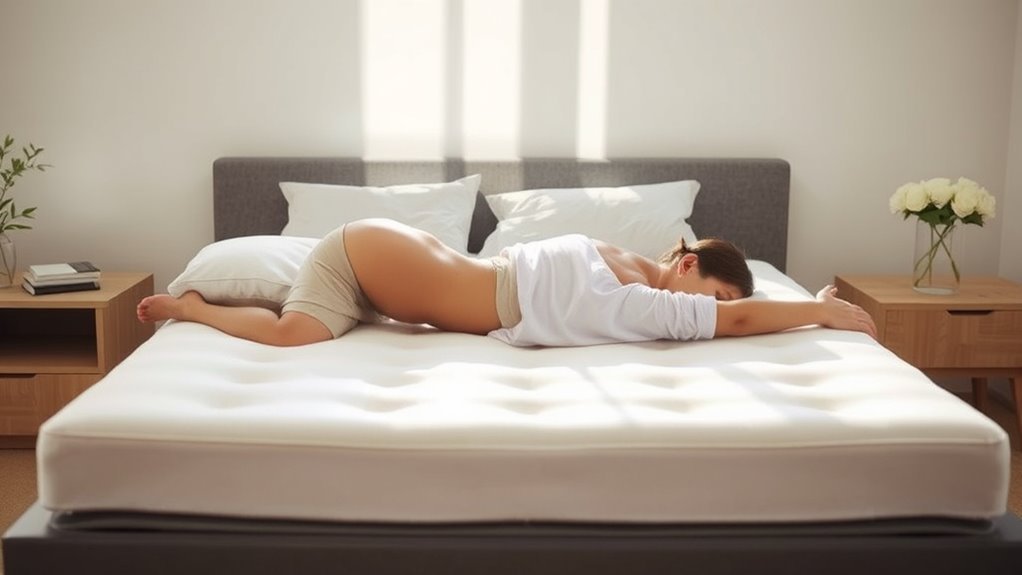
While memory foam can support your spine’s natural curves when it has the right firmness and density, it can also cause back pain if it sinks too much or feels too soft or too firm. The key to good back health lies in proper spinal alignment, which depends on mattress firmness matching your body weight.
Memory foam offers excellent pressure relief by contouring to your shape, but if the foam is too soft, your spine may sag, causing back discomfort. On the other hand, overly firm memory foam may fail to cushion pressure points, leading to similar issues.
Additionally, a weak support system beneath the memory foam can worsen sinking and misalignment. Choosing the right memory foam mattress firmness ensures balanced support and helps prevent back pain effectively.
Common Causes of Back Pain From Memory Foam Mattresses

If your memory foam mattress isn’t providing proper support, you might experience back pain due to spinal misalignment. One common cause is a support layer that’s too soft, allowing your body to sink excessively and fail to support your body’s natural curves.
Over time, low-density foam or worn-out materials can lead to sagging, creating poor support and resulting in back discomfort. Additionally, firmness levels that don’t align with your body weight or sleep position can disrupt spinal alignment.
Even if the mattress feels comfortable initially, an inadequate support system beneath it can worsen sagging and back pain. So, making sure your mattress maintains proper support is essential to avoid these issues and keep your spine healthy throughout the night.
Choosing the Right Firmness and Support for Your Body

Addressing back pain from a memory foam mattress starts with choosing the right firmness and support tailored to your body. Your firmness level should match your sleep position and body type to maintain proper spinal alignment.
Finding the right firmness for your sleep style is key to easing back pain and supporting your spine.
If you’re a back sleeper, a medium-firm mattress usually provides balanced support and comfort layers. Meanwhile, stomach sleepers benefit from firmer surfaces to avoid sagging.
Side sleepers need softer, contouring comfort layers that relieve pressure points around shoulders and hips without sacrificing support. Heavier individuals over 200 lbs generally require firmer support layers and higher foam density (around 70kg/m³ or more) to prevent excessive sinking.
Picking the right combination of foam density, support layers, and comfort layers based on your sleep needs really helps reduce back pain and improves overall sleep quality. It’s all about what fits your body best!
Tips for Adjusting to a New Memory Foam Mattress
Getting used to a new memory foam mattress can take time, so give yourself at least 30 to 60 days to fully adjust. During this break-in period, your body will adapt to the mattress’s unique firmness and contouring support.
Try experimenting with different sleep positions and pillow heights to find what best relieves pressure points and enhances comfort. It’s all about figuring out what works best for you.
Make sure your foundation provides proper support. An inadequate base can increase discomfort and delay your adjustment.
You might want to incorporate gentle stretching or spinal decompression exercises each morning to ease stiffness and support your body’s shift. It really helps to wake up feeling better.
Alternatives and Solutions for Back Pain Relief
While memory foam mattresses offer unique contouring support, you might find that alternatives like pocket spring or hybrid mattresses provide quicker relief from back pain.
Natural latex and hybrid mattresses combine support, pressure relief, and temperature regulation. This reduces heat retention and promotes breathability.
Adjustable tension in two-sided pocket springs adapts to your body, enhancing back pain relief. Plus, moisture-wicking natural fibers like mohair improve comfort and cooling.
| Mattress Type | Key Features | Benefits for Back Pain Relief |
|---|---|---|
| Pocket Spring | Adjustable tension, natural fibers | Instant support, temperature regulation |
| Natural Latex | Quick pressure response, airflow | Enhanced support, prevents overheating |
| Hybrid Mattresses | Combination of springs & latex | Balanced support, moisture-wicking |
| Natural Fibers | Mohair, hemp, wool | Improved breathability, reduces discomfort |
Frequently Asked Questions
Why Are People No Longer Buying Memory Foam Mattresses?
You’re no longer buying memory foam mattresses because they trap heat, sag over time, and limit movement.
You want better support and breathability, so you’re choosing alternatives like latex or pocket springs for cooler, more comfortable sleep.
Why Does My Back Hurt After Sleeping on Memory Foam?
Your back’s like a boat on soft waves; if the memory foam’s too soft or uneven, it lets your spine sag, causing pain.
You’ll want firmer support and time to adjust for smoother sailing each night.
Who Should Not Use a Memory Foam Mattress?
You shouldn’t use a memory foam mattress if you need firm support or have spinal issues.
Also, if you tend to overheat easily or dislike the slow response of the mattress, it might not be the best choice for you.
Plus, if you’re allergic to foam materials, it’s definitely a no-go. Otherwise, it could end up making your discomfort worse instead of helping you sleep better.
Do Chiropractors Recommend Memory Foam Mattresses?
Imagine your spine as a well-tuned guitar—chiropractors do recommend memory foam mattresses because they help keep your strings aligned.
But you’ve got to choose one with the right support to avoid any discord in your back.
Conclusion
If you’ve ever wondered whether a memory foam mattress causes back pain, remember: it’s not the mattress alone but how it supports *your* unique body. Like a tailor-made suit, the right firmness and proper adjustment can make all the difference.
Don’t let discomfort steal your rest—listen to your body and choose wisely. After all, a good night’s sleep is the foundation upon which your health is built.
When selecting a memory foam mattress, consider your sleeping position and personal preferences to avoid back pain. Proper support and alignment are key to preventing discomfort. So, take your time and find a mattress that cradles your spine correctly.
By understanding how a memory foam mattress interacts with your body, you can enjoy restful nights without back pain. Choosing the right mattress helps maintain healthy posture and promotes overall well-being. Remember, avoiding back pain starts with smart mattress choices that prioritize support and comfort.