Do Memory Foam Mattresses Require Box Springs for Support?
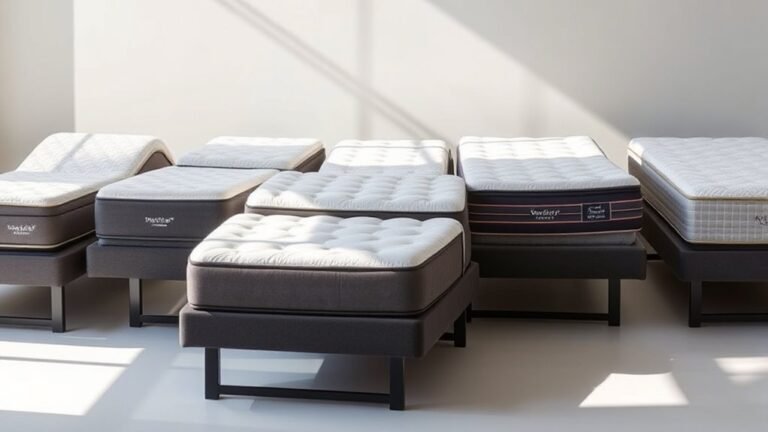
You don’t have to use a box spring with your memory foam mattress—in fact, it often isn’t recommended. Memory foam mattresses need a firm, flat surface for proper support, which helps them last longer and stay comfortable.
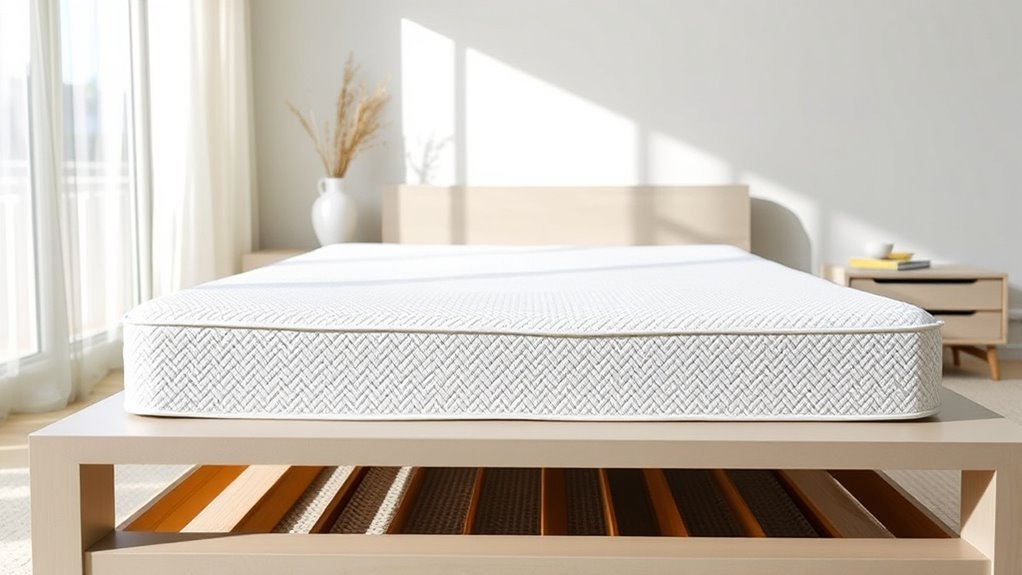
Using a solid platform or a sturdy slatted foundation with tight spacing usually works best.
Box springs can sometimes cause sagging or uneven support, which isn’t ideal for memory foam. If you want to explore the best options for your mattress setup, keep going to learn more.
We’ll help you find the perfect foundation to keep your memory foam mattress in great shape.
Key Takeaways
- Memory foam mattresses typically do not require box springs and can be placed on solid platforms or slatted foundations.
- A firm, flat surface with slats spaced ≤4 inches provides proper support and prevents sagging for memory foam mattresses.
- Box springs are only needed if the bed frame lacks sufficient support or has widely spaced slats.
- Using an incompatible box spring may cause sagging, reduce mattress lifespan, and interfere with foam contouring.
- Manufacturer guidelines should be followed to ensure the correct support system and maintain warranty validity.
Understanding Memory Foam Mattress Support Requirements
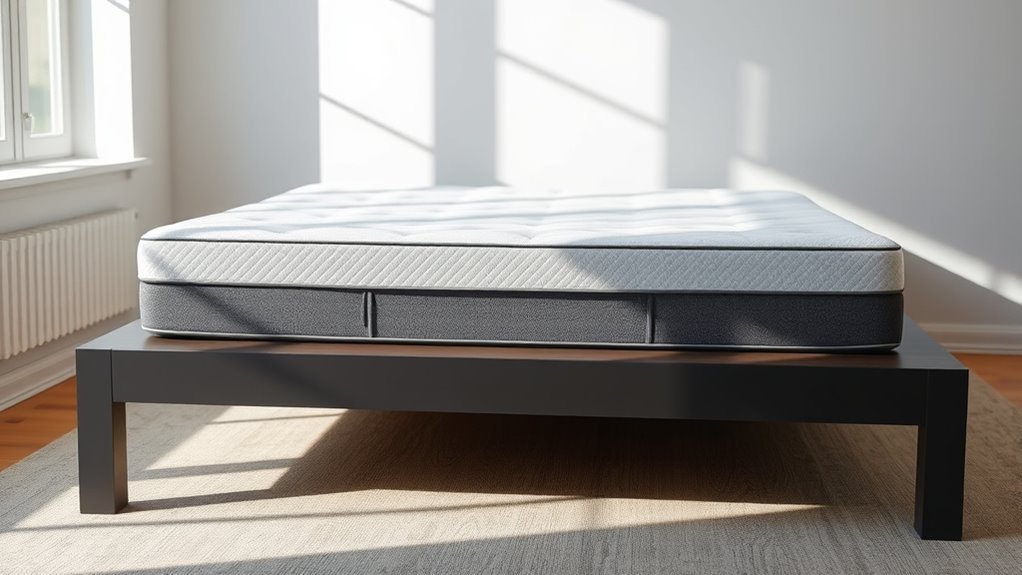
Although memory foam mattresses offer excellent comfort, they need a firm, flat support surface to keep their shape and prevent sagging. You don’t always need a traditional box spring, but your support system must provide solid support to maintain the mattress’s integrity.
Options like a platform bed or a sturdy foundation can give the mattress the support it requires. When choosing support for your mattress, make sure it can handle the mattress’s weight and construction to avoid damage and preserve comfort.
Proper mattress support also helps maintain spinal alignment and reduces pressure points while you sleep. Using a flimsy or incompatible base might void your warranty and shorten your mattress’s lifespan, so it’s best to pick a support system designed specifically for memory foam mattresses.
Bed Frame Options Compatible With Memory Foam Mattresses
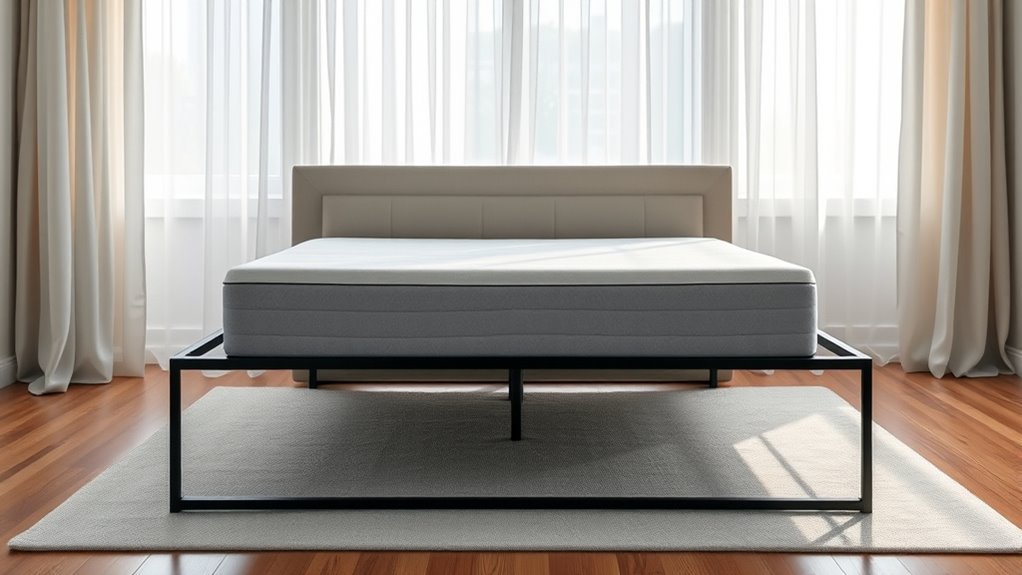
When you choose a bed frame for your memory foam mattress, it’s important to pick one that provides firm, even support and proper ventilation. Not all bed frames offer the compatibility needed for memory foam mattresses, so focus on options that create a solid foundation without causing sagging or damage.
Think about these bed frame options for maximum support:
Consider platform beds, closely spaced slats, adjustable bases, and metal frames for optimal memory foam mattress support.
- Platform beds with a solid surface that evenly supports the mattress
- Slat foundations with slats spaced no more than four inches apart
- Adjustable bases that allow customizable positioning and excellent support
- Metal frames featuring closely spaced slats, avoiding traditional box spring setups
Try to avoid traditional box springs unless specifically recommended, as they often lack the necessary firmness. Choosing the right bed frame helps your memory foam mattress perform well and last longer.
When a Box Spring May Be Necessary
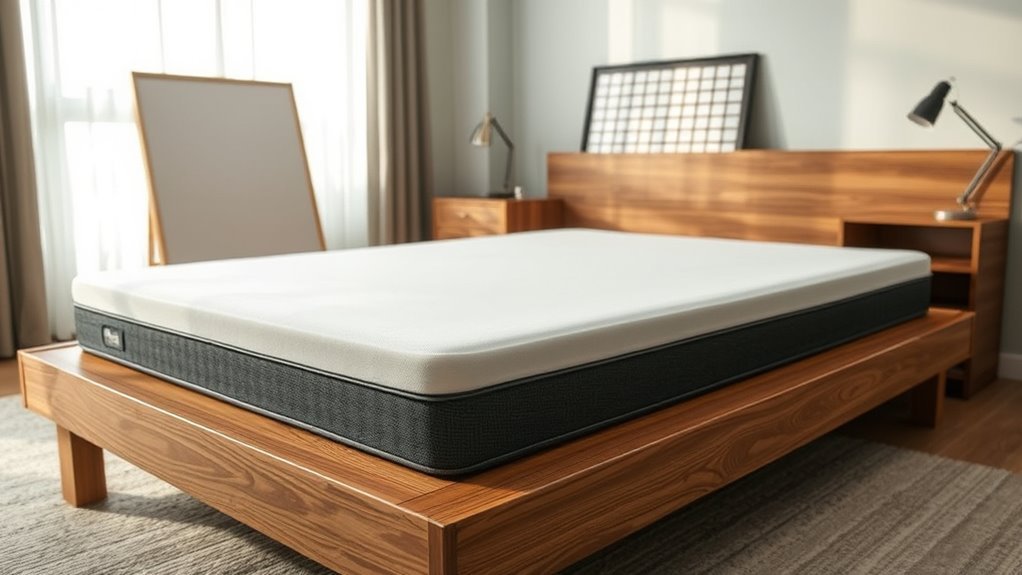
Even though memory foam mattresses usually don’t need box springs, you might find one necessary if your bed frame lacks proper support.
If your bed frame is designed for traditional innerspring mattresses, it may require a box spring or foundation to adequately support the mattress.
Also, if your bed frame has slats spaced more than four inches apart or is a collapsible metal frame without internal support, a box spring can help prevent sagging and support your body properly.
Using a box spring in these cases guarantees you support your mattress correctly, maintaining its longevity and comfort.
Always check the manufacturer’s guidelines to confirm whether your specific memory foam mattress needs a box spring to provide the necessary support and stability.
Benefits of Platform Beds and Slatted Foundations
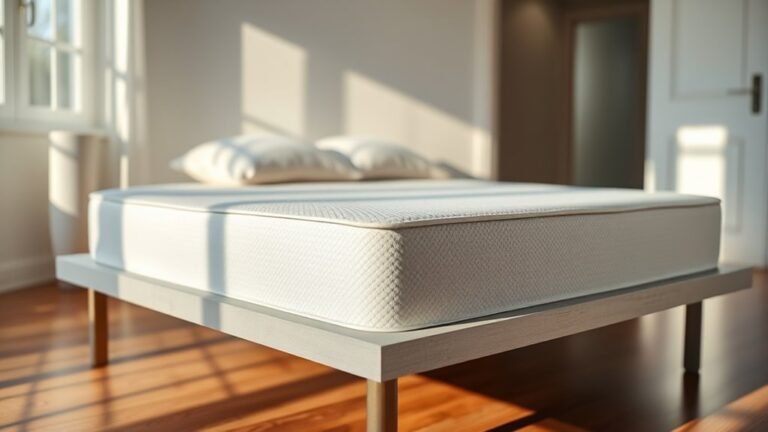
If your bed frame doesn’t provide proper support, a box spring can help, but opting for a platform bed or a slatted foundation might be an even better choice. Platform beds offer a solid, flat surface that evenly supports your memory foam mattress, while slatted foundations use closely spaced slats to balance support and airflow.
These foundation types prevent sagging, extending your mattress lifespan and maintaining comfort. So, it’s a win-win!
Choosing the right foundation type benefits you by:
- Providing consistent, proper support to avoid mattress dips
- Enhancing airflow to regulate temperature and reduce moisture
- Preventing sagging that can damage memory foam
- Increasing mattress lifespan through even weight distribution
Both platform beds and slatted foundations are excellent options for maintaining your mattress’s integrity. Trust me, your mattress will thank you!
Adjustable Bases and Their Role in Mattress Support
You can often skip the box spring when using an adjustable base, as it provides firm, even support directly to your memory foam mattress. Many memory foam models work well with adjustable bases, but it’s important to check manufacturer recommendations for compatibility.
Adjustable Base Compatibility
When choosing a memory foam mattress, understanding its compatibility with an adjustable base is essential because adjustable bases support the mattress directly without needing a traditional box spring. Not all memory foam mattresses are designed for adjustable bases, so checking manufacturer guidelines guarantees proper support and durability.
An adjustable base provides a firm, solid surface, offering better support than traditional box springs. Plus, its customizable positions enhance comfort without compromising the mattress’s integrity.
Consider these points about adjustable base compatibility:
- Adjustable bases eliminate the need for traditional box springs.
- They offer a stable, even support surface for memory foam mattresses.
- Compatibility depends on the mattress design; always verify before purchase.
- Customizable head and foot settings improve comfort while maintaining support.
Benefits for Memory Foam
Although memory foam mattresses offer excellent comfort on their own, pairing them with an adjustable base considerably enhances their support and functionality. Unlike a traditional box spring, an adjustable base provides firm, even support tailored to your body’s needs, reducing pressure points and improving overall comfort.
This mattress foundation’s compatibility with memory foam ensures maximum stability and flexibility, preventing sagging and extending the mattress’s lifespan. By allowing you to customize head and foot positions, an adjustable base addresses health concerns like acid reflux and sleep apnea while promoting better sleep posture.
Plus, it improves airflow around the mattress, aiding temperature regulation and minimizing heat retention. Choosing an adjustable base over a traditional box spring really elevates your memory foam mattress’s performance and support.
Support Without Box Springs
Since adjustable bases directly support memory foam mattresses, they eliminate the need for traditional box springs. You can enjoy mattress support without box springs by opting for an adjustable base, which serves as a versatile bed foundation.
These bases offer customizable height and angle adjustments, enhancing comfort while maintaining proper support. To ensure mattress compatibility, always check manufacturer guidelines before pairing your memory foam mattress with an adjustable base.
Benefits of using an adjustable base include direct mattress support without a traditional box spring and improved airflow around the mattress for better cooling. Plus, you get enhanced comfort through adjustable positions and compatibility with many memory foam mattress models.
Choosing the right adjustable base guarantees excellent mattress support and prolongs the life of your memory foam mattress. It’s a smart move for both comfort and durability.
Signs It’s Time to Replace Your Box Spring
If you notice your bed creaking, sagging, or showing soft spots, it’s a clear sign your box spring needs replacing. Sagging and soft spots in the support system reduce the foundation’s ability to provide proper support, affecting your mattress’s comfort and durability.
Structural damage or broken internal components also indicate that replacement is necessary to maintain a stable foundation. Over time, wear takes its toll—especially after 8 to 10 years—so even if no visible damage appears, the support system may no longer offer adequate firmness.
If your mattress feels uneven or the foundation fails to keep the proper height, it’s time to upgrade. Ensuring your box spring provides consistent support prevents mattress sagging and extends the life of your sleep setup.
Frequently Asked Questions
Why Are People No Longer Buying Memory Foam Mattresses?
You’re not buying memory foam mattresses as much because newer options offer better airflow, cooling, and support.
Plus, some find them too soft or warm, so you’re choosing alternatives that match your comfort and temperature needs better.
Do I Need a Boxspring if I Have a Memory Foam Mattress?
You don’t need a box spring for your memory foam mattress—over 70% of owners use platform beds instead.
Just make certain your support is firm and flat, with slats no wider than 4 inches to keep it comfy and durable.
That way, your mattress will last longer and feel great every night.
What Is the Best Thing to Put Under a Memory Foam Mattress?
The best thing to put under your memory foam mattress is a solid platform or a foundation with slats less than four inches apart. Adjustable bases and bunkie boards work well, providing firm, even support to keep your mattress durable and comfy.
You want something that gives your mattress a strong, steady base. This helps it last longer and feel just right every night. So, think about what kind of support will keep your bed cozy and in great shape!
Is There a Memory Foam Mattress That Doesn’t Require a Box Spring?
Imagine you buy a Casper memory foam mattress—it doesn’t need a box spring. You can place it on a solid platform or slatted base with close slats, and it’ll support you perfectly without extra foundation.
It’s super convenient, right? No need to fuss with an extra layer underneath. Just set it up, and you’re good to go!
Conclusion
You don’t always need a box spring for your memory foam mattress, but you do need proper support. Whether you choose a platform bed, slatted foundation, or adjustable base, make sure it’s sturdy, flat, and well-ventilated.
You want comfort, durability, and stability. So, check your setup and replace worn-out box springs if necessary. Giving your mattress the right foundation helps maintain its shape and longevity.
In the end, memory foam mattresses don’t require traditional box springs, but they do need a supportive and breathable base. A good foundation ensures your mattress stays comfortable and durable for years to come. So, whether it’s a platform bed or slatted frame, prioritize stable support to keep you sleeping soundly every night. Proper support is key to enjoying the full benefits of your memory foam mattress.