Do Carpet Beetles Bite Humans and How Can You Prevent It?
Carpet beetles don’t actually bite humans, but their larvae can cause itchy, red skin irritation. This happens because the tiny hairs on the larvae can trigger allergic reactions in some people.
So, while you won’t get bitten, you might still experience some discomfort if you come into contact with them.
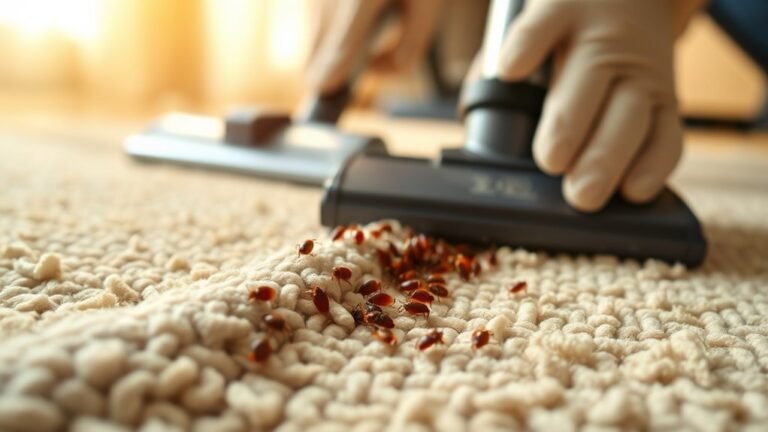
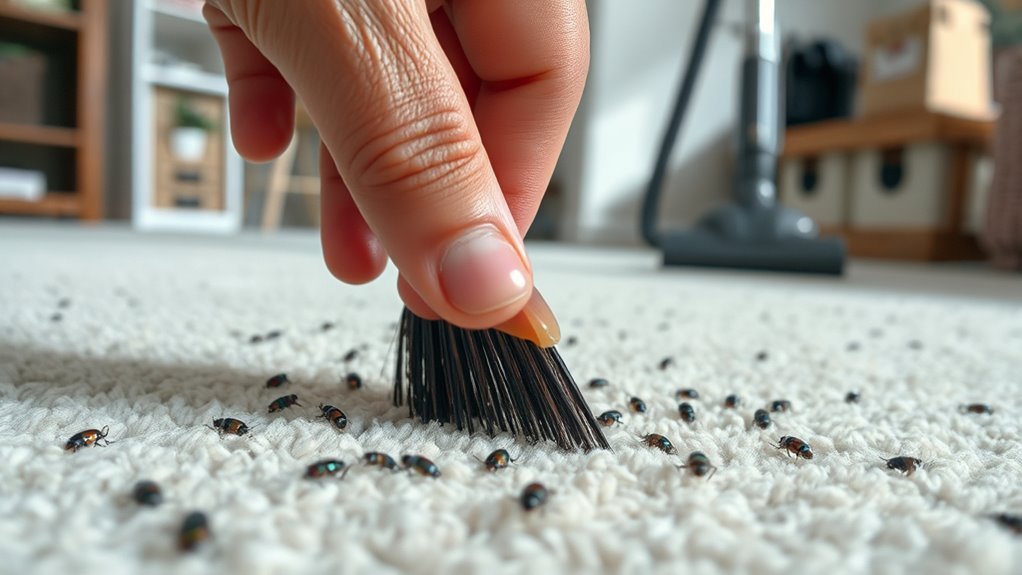
To keep these pests at bay, it’s important to maintain a clean home. Vacuum regularly to remove larvae and eggs from carpets and floors. Also, store natural fiber items like wool and silk in airtight containers to protect them.
Reducing clutter gives larvae fewer places to hide, making it easier to spot and tackle infestations early. Don’t forget to check dark corners and clean upholstery often.
If you want to learn how to identify signs of carpet beetles and deal with them effectively, there’s plenty more helpful info ahead!
Key Takeaways
- Carpet beetles do not bite humans. The skin irritation you might notice is actually caused by allergic reactions to the hairs on their larvae, not from bites.
- These tiny hairs can embed in your skin and cause dermatitis. That means you might see red, itchy bumps and welts—but these aren’t from any puncture wounds or bites.
- To prevent irritation, try to avoid contact with the larvae as much as possible. It also helps to clean your carpets, upholstery, and storage areas regularly.
- Keep an eye out for signs like larvae, shed skins, or damage to your textiles. Vacuum frequently and store natural fibers in airtight containers to keep these pests at bay.
- If you’re still dealing with infestations or skin reactions even after cleaning, consider using natural repellents. And if that doesn’t do the trick, professional pest control services can help.
Understanding Carpet Beetles and Their Behavior
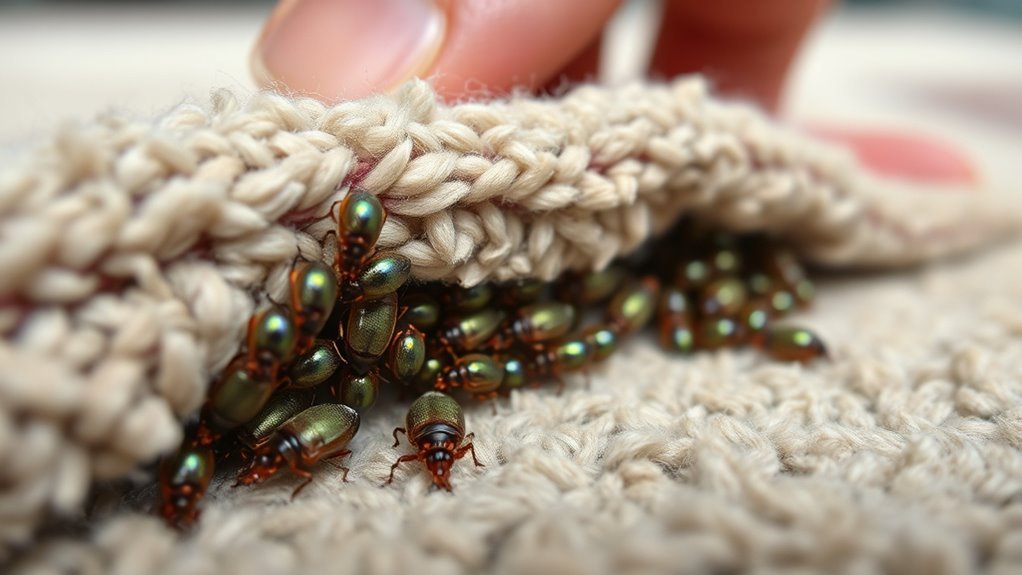
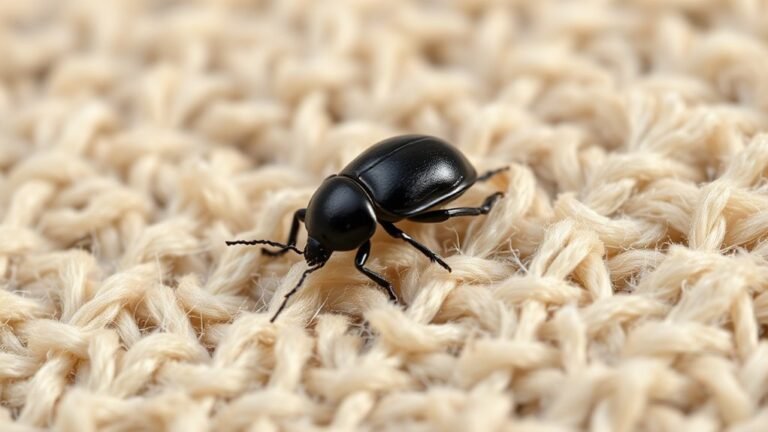
Although adult carpet beetles might catch your eye as they flutter near lights, they don’t bite or feed on human skin. Instead, adult beetles are attracted to light and primarily feed on pollen, avoiding humans altogether.
The real concern is the larvae, which feed on natural fibers like wool, silk, and fur. These larvae cause damage by chewing through household textiles, leading to an infestation.
While carpet beetles don’t bite, you might experience skin irritation if you come into contact with larvae hairs, which can cause allergic reactions. Understanding this difference is key to proper pest control.
The Truth About Carpet Beetle Bites
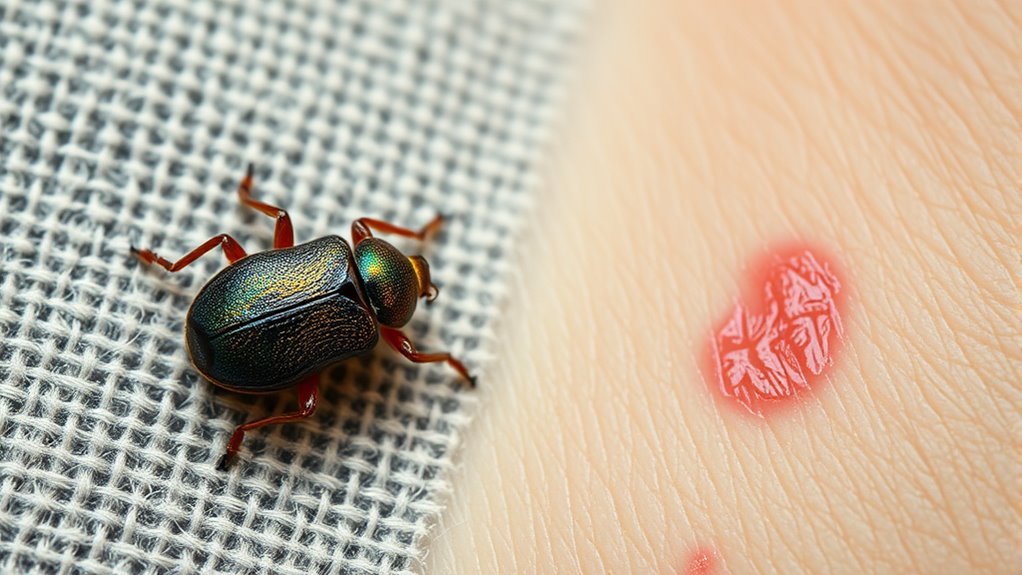
How can you tell if those itchy spots are from carpet beetles? The truth is, carpet beetles don’t bite humans. Instead, their larvae’s tiny hairs cause skin irritation and allergic reactions.
If you see bites or wounds, other pests like bed bugs are likely culprits. To help you differentiate, here’s a quick guide:
| Symptom Type | Likely Cause |
|---|---|
| Itchy red bumps | Allergic reaction to larvae hairs |
| Visible bite marks | Other pests (e.g., bed bugs) |
| Skin welts | Allergic response |
| No blood feeding | Carpet beetles don’t bite |
| Larvae presence | Leads to irritation, not bites |
Controlling larvae populations and avoiding contact with their hairs helps prevent skin irritation. If unsure, get a professional inspection to identify the true cause of your skin issues.
How Carpet Beetle Larvae Cause Skin Irritation
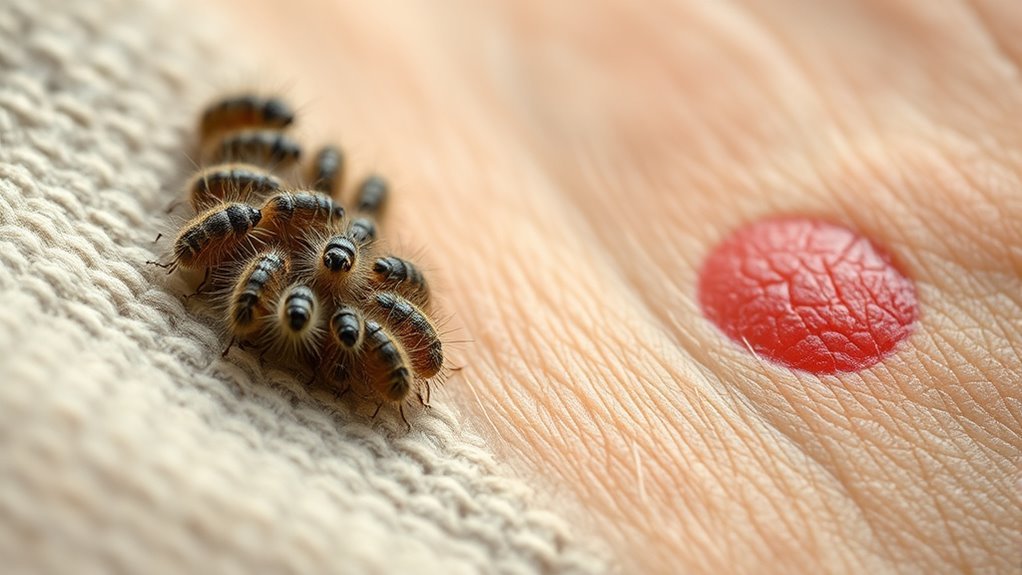
When you come into contact with carpet beetle larvae, their tiny hairs can trigger allergic reactions on your skin. These hairs contain proteins that cause red, itchy welts and dermatitis, even though the larvae don’t bite.
It might sound surprising, but it’s not a bite causing the irritation. The hairs themselves are the culprits. Understanding how these hairs affect you is key to preventing and managing skin irritation.
Allergic Reaction Mechanism
Since carpet beetle larvae don’t bite, you might not expect them to cause skin problems. But their tiny, hair-like bristles can embed in your skin and trigger allergic reactions.
When these allergenic hairs come into contact with your skin, they often cause irritation. This leads to dermatitis, which is characterized by redness, itching, and rash.
These hairs can also become airborne. If you inhale them, it may result in respiratory irritation.
The allergic reaction happens because your immune system treats the proteins in the larvae’s hairs as harmful. This causes inflammation and discomfort.
Repeated exposure makes you more sensitive, so future skin irritation can be worse. Knowing how this allergic reaction works helps you understand why carpet beetle larvae cause those unpleasant symptoms without actually biting you.
Larvae Hair Effects
Although carpet beetle larvae don’t bite, their tiny hairs can still cause significant skin irritation when they come into contact with you. These larvae hairs are easily shed and can become airborne, landing on your skin, clothing, or bedding.
When you experience skin contact with these shed skins and hairs, it can trigger allergic reactions, including dermatitis. This often shows up as red, itchy welts or rashes, which can be quite uncomfortable.
The skin irritation isn’t from bites but from your body’s response to the hairs. If you keep encountering larvae hairs repeatedly, your risk of developing more severe allergic dermatitis increases.
Being aware of these larvae hairs and minimizing exposure helps reduce the chances of skin irritation and allergic reactions caused by carpet beetle larvae. So, it’s a good idea to stay cautious and keep your environment clean.
Identifying Carpet Beetle Rashes Versus Other Pest Bites
You might notice red, itchy bumps after contact with carpet beetle larvae hairs, but these aren’t actual bites since carpet beetles don’t bite humans. Unlike pest bites that leave puncture marks or follow a pattern, these rashes are allergic reactions to the larvae’s hairs.
To tell the difference, check your skin carefully and look for larvae or shed skins in your bedding or clothing. This can help you figure out what’s causing those annoying bumps.
Rash Vs Bite
When you notice itchy red bumps on your skin, it’s important to know whether carpet beetles or other pests caused them. A carpet beetle rash results from an allergic response to larvae hairs, which cause scattered, irregular skin irritation without bite wounds.
Unlike bites from pests such as bed bugs that form patterns or welts, carpet beetles don’t bite, so you won’t see puncture marks. The skin reaction from carpet beetle larvae is a contact allergy rather than a true bite.
To differentiate bites vs rash, look for clustered marks or lines indicating blood-feeding pests, while carpet beetle rash appears as random red dots or bumps. Recognizing these differences helps you address the cause and treat skin irritation effectively.
Larvae Hair Reactions
Since carpet beetle larvae don’t bite, their hairs cause skin irritation by embedding in your skin and triggering allergic reactions. These tiny hairs and shed skins can lead to carpet beetle dermatitis, marked by red, itchy bumps rather than bite marks.
You can identify a carpet beetle rash by noticing random red dots or itchy welts without a bite pattern. Also, finding shed skins or hairs on your clothing or bedding is a good clue.
If you experience persistent skin irritation and allergic reactions after contact, it’s likely due to these larvae. Unlike pests that bite, carpet beetle larvae cause skin irritation solely through contact with their hairs.
Signs of Carpet Beetle Infestation in Your Home
Although carpet beetles are small, their presence can cause significant damage to your home and belongings. Signs of carpet beetle infestation often include tiny, hairy larvae lurking in dark, undisturbed areas like closets or under furniture.
You might notice damage such as holes in clothing, carpets, or upholstery made from natural fibers. Shed skins and tiny brown or black fecal pellets near these items are clear indicators of active infestation.
Holes in natural fiber items, plus shed skins and tiny pellets, signal an active carpet beetle infestation.
Spotting adult beetles, small and oval-shaped with patterns, flying near windows or light fixtures also points to a nearby source. Additionally, unexplained red, itchy welts or dermatitis might mean larvae hairs have caused an allergic reaction.
If you see any of these signs, it’s a good idea to check for carpet beetle activity right away. Don’t wait—catching them early can save your stuff!
Common Areas Where Carpet Beetles Hide
Because carpet beetles thrive in dark, undisturbed spots, you’ll often find them hiding in closets, under furniture, and inside storage boxes filled with natural fibers. They prefer areas where they can stay hidden and feed without disturbance.
The larvae especially seek out cracks and crevices to develop safely.
Common hiding spots include:
- Carpets and rugs, especially in corners and along baseboards
- Natural fiber clothing, wool blankets, and stuffed toys
- Cracks, wall voids, pet bedding, and behind baseboards
These undisturbed areas provide ideal environments for both adult beetles and larvae to remain concealed. Knowing where carpet beetles hide helps you identify potential infestation zones early.
Preventive Measures to Avoid Carpet Beetle Infestation
To keep carpet beetles from invading your home, you need to focus on regular cleaning and proper storage. Preventive measures include vacuuming carpets, upholstery, and closets frequently to remove larvae, eggs, and shed hairs that attract these pests.
Pay special attention to hidden areas like behind furniture and inside storage boxes. For storage, keep natural fiber items such as wool, fur, and silk in airtight containers to block beetle access.
Reducing clutter and maintaining low humidity with good ventilation also help discourage infestation. If you notice signs of carpet beetle damage, don’t hesitate to contact professional pest control services for inspections and treatments.
Taking these steps will effectively minimize the risk of carpet beetle bites and damage in your home. It’s all about staying proactive and keeping your space clean and well-organized.
Effective DIY Methods for Carpet Beetle Control
Maintaining a clean environment and proper storage is just the start when dealing with carpet beetles. For effective carpet beetle control, you can use simple DIY methods that target larvae and eggs, which are vital to infestation prevention.
Here are some practical steps:
- Vacuum carpets, upholstery, and hidden areas regularly to remove larvae, eggs, and adult beetles.
- Apply natural repellents like peppermint or clove oil mixed with water to deter beetles from settling.
- Steam-clean fabrics and carpets at high temperatures to kill larvae and eggs effectively.
When to Seek Professional Pest Control Services
If you keep spotting carpet beetles or notice damage like holes in your fabrics, it’s time to call in professional pest control services. Persistent carpet beetle infestation, visible larvae, or other signs of activity signal that DIY methods might not be enough.
Professionals can accurately identify the extent of the problem and apply targeted treatments for complete eradication. If you experience allergic reactions or skin irritations caused by larvae hairs, prompt professional intervention is essential.
Regular inspections by experts help prevent recurrence, especially if you’re frequently exposed to natural fibers or had previous infestations. By relying on professional pest control, you ensure effective, lasting solutions that protect your home and health from these destructive pests.
Frequently Asked Questions
Do Carpet Beetles Bite?
No, carpet beetles don’t bite you. You might get skin irritation from their larvae’s hairs, but it’s not a bite.
To avoid problems, keep your home clean and store natural fibers properly. That way, you can steer clear of any issues.
Do Carpet Beetles Ever Go Away?
Yes, carpet beetles can go away if you remove their food sources and clean regularly.
You’ll need to store natural fibers properly and might have to call pest control to fully break their life cycle and prevent return.
Will Carpet Beetles Lay Eggs in Your Hair?
No, carpet beetles won’t lay eggs in your hair. They prefer dark, undisturbed places with natural fibers like wool.
To avoid infestations, keep your home clean and store fabrics properly. This helps prevent larvae from settling nearby.
Why Attract Carpet Beetles?
You attract carpet beetles because they love natural fibers like wool and silk you have around. They’re drawn to cluttered, undisturbed areas with pet hair or lint.
Keeping things clean and stored properly helps stop them. It’s really about cutting off what they like to eat and where they like to hide.
Conclusion
Now that you know carpet beetles don’t actually bite but their larvae can cause itchy skin irritation, it’s easier to protect yourself. Imagine Sarah, who noticed red, itchy spots after finding larvae in her closet.
Once she cleaned thoroughly and used preventive sprays, the irritation stopped. By regularly checking common hiding spots and taking quick action, you can keep your home pest-free and avoid discomfort.
Don’t wait—start carpet beetle prevention today! Regular cleaning, vacuuming, and using insecticides can help keep these pests at bay. Keeping your home free of carpet beetle larvae means no more itchy bites or skin irritation. Taking these simple steps protects you and your family from carpet beetle larvae problems before they start.