
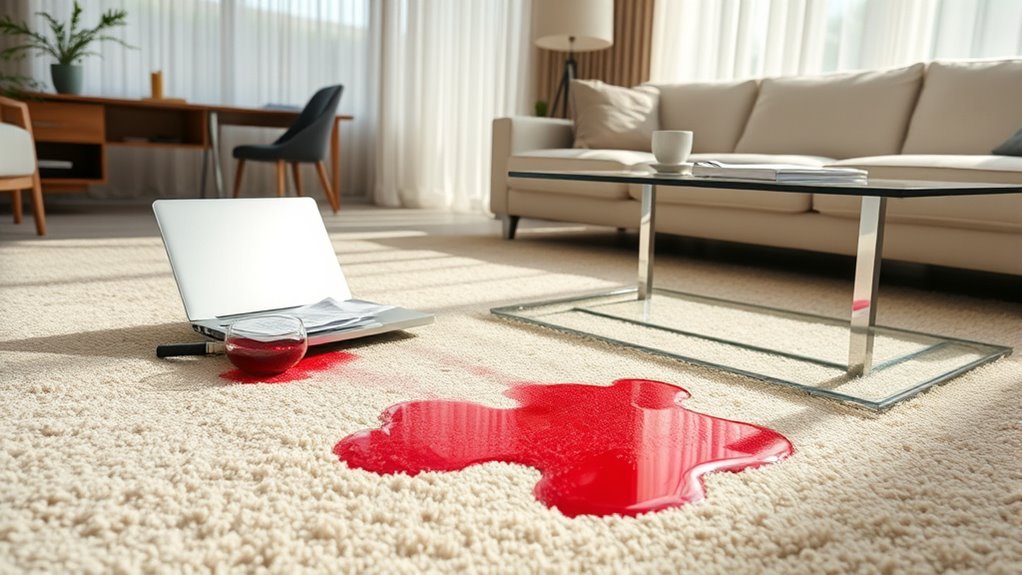
Does Renters Insurance Cover Carpet Damage?
You can rely on renters insurance to cover carpet damage caused by sudden events like fire, water leaks, or vandalism. These unexpected incidents are generally covered because they are considered accidental and out of your control.
However, it’s important to know what’s not covered. Renters insurance won’t cover normal wear and tear, neglect, or damage from poor maintenance. So, if your carpet looks worn out simply because of age or lack of cleaning, you’re likely on your own.
Pet damage might be covered if it’s accidental, but routine issues caused by pets usually aren’t.
Be sure to keep detailed proof of any damage and act quickly when filing a claim. If you want to fully understand how your policy treats carpet damage and explore alternatives, there’s more to contemplate before making decisions.
Key Takeaways
- Renters insurance typically covers carpet damage caused by fire, smoke, water leaks, vandalism, or theft-related incidents. These are sudden and accidental events that your policy is designed to protect against.
- However, damage from normal wear and tear, neglect, or age-related deterioration is generally excluded from coverage. So if your carpet is just old or worn out, insurance probably won’t help.
- When it comes to pet damage, it might be covered if it results from sudden accidents. But routine damage or issues caused by neglect usually aren’t covered.
- It’s important to have proper documentation, like photos and repair estimates, when filing a carpet damage claim. This helps make the process smoother and increases your chances of approval.
- For minor carpet damage, sometimes it’s better to handle repairs professionally or even talk to your landlord before filing an insurance claim. This can help you avoid potential premium increases or claim denials.
Understanding Carpet Damage in Rental Properties
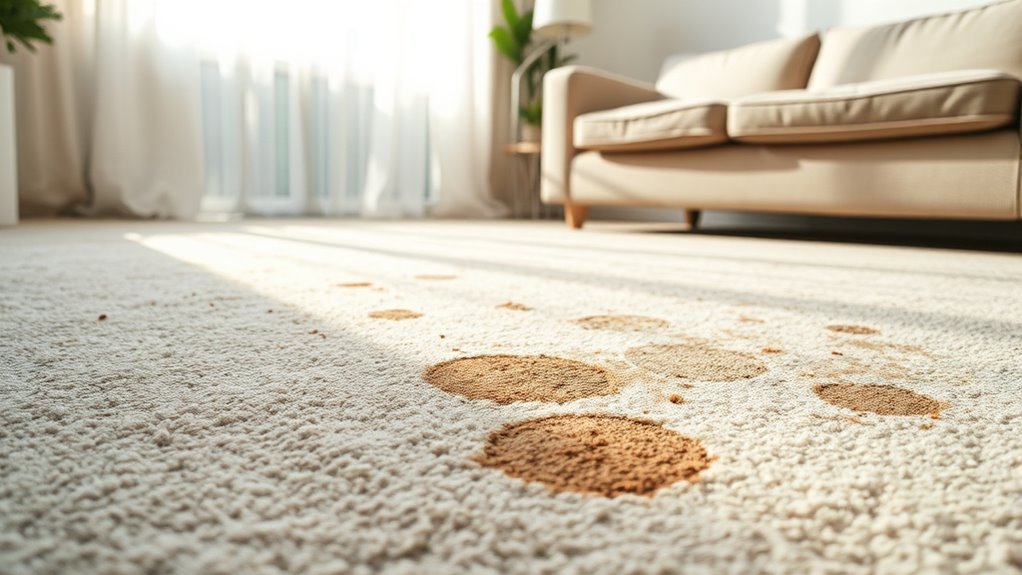
Although carpet in rental properties often shows signs of wear and aging, you can expect damage like pulled threads or tears to occur over time. Carpet damage usually results from pet activity, accidents, or general use, impacting the property’s overall condition.
Carpet wear in rentals is common, often caused by pets, accidents, or everyday use, affecting property condition.
When you rent, understanding how this damage affects your responsibilities is vital. Renters insurance can sometimes provide coverage for accidental damage, but it’s important to know what qualifies.
Minor issues might be fixed with simple repair, like patchwork, while severe damage may require full replacement. Since many rental carpets are around 20 years old, their vulnerability to damage increases.
Knowing how your renters insurance interacts with carpet damage helps you protect your belongings and avoid unexpected costs. So, it’s a good idea to get familiar with the details before any trouble happens.
Types of Carpet Damage Covered by Renters Insurance
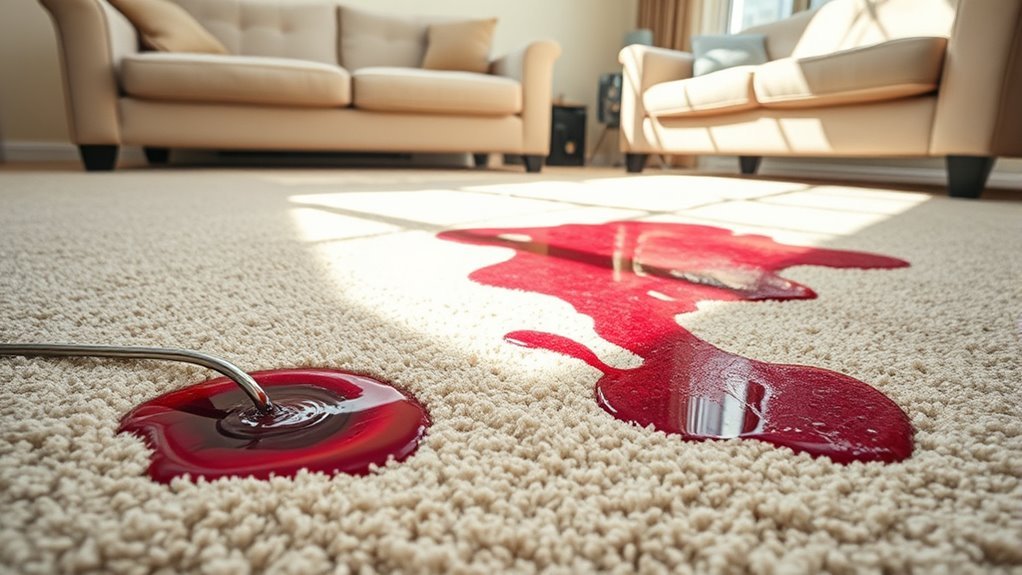
When your carpet suffers damage from fire, smoke, or water leaks, renters insurance may cover the repairs or replacement. These are common covered perils that typically fall under your policy’s protection.
You might also find coverage for carpet damage caused by vandalism or theft through your personal property coverage. If someone intentionally damages your carpet or it’s stolen, you can usually file a claim.
Some policies even cover damage from pet accidents, like pulled threads or stains, but this varies. Remember, you’ll need proof of the damage and repair costs to qualify.
Wear and tear or age-related deterioration, however, aren’t covered. Understanding what types of carpet damage your renters insurance covers helps you protect your belongings effectively.
Common Exclusions Related to Carpet Damage
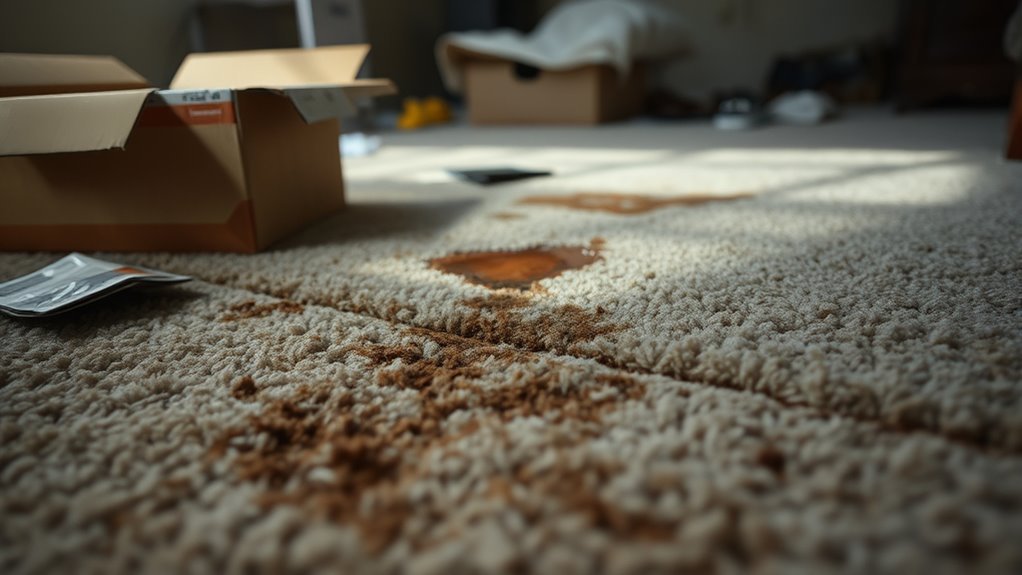
You won’t find coverage for carpet damage caused by normal wear and tear or neglect in your renters insurance.
If you don’t maintain or clean your carpet properly, the insurer likely won’t pay for repairs.
It’s important to understand these limits so you know when you’re protected and when you’re not.
Wear and Tear Exclusion
Because renters insurance focuses on protecting you from sudden and accidental damage, it won’t cover carpet issues caused by normal wear and tear. This means damage from regular foot traffic, fading, or small stains over time falls under maintenance, not something your insurance will cover.
When your carpet ages and reaches the end of its useful life, insurance won’t pay for repairs or replacement. Instead, wear and tear is considered a gradual process that’s your responsibility to manage through proper upkeep.
To get coverage, the damage must be sudden and accidental, not due to aging or neglect. So, if your carpet shows signs of wear and tear, you’ll need to handle maintenance and eventual replacement yourself.
Negligence and Damage Limits
Although renters insurance can cover certain types of carpet damage, it won’t protect you from harm caused by negligence or intentional actions. Most policies explicitly exclude coverage for damage resulting from your negligence, like failing to fix leaks that ruin your carpet.
Damage limits also come into play. If carpet damage exceeds your policy’s thresholds, your claims may be denied or only partially paid.
Keep in mind, maintenance issues like wear and tear or age-related deterioration aren’t covered either. While accidental pet damage might qualify, neglect usually disqualifies coverage under these common exclusions.
To avoid denied claims, you should maintain your carpets properly. It’s also important to understand your policy’s damage limits and negligence clauses before filing a claim.
Role of Negligence and Wear in Carpet Claims
When you file a carpet damage claim, your insurer will look closely at whether the damage was caused by negligence or normal wear.
If you’ve neglected regular cleaning or maintenance, your claim might be denied. It’s important to understand that gradual wear isn’t covered, while sudden, accidental damage usually is.
Negligence Impact on Claims
If you neglect routine maintenance like fixing leaks or cleaning spills promptly, your insurance claim for carpet damage might get denied. Insurers distinguish between accidental damage and damage caused by negligence.
Coverage often excludes claims stemming from ongoing neglect, but sudden, accidental damage may be covered. To guarantee your claim is approved, you must prove the damage resulted from an accidental event rather than lack of maintenance.
Keep these points in mind regarding negligence and claims:
- Negligence includes failing to address leaks or spills promptly, leading to denied coverage.
- Accidental damages like pet stains might be covered if not due to neglect.
- Insurers require evidence that damage wasn’t caused by wear or negligence for claims approval.
Wear Versus Damage
Since renters insurance covers accidental damage but not normal wear and tear, it’s important you understand the difference between everyday carpet wear and damage caused by negligence.
Wear and tear, like fading or minor staining, is expected from regular use and typically isn’t a covered loss in an insurance claim. However, damage resulting from negligence—such as deep stains or significant tears—may fall outside your coverage and become your responsibility.
Minor damage, like pulled threads or small burns, often can be repaired without filing a claim. When considering an insurance claim, you’ll need to prove the damage stems from an insured peril, not neglect.
How Pet Damage to Carpets Is Treated by Insurance
Although pet damage to carpets can be frustrating, your renters insurance might cover it, especially if the damage results from sudden or accidental events.
Pet damage like torn fibers or stains from accidents may qualify for coverage, but it depends on your policy’s coverage limits and exclusions. You’ll want to check if your renters insurance includes pet-related carpet damage or if you need additional endorsements.
When considering a claim, insurers often require proof of damage, such as photos and repair estimates. Remember, routine wear or neglect usually isn’t covered.
Key points to note:
- Coverage depends on whether the damage was sudden or accidental
- Some policies exclude pet damage or limit coverage
- Providing clear evidence is essential for a successful claim and repair reimbursement
Filing a Carpet Damage Claim With Renters Insurance
When you notice carpet damage, start by documenting it with clear photos and getting repair estimates from professionals.
Then, contact your insurer online or by phone to submit your claim with all necessary paperwork.
Knowing what documentation to provide will help speed up the process and improve your chances of coverage.
Claim Process Overview
How do you file a carpet damage claim with your renters insurance? Start by contacting your insurer promptly after you notice the damage. The claim process requires you to prove the damage and confirm it resulted from a covered cause.
Here’s what you should focus on: gather proof of damage with photos or videos and get repair or replacement estimates. It’s a good idea to be prepared for a possible inspection by an adjuster who will assess the damage.
Also, understand that you’ll likely pay a deductible before receiving insurance reimbursement to cover the cost. So, keep that in mind as you move forward with your claim.
Required Documentation
Before you file a carpet damage claim with your renters insurance, you’ll need to gather specific documentation to support your case. Start by taking clear photos or videos of the damaged carpet to provide visual evidence.
Collect proof of purchase or receipts for any professional repairs or carpet patches. Be sure to note the date and cause of the damage, as detailed damage documentation helps your insurance provider determine if the claim falls within your policy’s coverage limits.
Review your policy carefully to understand what’s covered and whether the damage qualifies under personal property protection. Report the damage promptly to your insurance provider and submit all required documents within the claim window to avoid delays or denial of your claim.
Documentation Required for Carpet Damage Claims
Although filing a carpet damage claim can feel overwhelming, gathering the right documentation makes the process smoother. To guarantee your claim is processed efficiently, you’ll need to collect essential proof and details that clearly show the extent and cause of the damage.
Accurate documentation supports your reimbursement request and speeds up the claim process. Here’s what you should prepare:
Accurate documentation strengthens your reimbursement claim and accelerates the insurance process. Gather essential proof carefully.
- Clear photos or videos of the damaged carpet area
- Receipts or repair estimates related to the carpet damage
- A detailed damage description explaining how the damage occurred
Submitting these items through your insurance provider’s claim process helps verify your loss and ownership. Keeping everything organized and thorough increases your chances of a successful reimbursement for your carpet damage.
Renters’ Liability for Carpet Damage Repairs
When you rent a home, your liability for carpet damage depends largely on the cause and your renters insurance coverage. If the damage results from covered perils like fire, smoke, or vandalism, your renters insurance may provide damage coverage up to your policy limits.
Carpet damage caused by your pets can also be covered if your policy includes such protection. However, renters liability typically excludes damage from neglect or poor maintenance.
To handle repair costs, you’ll need to file a claim with proof of the damage and estimates. Keep in mind, your renters insurance won’t cover everything, so understanding your policy limits and what qualifies as renters liability is essential to avoid unexpected expenses for carpet repairs.
Alternatives to Insurance for Carpet Repair
If your renters insurance doesn’t cover carpet damage or you want to avoid filing a claim, you can explore other options like hiring professional carpet repair services for minor fixes or discussing maintenance programs with your landlord. Proper maintenance and damage prevention extend your carpet’s life and reduce the need for an insurance claim.
When damage occurs, consider these alternatives:
- Hire carpet repair professionals for patching, stretching, or spot treatments.
- Talk to your landlord about maintenance programs or warranties that cover replacement options.
- Negotiate landlord reimbursement for partial repairs if damage is extensive but not covered by insurance.
These approaches help you manage carpet issues without involving insurance. This way, you can save yourself from potential premium increases and keep your rental in good shape.
Impact of Carpet Damage on Rental Agreements and Rent Adjustments
Since carpet damage can affect the condition of your rental, landlords often adjust rent or enforce repair responsibilities based on your lease terms. If your rental agreement specifies tenant responsibility for carpet maintenance, you might face rent adjustments or be required to cover repair costs after damage.
Landlords may view issues like pet stains or pulled threads as neglect, leading to increased rent to offset repairs. Even damage from accidents or maintenance can result in rent changes.
While renters insurance typically doesn’t cover wear and tear, it may help with accidental damage, easing your financial burden. Understanding your rental agreement and discussing landlord responsibility upfront can help you manage potential rent adjustments linked to carpet damage and avoid unexpected expenses.
Frequently Asked Questions
Is Carpet Covered by Contents or Building Insurance?
You’ll find carpet coverage under contents insurance if it’s your personal carpet, but building insurance covers carpets as part of the structure.
Always check your policy because coverage can vary depending on ownership and damage cause.
It’s a good idea to know exactly what your insurance covers so you’re not caught off guard.
If you’re unsure, a quick call to your insurer can clear things up pretty fast!
How Much Is Allstate Renters Insurance?
If you’re guessing Allstate renters insurance costs a fortune, think again—it usually runs $5 to $15 monthly.
Your price depends on coverage, location, and discounts, so getting a personalized quote is the smartest move.
What Is Not Covered by Renters Insurance?
You won’t find coverage for damage caused by neglect, wear and tear, pests, floods, or structural issues.
Renters insurance focuses on personal belongings and liability, not the rental property’s maintenance or physical damage. So, if something’s due to the place wearing out or a pest problem, you’re usually on your own.
What Kind of Insurance Do I Need for Carpet Cleaning?
You don’t typically need special insurance for carpet cleaning.
However, if you’re a professional cleaner, liability insurance is a good idea because it protects you from damage claims. Renters or homeowners insurance can cover accidental damages that happen during cleaning at home too.
Conclusion
Dealing with carpet damage as a renter can feel like traversing a maze, but understanding what your renters insurance covers makes it much clearer. While some types of damage, like sudden spills or fire, are typically covered, wear and pet damage often aren’t.
Always document any damage promptly and know your responsibilities to avoid surprises. By staying informed, you protect yourself and maintain a good relationship with your landlord, keeping your rental experience smooth and worry-free.
So, does renters insurance cover carpet damage? It depends on the cause. Sudden and accidental damage usually falls under your policy, but gradual wear and tear or pet-related damage typically do not. Knowing these details helps you handle claims confidently and avoid unexpected costs. Stay proactive, keep good records, and make sure your renters insurance policy fits your needs to safeguard your home and belongings effectively.