How to Do You Flip Memory Foam Mattresses Correctly
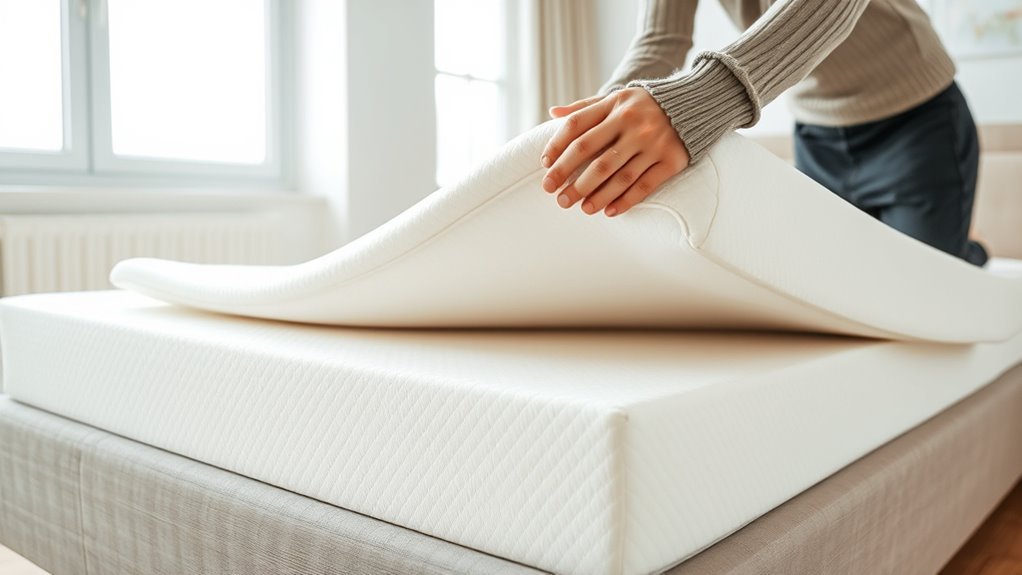
You rarely want to flip a memory foam mattress because most are one-sided and flipping can damage the foam. Instead, you should rotate it head to toe every 3 to 6 months to prevent sagging and uneven wear.
When rotating, remove all bedding and lift carefully to avoid stress on the mattress.
Follow your manufacturer’s instructions closely to protect your warranty.
Keep going to discover helpful tips on caring for your memory foam mattress and when to replace it. Taking proper care can extend the life of your mattress and ensure you get a comfortable night’s sleep.
Key Takeaways
- Most memory foam mattresses are one-sided and should not be flipped to avoid damage.
- Instead, rotate the mattress head to toe every 3 to 6 months. This helps prevent uneven wear and sagging.
- Always check the manufacturer’s instructions before attempting to flip or rotate your mattress.
- When rotating or flipping, use proper lifting techniques and avoid dragging. This protects the foam layers.
- Keep in mind, flipping a one-sided mattress can void warranties and cause tears. So, handle with care and follow the guidelines.
Understanding Memory Foam Mattress Construction
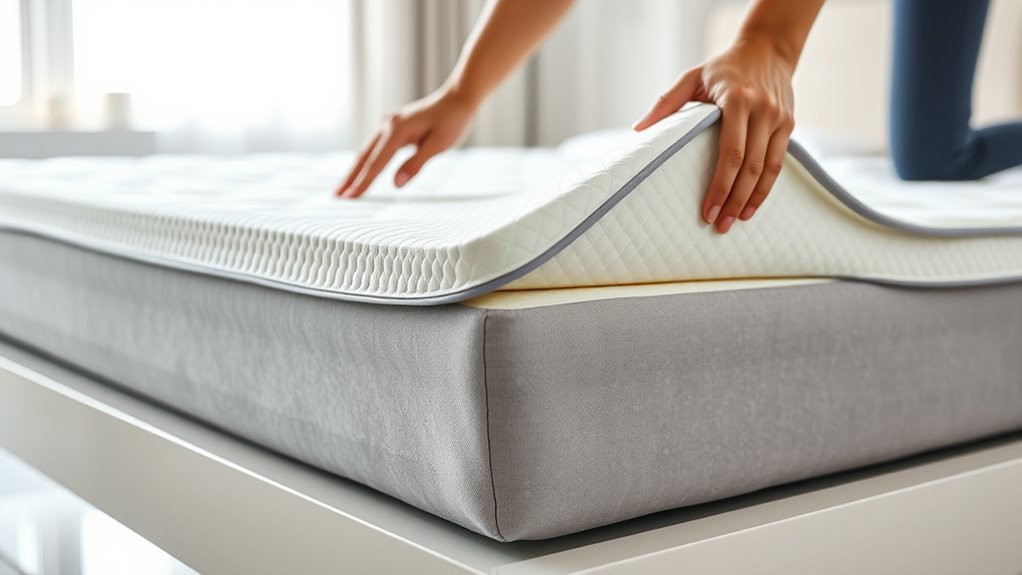
Although memory foam mattresses look simple, their construction involves multiple layers of viscoelastic polyurethane foam designed to conform to your body shape and temperature. When you look inside a memory foam mattress, you’ll find a dense support core layered beneath softer comfort foams that relieve pressure points.
These layers vary in density and thickness, which affects how flexible and durable your mattress feels over time. Unlike innerspring mattresses, memory foam mattresses are usually single-sided and aren’t meant to be flipped.
The layers are carefully bonded to maintain support and comfort, ensuring your mattress lasts. Understanding this layered construction helps you realize why flipping is often unnecessary and why rotating might be the better care method to keep your memory foam mattress performing well.
When Should You Flip or Rotate Your Memory Foam Mattress
You shouldn’t flip most memory foam mattresses since they’re made with one soft side on top. But rotating them every 3 to 6 months keeps them in good shape.
Rotating helps prevent uneven wear and sagging, which can extend your mattress’s life. It’s a simple step that makes a big difference.
Always check the manufacturer’s instructions to know what’s best for your specific mattress. That way, you’ll keep it comfy and supportive for years to come.
Flip vs. Rotate
While flipping traditional mattresses was once common practice, most memory foam mattresses are designed to be rotated rather than flipped to prevent damage to the foam layers.
You should rotate your mattress head to toe at least twice a year to avoid wear in one spot and keep it feeling like the best mattress. Flipping a Pillow Top Mattress or memory foam can compress layers and reduce comfort.
Feel free to give it a spin every six months to reduce dust mites and enjoy better sleep.
| Action | Suitable For | Frequency |
|---|---|---|
| Rotate | Most Memory Foam | Every six months |
| Flip | Double-sided Mattress | Rarely recommended |
| Rotate | Pillow Top Mattress | At least twice/year |
| Flip | Traditional Mattresses | Every six months |
Optimal Rotation Timing
Proper timing plays a big role in keeping your memory foam mattress in top shape. Most manufacturers recommend rotating your mattress every 3 to 6 months to guarantee even wear and prevent sagging.
Unlike traditional mattresses, flipping memory foam ones isn’t advised since it can damage the foam layers and may void your warranty. Instead, focus on consistent rotation within the recommended intervals to maintain proper support and comfort.
This simple habit helps prevent indentations and extends your mattress’s lifespan considerably. Always check your mattress’s specific guidelines for rotation timing, as following those ensures maximum longevity and performance.
Step-by-Step Guide to Safely Flipping a Memory Foam Mattress
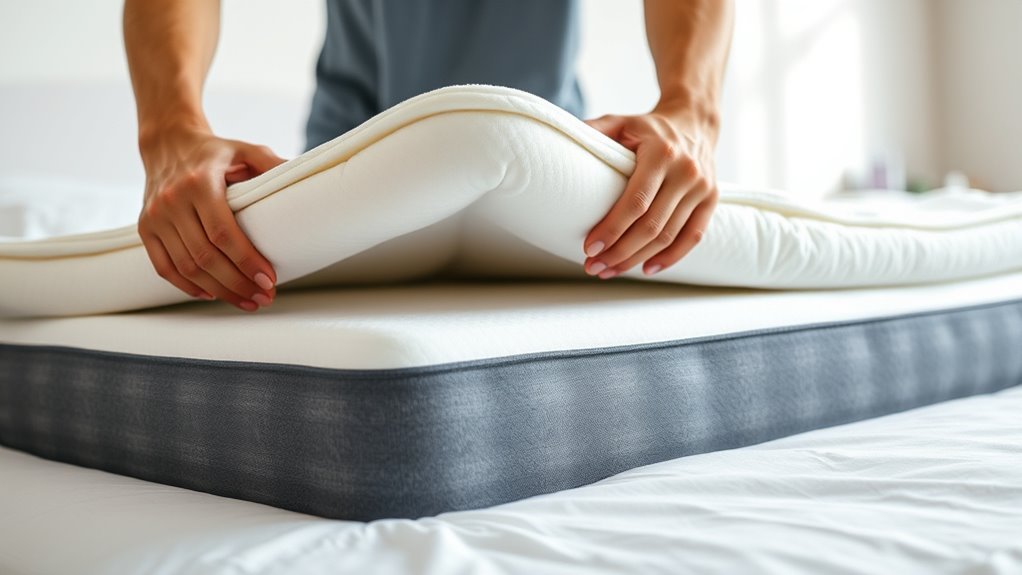
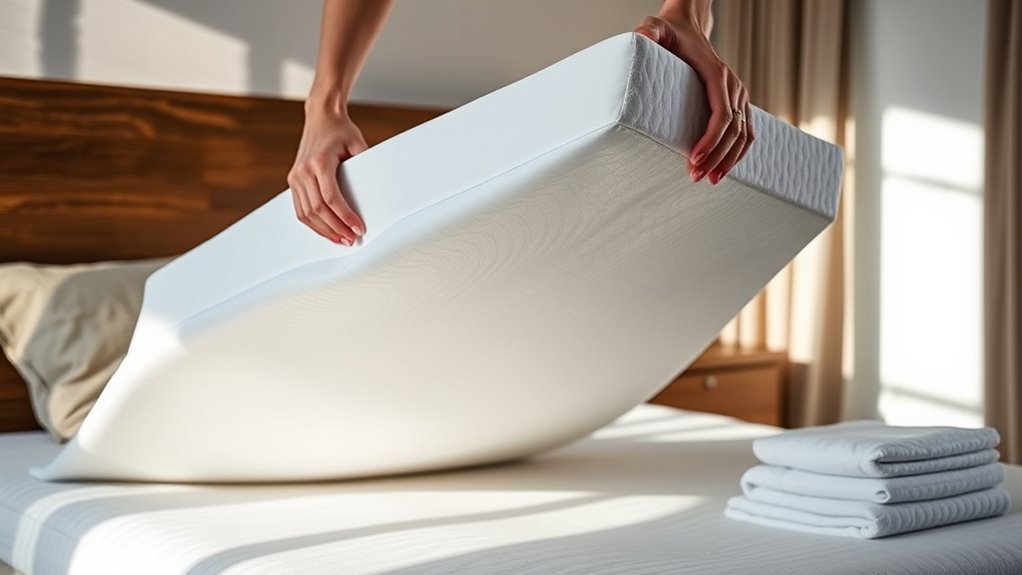
Although most memory foam mattresses aren’t designed to be flipped, if yours is double-sided, flipping it safely requires careful handling. Start by removing all bedding and accessories.
Next, stand the mattress on its side to prepare for flipping. Use proper lifting techniques, keeping the mattress level, and avoid dragging it to prevent damage.
If it’s heavy, ask for help. Finally, gently turn it over and lay it flat.
| Step | Action |
|---|---|
| 1 | Remove bedding and accessories |
| 2 | Stand mattress on its side |
| 3 | Lift carefully, keep mattress level |
| 4 | Avoid dragging on rough surfaces |
| 5 | Gently flip and lay flat |
Common Mistakes to Avoid During Flipping
Before you flip your memory foam mattress, always check the manufacturer’s guidelines to avoid damaging the foam layers. Using too much force or flipping it the wrong way can cause tears or warping that shorten its lifespan.
Don’t skip these steps if you want to keep your mattress comfortable and protected. Taking a little extra care goes a long way!
Flipping Foam Risks
If you flip a memory foam mattress without knowing its design or manufacturer guidelines, you risk damaging the foam layers and voiding your warranty. Flipping a one-sided mattress upside down can tear or prematurely degrade the foam, cutting its lifespan short.
Using too much force or failing to support the mattress evenly during flipping may compress or structurally damage the foam. Also, not removing or properly rotating the mattress cover before flipping can deform or harm both the fabric and foam layers.
To avoid these risks, handle your mattress gently and understand its specific construction before flipping. This way, you’ll protect your investment and maintain the mattress’s comfort and durability over time.
Ignoring Manufacturer Guidelines
Understanding your mattress’s design is key to avoiding damage when flipping it. Many memory foam mattresses are one-sided, so flipping them against manufacturer guidelines can damage internal layers and void your warranty.
If you ignore these instructions, you risk tearing the foam, causing premature breakdown, or developing uneven indentations. These issues disrupt the mattress’s structural integrity, leading to discomfort and shortening its lifespan.
Before you flip your memory foam mattress, always check the care label or manufacturer’s instructions carefully. Following their recommendations helps you maintain support and comfort while protecting your investment.
Don’t assume all mattresses can be flipped—doing so improperly can lead to costly damage that’s easily avoidable when you respect the manufacturer’s guidelines. So, it’s really worth taking that extra moment to read those instructions!
Maintenance Tips to Prolong Mattress Lifespan
Although flipping a memory foam mattress isn’t recommended, rotating it every 3 to 6 months can help you maintain even wear and prevent indentations. When rotating, apply gentle, even pressure to avoid damaging the foam layers.
Always keep your mattress clean and dry by using a breathable mattress protector. This prevents mold, mildew, and dust buildup that can shorten its lifespan.
Following manufacturer guidelines is essential—improper care might void your warranty and reduce durability. Avoid flipping the mattress, as this can deform or tear the foam.
Signs It’s Time to Replace Your Memory Foam Mattress
When your memory foam mattress starts showing persistent sagging or permanent indentations, it’s a clear sign that it’s lost its support and needs replacing. If you find yourself waking up with aches, pains, or increased back tension, your mattress likely no longer provides proper spinal alignment.
Also, consider the mattress’s age—if it’s over 7 to 10 years old, deterioration is expected. You might notice unrefreshing sleep or feel foggy and tired despite a full night’s rest, indicating your mattress isn’t offering enough comfort.
Frequently Asked Questions
Can I Flip My Foam Mattress?
You shouldn’t flip your foam mattress because it’s usually one-sided and flipping can damage it.
Instead, rotate it 180 degrees every few months to maintain even wear.
Also, check the manufacturer’s guidelines for specific instructions.
How Do I Cut a Bed Foam Mattress?
Cutting your foam mattress is like carving a path through clouds; mark your line carefully. Use a serrated or electric knife to get the best results.
Cut slowly from the center outward on a stable surface. If the mattress is too heavy for you, tackle it in sections.
What Is the Average Lifespan of a Memory Foam Mattress?
You can expect your memory foam mattress to last between 7 to 10 years.
With proper care and regular rotation, high-quality mattresses might even reach the 10-year mark before showing signs of wear and sagging.
Can You Reroll up a Memory Foam Mattress?
About 90% of memory foam mattress manufacturers advise against rerolling your mattress. You shouldn’t reroll it, as doing so can damage foam cells, reduce support, and even void your warranty.
It’s best to let it fully expand instead. This way, your mattress maintains its shape and comfort over time. Trust me, giving it space to breathe is the way to go!
Conclusion
Flipping your memory foam mattress correctly helps it last longer and stay comfortable. Remember, “a stitch in time saves nine”—regularly rotating or flipping your mattress prevents uneven wear and sagging.
Follow the steps carefully, avoid common mistakes, and keep up with maintenance to enjoy restful nights. When you notice signs of wear, don’t hesitate to replace it.
Taking these simple actions guarantees your mattress supports you well for years to come. Properly flipping and rotating your memory foam mattress keeps it in great shape, ensuring comfort and durability. So, make it a habit to flip or rotate your mattress every few months to maintain its form and extend its lifespan. This way, you can enjoy restful sleep on your memory foam mattress for many years!