Can Carpet Beetles Bite Humans and How to Prevent It
Carpet beetles don’t actually bite humans, but their larvae can cause skin irritation. These tiny hairs on the larvae can trigger rashes and allergic reactions, which might surprise you. You may notice itchy bumps or redness, especially after coming into contact with infested fabrics or furniture.
To keep these annoying pests from causing problems, vacuum your home regularly. Storing natural fibers like wool or cotton in airtight containers really helps too.
Also, sealing any entry points around windows and doors can keep carpet beetles from sneaking inside.
When you handle items that might be infested, wearing gloves is a smart move to protect your skin. Keeping your home clean overall reduces the risk of an infestation.
Want to stay ahead? Explore more ways to identify and manage carpet beetles effectively and keep your living space pest-free!
Key Takeaways
- Carpet beetles don’t bite or sting humans. It’s actually their larvae’s tiny hairs that can cause skin irritation and allergic reactions.
- Those larval hairs might lead to rashes, itchy bumps, and dermatitis. But the adult beetles themselves don’t pose any direct threat to your skin.
- To keep them away, make sure to vacuum regularly and wash your fabrics often. Storing natural fibers in airtight containers also helps a lot.
- You can try natural repellents like cedar chips or lavender too. Plus, sealing up any entry points can really cut down on the chances of an infestation.
- When you’re dealing with infested items, it’s smart to wear gloves and long sleeves. That way, you avoid coming into contact with those irritating larval hairs.
Can Carpet Beetles Bite or Bite You?
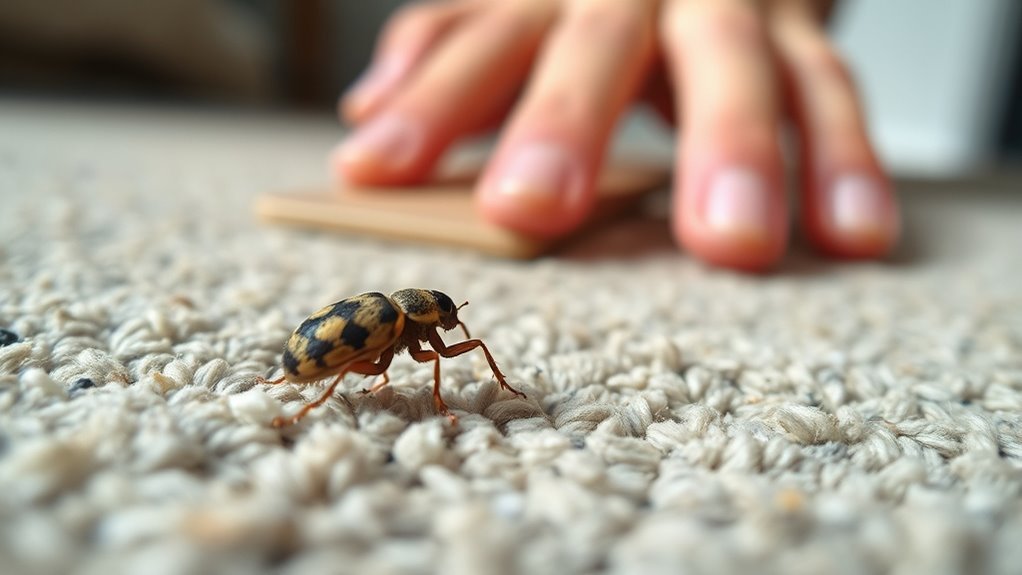
Although carpet beetles don’t actually bite you, their larvae can cause skin irritation through tiny hairs that trigger allergic reactions. You might mistake these reactions for bites, but it’s the larval hairs causing allergic dermatitis, not actual biting.
Adult carpet beetles don’t bite or sting; they mainly feed on pollen, posing no direct threat to your skin. When you have an infestation, the larvae’s hairs can spread around your home, especially near eggs and natural fibers they consume.
This exposure can lead to uncomfortable skin irritation if you come into contact with them. Understanding that carpet beetles don’t bite helps you focus on managing larvae and eggs to prevent allergic reactions and reduce skin irritation during an infestation.
What Are the Signs of Carpet Beetle Allergic Reactions?
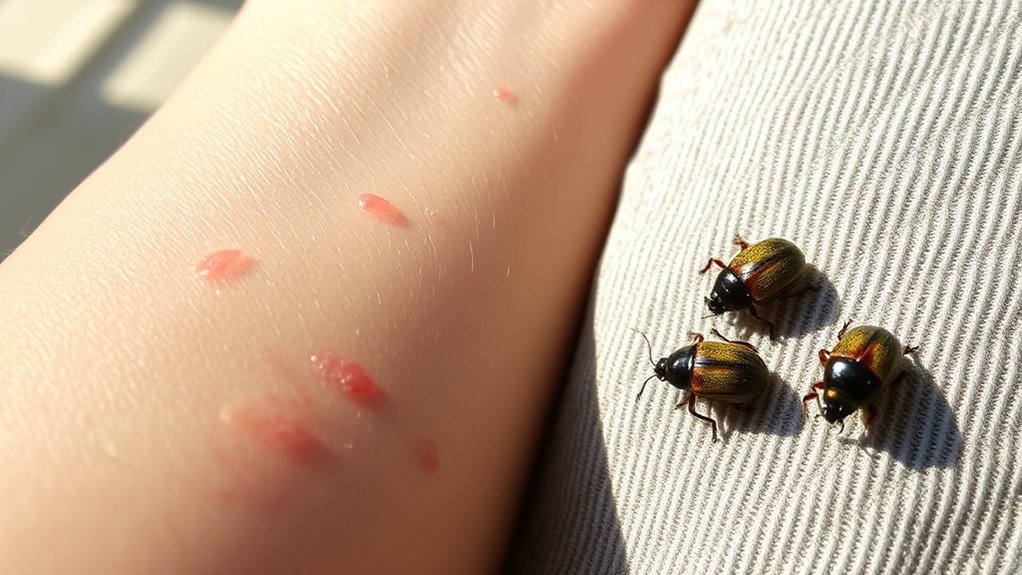
While carpet beetles themselves don’t bite, the tiny hairs from their larvae can cause noticeable allergic reactions on your skin. You might experience itchy rashes, red bumps, or dermatitis that often look like hives or eczema.
These symptoms come from contact with fabrics, carpets, or items contaminated with larval hairs or shed skins. If you’re sensitive, exposure can trigger skin irritation, swelling, and even respiratory discomfort.
Over time, repeated contact may lead to allergic sensitization, making your reactions more persistent and severe. Recognizing these signs early can help you address the problem before it worsens.
How to Tell Carpet Beetle Irritations Apart From Bed Bug Bites
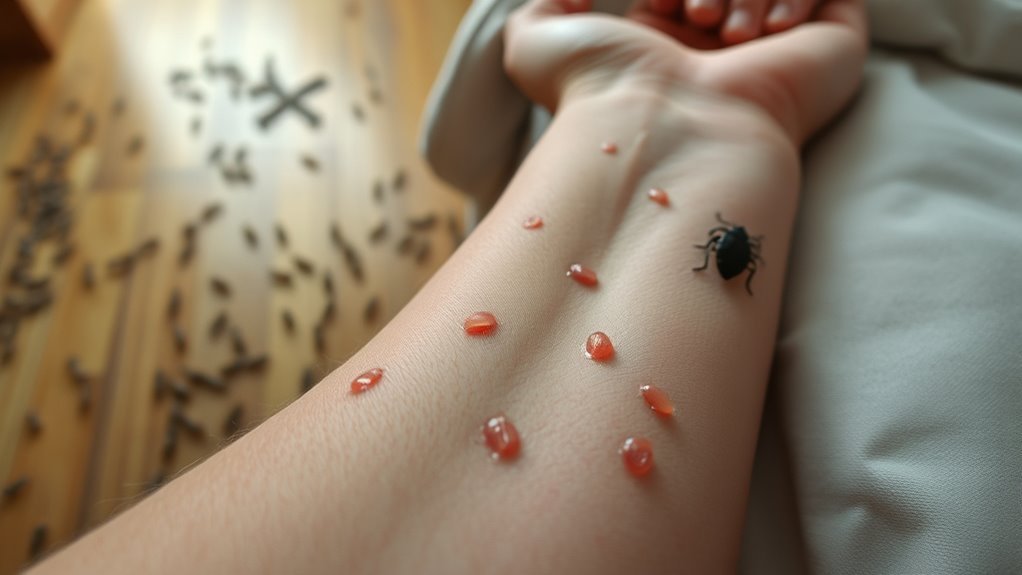
You might confuse carpet beetle irritations with bed bug bites, but the differences are clear once you know what to look for. Carpet beetle reactions usually show up as small rashes without bite marks, while bed bug bites often appear as itchy clusters or lines with visible punctures.
Knowing these appearance differences really helps. It makes identifying the cause easier, so you can take the right action quickly.
Appearance Differences
How can you tell if your skin irritation comes from carpet beetles or bed bugs? The key lies in appearance differences and signs of infestation. Carpet beetles don’t bite; instead, their larvae have tiny hairs that cause skin reactions.
Here’s how to distinguish them: Look for small holes or shed larval skins—these are a clear sign of infestation by carpet beetle larvae, not bed bugs. Visual identification helps too: adult beetles are round and colorful, while larvae are hairy and worm-like, causing diffuse rashes rather than distinct bite marks.
Bed bug bites usually appear in clusters, whereas carpet beetle irritation spreads more irregularly without puncture marks. So, if you notice clustered bites, it’s likely bed bugs. But if the rash is patchy and you see shed skins or tiny holes, carpet beetles are probably the culprits.
Bite Versus Rash
Although carpet beetles don’t actually bite, the tiny hairs on their larvae can cause skin irritation that often gets mistaken for bed bug bites. Unlike bed bugs, which leave distinct bite marks often in clusters of three or more, carpet beetle irritation appears as a rash or dermatitis without bite marks.
The larval stage’s hairs trigger allergic reactions, leading to redness and itching. If you notice a rash but no bite marks, it’s likely carpet beetle irritation, not bed bug bites.
Bed bug bites are raised and usually occur during sleep, while carpet beetle dermatitis results from contact with the larvae’s hairs. Properly identifying the source of your skin irritation helps you treat it effectively and prevent further allergic reactions or dermatitis.
How to Spot a Carpet Beetle Infestation in Your Home
You’ll want to look for adult beetles, which are small and often found near windows or light sources. Keep an eye out for tiny larval skins and fabric damage like small holes in wool, silk, or leather.
Spotting these signs early helps you tackle the infestation before it gets worse. It’s much easier to deal with them when you catch it early, trust me!
Identifying Adult Beetles
When adult carpet beetles show up near windowsills or light fixtures, they’re usually trying to tell you there’s a hidden infestation somewhere in your home.
To identify these adult beetles, keep an eye out for a few key signs:
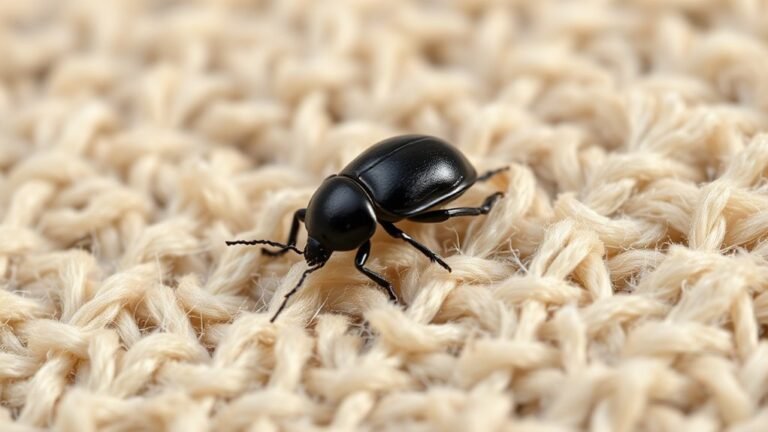
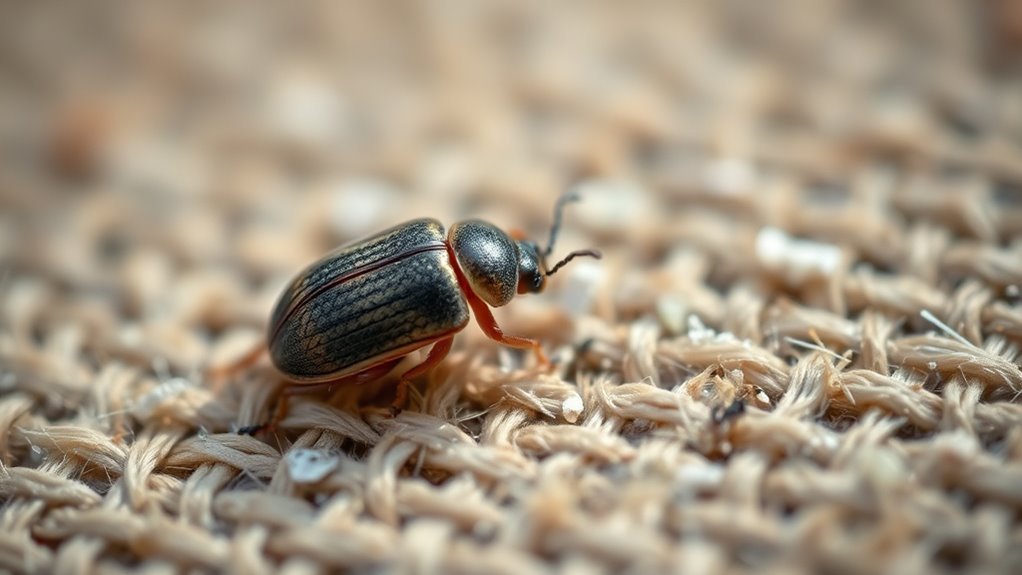
- Size and Shape: Adult carpet beetles are small and oval-shaped, usually about 1 to 12 millimeters long.
- Color and Patterns: Their colors can vary—black, mottled, white, brown, or yellow—and they often have distinctive markings.
- Location and Activity: You’ll often find them near natural fibers, stored fabrics, or dark corners, especially during spring and summer.
Since carpet beetles lay their eggs close to these spots, seeing adult beetles means larvae and eggs might be nearby too.
It’s important to act quickly with pest control to stop any further damage. Recognizing adult carpet beetles early helps you move fast and avoid a bigger infestation.
Recognizing Larval Signs
Spotting adult carpet beetles is just the beginning of identifying an infestation—pay close attention to signs left behind by their larvae. Larval signs include shed larval skins or molt remnants found in closets, under furniture, or along baseboards.
You might notice small worm-like larvae, about 1-4 millimeters long, covered with flattened hairs and colored scales, indicating active larvae activity. Keep an eye out for irregular holes in natural fibers like wool or silk, signaling damage caused by feeding larvae.
Visible droppings, tiny black or brown specks resembling sand or pepper, also reveal larvae presence. And if you find dead beetles near windowsills or light sources, that’s a good sign there’s an ongoing infestation and breeding inside your home.
Recognizing these clues helps you act early to control the problem before it gets worse.
Detecting Fabric Damage
Although carpet beetles are small, their presence becomes unmistakable once you detect damage to your fabrics. To spot an infestation, closely inspect your natural fiber items for signs like tiny holes in natural materials such as wool, silk, or fur.
You should also check dark corners and undisturbed areas where shed larval skins might accumulate. Look out for:
- Small holes in natural fabrics indicating active fabric damage.
- Black or brown droppings resembling pepper flakes near affected zones.
- Visible adult beetles around windows or light sources signaling ongoing infestation.
Simple DIY Ways to Prevent Carpet Beetle Problems
Since carpet beetles can quickly multiply and cause damage, you’ll want to take simple, proactive steps to keep them at bay. Start by vacuuming carpets, furniture, and hidden spots like under beds and vents regularly to remove eggs and larvae.
Store natural fibers such as wool or cotton in airtight containers or sealed plastic bags to prevent beetle access. Launder or dry clean these fabrics periodically, especially during spring and summer when beetle activity peaks.
Seal cracks, gaps, and entry points around windows, doors, and vents to block beetles from entering your home. Finally, use natural deterrents like cedar chips, lavender, or clove oils near storage areas to repel these pests.
How to Protect Your Skin and Home From Carpet Beetle Hairs
Taking steps to prevent carpet beetle infestations also helps protect your skin from their irritating hairs. These tiny carpet beetle hairs can cause allergic reactions like rashes and itching. So, it’s really important to minimize these reactions by managing your home carefully.
Preventing carpet beetle infestations safeguards your skin from irritating hairs that cause rashes and itching.
Here’s how you can protect your skin and home:
- Wear gloves and long sleeves when handling infested items. This helps you avoid direct contact with shed hairs.
- Perform thorough vacuuming of carpets, furniture, and storage areas regularly. Doing this removes hairs and reduces your exposure.
- Use natural deterrents such as cedar or clove oil. These can repel carpet beetles and lower the amount of irritating hairs around.
When Should You Call a Professional for Carpet Beetle Control?
How do you know when it’s time to call a professional for carpet beetle control? If you notice persistent damage to fabrics or household items that DIY treatments haven’t fixed, it’s a clear sign you need professional intervention.
A widespread infestation with numerous larvae, adult beetles, or signs of heavy damage demands expert pest control to guarantee complete eradication. When clothing, furniture, or stored food is heavily affected, don’t hesitate to schedule a professional inspection.
Early signs of infestation should never be ignored, as prompt action can prevent extensive property damage and recurring issues. Additionally, if you experience allergic reactions or skin irritation despite cleaning, professional help is advisable.
Trust a professional to handle severe infestations and protect your home effectively. It’s always better to be safe than sorry!
Frequently Asked Questions
What Damage Do Carpet Beetles Cause?
Carpet beetles damage your natural fabrics like wool, silk, leather, and fur by creating holes and weakening them. Their larvae destroy clothing, upholstery, and carpets, causing costly repairs if you don’t catch and control infestations early.
If you notice any signs of these pests, it’s best to act quickly. Otherwise, the damage can get worse and more expensive to fix.
Do Carpet Beetles Bite Humans at Night?
No, carpet beetles don’t bite you at night or any time. Instead of biting, their larvae’s tiny hairs might irritate your skin.
Do Carpet Beetles Live in Beds?
Carpet beetles usually don’t live in beds, but their larvae might if you store natural fibers like wool there.
Keep bedding clean and store fibers properly to prevent larvae from settling in mattress seams or under your sheets.
What Is Carpet Beetle Dermatitis and What Are Its Symptoms?
Imagine invisible needles—carpet beetle dermatitis is your skin’s allergic reaction to tiny larvae hairs. You’ll notice itchy rashes, red bumps, and irritation, often clustered on exposed skin after contact with infested fabrics or carpets.
It’s like your skin is trying to tell you something’s not right. And those little larvae hairs? They’re the main culprits causing all that discomfort. So, if you’ve been around carpets or fabrics that might be infested, keep an eye out for these symptoms.
Conclusion
You might worry that carpet beetles will bite you like bed bugs, but they rarely do. Instead, it’s their tiny hairs that cause irritation or allergic reactions.
By spotting infestations early and using simple prevention methods, you can protect both your skin and home without harsh chemicals. If the problem feels overwhelming, don’t hesitate to call a professional.
Taking action now keeps your space comfortable and bite-free. Preventing carpet beetle bites means staying vigilant and addressing any signs of these pests quickly. With the right approach, you can enjoy a clean, safe home without the stress of irritation or allergic reactions.