Do Reclining Sectionals Take Up More Space?
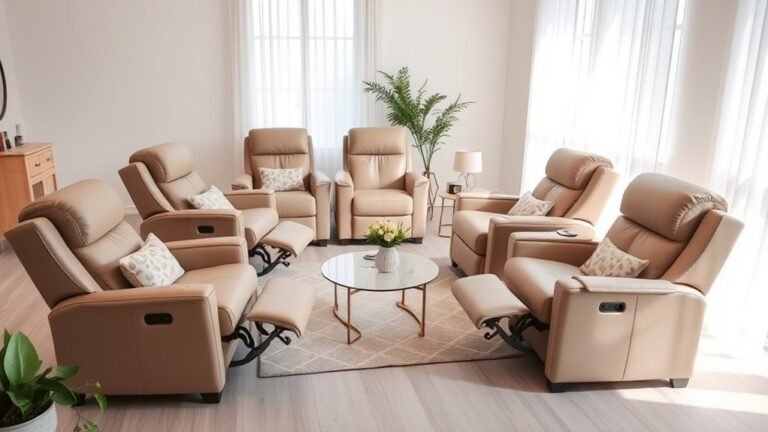
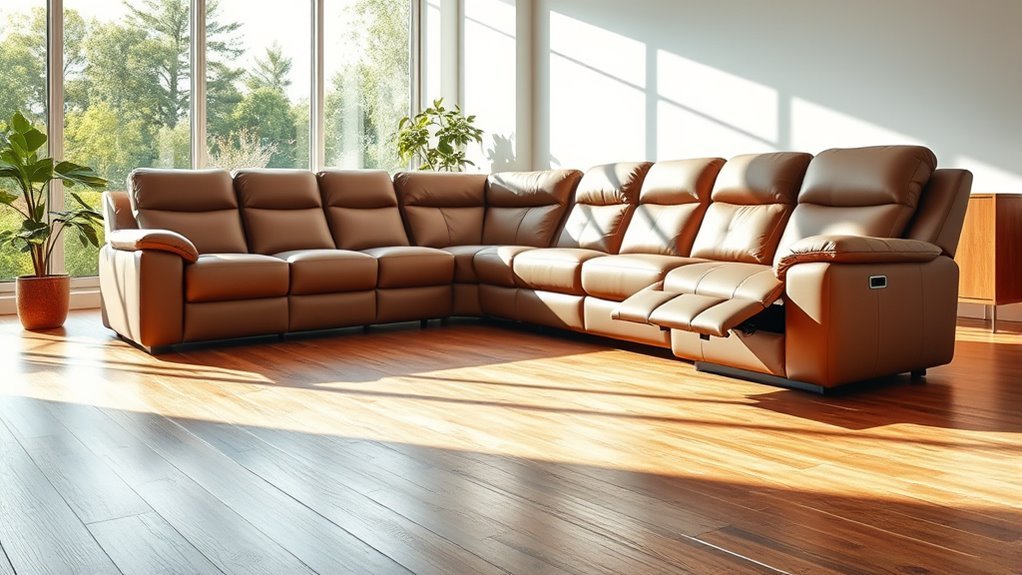
Yes, reclining sectionals do take up more space than regular ones because their footrests extend 24-36 inches when fully reclined, requiring extra front clearance.
This means you’ll need to consider how much room the sectional will occupy once it’s in use, not just when it’s closed up.
You’ll also need 12-18 inches behind the sectional unless you choose a wall-hugger model. Wall-huggers save space by sliding forward as they recline, making them a smart option for tighter rooms.
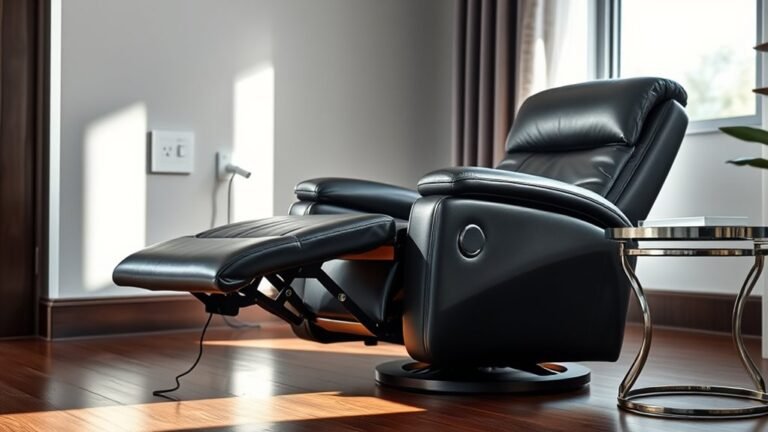
Power recliners add to the footprint, too, since they often need extra space for wiring and mechanisms.
If you want to optimize your room and pick the right sectional, understanding these space needs will help you plan better.
Taking these factors into account ensures you get comfort without overcrowding your living space.
Key Takeaways
- Reclining sectionals need extra clearance of about 24-36 inches in front for the footrest to fully extend. This means they usually take up more space than non-reclining models.
- However, wall-hugger reclining sectionals are designed to save space by minimizing back clearance to just 3-6 inches. So, they’re a better pick if your room is on the smaller side.
- Keep in mind, power recliners tend to be wider and deeper. That means you’ll need a bigger room compared to standard recliners or stationary sectionals.
- It’s super important to measure and mark the footprint when the sectional is reclined. Doing this helps avoid any obstructions and ensures the furniture fits comfortably without crowding the room.
- Plus, modular and wall-hugger designs really help make the most of your space. They let reclining sectionals fit nicely in different room sizes without taking up too much extra space.
Comparing Reclining Sectionals to Regular Sectionals in Space Usage
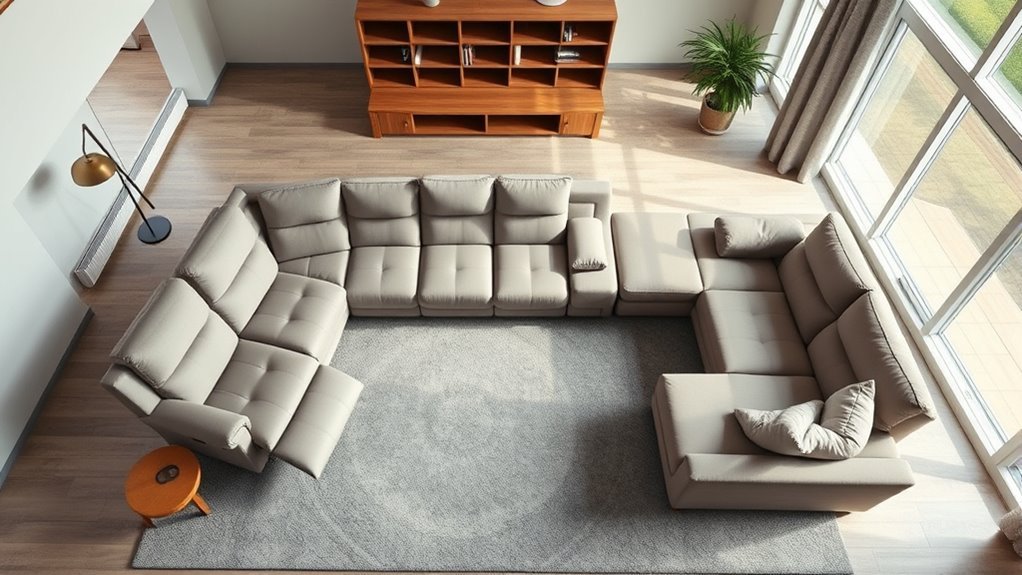
When you compare reclining sectionals to regular ones, you’ll notice reclining models need more space to function comfortably. Unlike standard sectionals that can sit close to walls, reclining sectionals require additional clearance to accommodate their footrests.
Typically, these footrests extend 24 to 36 inches into the room, increasing the overall space the sectional occupies when fully reclined. You’ll also need to allow 6 to 12 inches of clearance behind the sectional for the reclining mechanism, though wall-hugger designs reduce this to 3 to 6 inches.
This extra space guarantees the footrests can extend without obstruction, letting you relax fully. So, when planning your room layout, factor in this added space need to avoid cramped or awkward furniture arrangements.
Wall Clearance Requirements for Reclining Sectionals
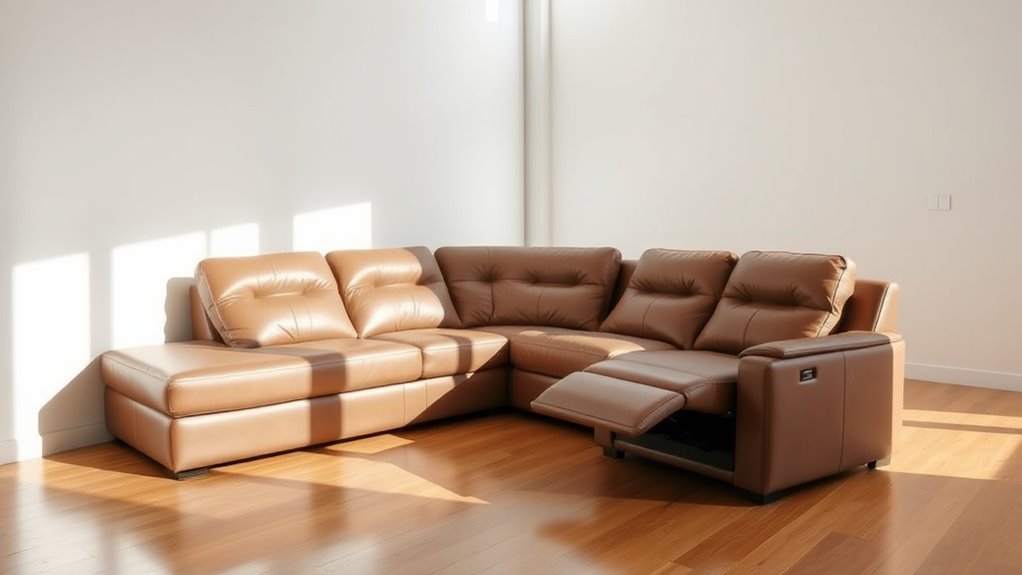
When placing your reclining sectional, you’ll need to contemplate how much wall clearance it requires. Standard recliners usually demand 12 to 18 inches behind them, while wall-hugger models only need about 3 to 6 inches.
Also, think carefully about positioning near windows to avoid blocking natural light or airflow. It’s all about making your space both comfy and functional!
Standard Recliner Wall Space
How much space do you really need behind a reclining sectional to guarantee it operates smoothly? For standard reclining sectionals, you’ll want to allow about 12 to 18 inches of wall clearance. This space requirement ensures the recliner fully extends without hitting the wall or other obstacles.
If you’re dealing with a larger power recliner, plan for even more clearance since their footrests and adjustable features need extra room. Measuring your room’s wall space before buying is essential to meet these space requirements and avoid cramped setups.
Proper wall clearance not only helps your reclining sectional function properly but also keeps pathways clear and prevents furniture from blocking windows. So, by giving your recliner enough space, you’re maximizing your room’s usability and comfort.
Wall-Hugger Recliner Clearance
Although traditional recliners need ample space behind them, wall-hugger recliners require just 3 to 6 inches of clearance to fully recline. This design slides the seat forward, making wall-hugger reclining sectionals perfect for rooms where space clearance is tight.
You’ll save significant room compared to standard or power recliners, which often need 12 to 18 inches or more behind them. Measuring your wall clearance carefully guarantees your sectional reclines smoothly without damage or obstruction.
| Recliner Type | Space Clearance Needed |
|---|---|
| Wall-Hugger | 3 to 6 inches |
| Standard Recliner | 12 to 18 inches |
| Power Recliner | 18+ inches |
Choosing a wall-hugger model helps you optimize space without sacrificing comfort in your living area. It’s a smart choice if you want to make the most of your room!
Placement Near Windows
Because reclining sectionals need enough space to fully extend, placing them near windows requires careful measurement of wall clearance. Standard reclining sectionals usually demand 12 to 18 inches behind them to recline properly.
However, wall-hugger reclining sectionals reduce this space requirement to just 3 to 6 inches, making them ideal near windows. You’ll want to guarantee the recliner doesn’t hit window sills, curtains, or blinds when fully extended.
To avoid guesswork, use painter’s tape on the floor to mark the recliner’s footprint when reclined. This visual helps you confirm there’s enough clearance and prevents damage.
Front Space Needed for Fully Reclined Seats
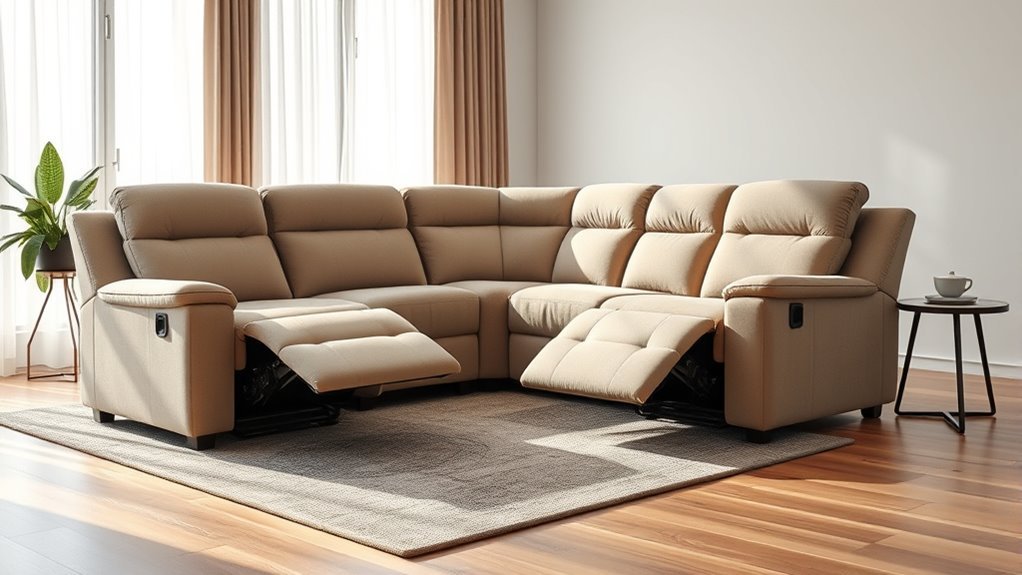
When you fully recline your sectional seats, they usually extend 24 to 36 inches into the room, depending on the model. This extra space is mainly due to the footrests pushing forward during reclining, increasing the front clearance you need to plan for.
To avoid surprises, measure the sofa’s length from its back to the extended footrest when reclined. This helps you understand the total space your sectional requires while in use.
A helpful trick is using painter’s tape on the floor to mark the reclined footprint, giving you a clear visual before buying. Properly accounting for this front space ensures your reclining sectional fits comfortably without crowding your room or obstructing walkways.
Advantages of Wall-Hugger Reclining Sectionals for Tight Spaces
You’ll love how wall-hugger reclining sectionals save space by sliding forward instead of requiring extra room behind. This clever design lets you place your sectional close to walls or windows without losing full recline functionality.
With more flexible placement options, you can maximize your seating even in the tightest rooms. It’s a smart choice if you want comfort without sacrificing space.
Space-Saving Recline Mechanism
Although space is limited, wall-hugger reclining sectionals let you enjoy full recline without needing extra room behind them. Their space-efficient design slides forward while reclining, requiring only 3 to 6 inches of clearance.
This clever mechanism maximizes room utilization, fitting snugly against walls and keeping pathways open.
| Feature | Traditional Recliners | Wall-Hugger Recliners |
|---|---|---|
| Clearance Needed | 12-18 inches | 3-6 inches |
| Recline Motion | Backward | Forward sliding |
| Space Utilization | Lower | Higher |
Placement Flexibility Benefits
How can you make the most of a tight space without sacrificing comfort? Wall-hugger reclining sectionals offer excellent placement flexibility, requiring only 3 to 6 inches behind them to fully recline.
Thanks to their sliding recline mechanism, the seat moves forward as it tilts back. This means you can place them directly against walls or near windows without losing functionality.
This design boosts space efficiency, freeing up valuable room area that traditional recliners would consume. For small living rooms or apartments where every inch counts, wall-hugger sectionals let you enjoy reclining comfort without compromising your layout options.
Measuring Doorways, Hallways, and Delivery Pathways
Before moving a reclining sectional into your home, measure all doorways, hallways, and stairwells along the delivery path. This will help guarantee the furniture fits without damage or difficulty.
Check the width and height of doorways against the sectional’s dimensions, especially in narrow spots. It’s a good idea to allow at least 12-18 inches of clearance behind standard recliners for full extension. For wall-hugger models, 3-6 inches of space is usually enough.
Marking the sectional’s footprint with painter’s tape can help you visualize the space needs better. This way, you’ll avoid any surprises when the furniture arrives.
| Location | Minimum Width | Recommended Clearance Behind |
|---|---|---|
| Doorways | 32 inches | N/A |
| Hallways | 32 inches | N/A |
| Reclining Space | N/A | 12-18 inches (standard) |
Planning Electrical Outlet Access for Power Recliners
Since power recliners need to plug into an electrical outlet within about six feet, you’ll want to plan your furniture placement carefully to guarantee easy access. Start by measuring the distance from your sectional to existing power outlets to avoid awkward cord stretches.
Positioning outlets behind furniture might require extension cords or power strips, but be mindful to keep cords tidy and off walkways to prevent tripping hazards. When arranging your room layout, consider electrical access as a priority—choose spots where cords won’t create clutter or safety risks.
Choosing the Best Sectional Configuration for Your Room Size
Getting the right sectional configuration starts with understanding your room’s size and layout. You’ll want to measure your available space carefully, including wall lengths and walking paths, to pick a sectional that fits comfortably.
Start by measuring your room’s layout and space to find a sectional that fits perfectly.
U-shaped and large modular configurations take up more space, so they’re best for bigger rooms. If you have limited space, consider L-shaped or loveseat-style sectionals, which are more compact.
Remember, power recliners add to the sectional’s size because they’re wider and deeper. But wall-hugger recliners only need a few inches behind to recline fully, saving space.
Choosing a modular sectional lets you customize the configuration to your room, optimizing space and comfort. By matching the sectional’s size and layout to your room, you’ll create a perfect fit without overcrowding.
Frequently Asked Questions
What Are the Disadvantages of Recliner Sofas?
You’ll find recliner sofas need extra space to fully recline, often feel bulky, and may require power outlets.
They can limit your room layout flexibility and make smaller spaces feel cramped or crowded.
What Is the 2/3 Rule for Sofas?
The 2/3 rule says your sofa should be no longer than two-thirds of your room’s width. This helps you keep balance, avoid overcrowding, and leave enough space for walkways and other furniture in your room.
Basically, it’s about making sure your space feels open and comfortable. You don’t want your sofa to take up too much room, right? So, sticking to this rule helps you get the size just right.
How Much Clearance Does a Reclining Sofa Need?
You’ll need about 12 to 18 inches of clearance behind a standard reclining sofa for full extension. Wall-huggers require less, around 3 to 6 inches.
Measure carefully to guarantee your recliner operates smoothly without obstruction. It’s worth taking the time to get it right so you can relax comfortably!
Are Reclining Sectionals Worth It?
You’ll feel like royalty with reclining sectionals—they’re absolutely worth it if comfort’s your throne. They transform relaxation.
But don’t forget to measure your space carefully. You don’t want to turn your room into a cramped dungeon.
Conclusion
While reclining sectionals do need extra space for fully extended seats, they don’t have to overpower your room. Wall-hugger models minimize clearance needs, letting you enjoy comfort without sacrificing space.
Plus, planning ahead by measuring doorways and outlets guarantees a smooth fit. So, if you worry about size, remember: with the right layout and sectional choice, you can have both relaxation and a stylish, spacious living area.
In short, reclining sectionals may take up a bit more space when extended, but smart choices like wall-huggers and careful planning make them a great option. You don’t have to compromise on comfort or style to keep your living room feeling open and inviting.