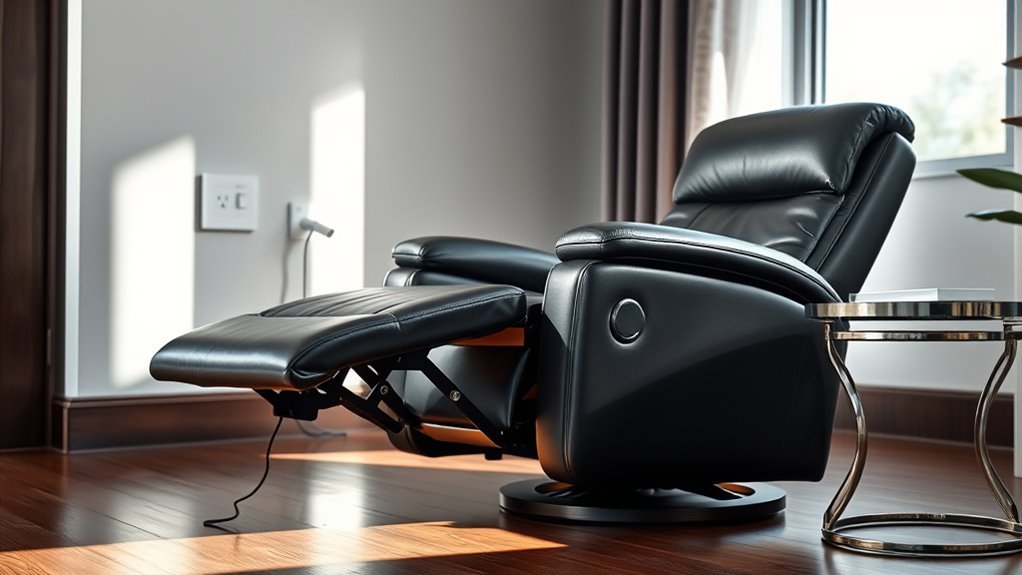
Do Power Recliners Need to Be Plugged In?
You usually need to plug power recliners into a standard outlet to operate their motors. These outlets provide the necessary electricity to adjust the chair smoothly and comfortably. Without being plugged in, most power recliners won’t function.
However, some models come with battery packs that let you recline without being tethered to a cord. These batteries offer cordless convenience and keep your recliner working during power outages. It’s a handy feature if you want freedom of movement or live in an area with unreliable power.
Proper maintenance of battery backups helps guarantee smooth operation. If you want to understand the pros, cons, and safety tips for different power options, there’s more useful info ahead.
Let’s dive into the details so you can make the best choice for your comfort and convenience.
Key Takeaways
- Most power recliners need to be plugged into a standard household outlet to run their electric motors. This is how they get the power to move and adjust positions.
- Some models come with rechargeable battery packs, so you can use them cordless. This is handy during power outages or if you want to avoid dealing with cords.
- Battery packs usually let you recline about 20-80 times before needing a recharge. You’ll have to plug them back in every now and then to keep them powered up.
- When plugged in, recliners have continuous power, which is great for frequent use. But keep in mind, the cords can be a tripping hazard since they’re visible and might get in the way.
- So, choosing between corded and cordless really depends on how often you use your recliner, where your outlets are, and whether you’re concerned about safety and aesthetics. It’s all about what works best for your space and lifestyle.
How Power Recliners Operate Electrically
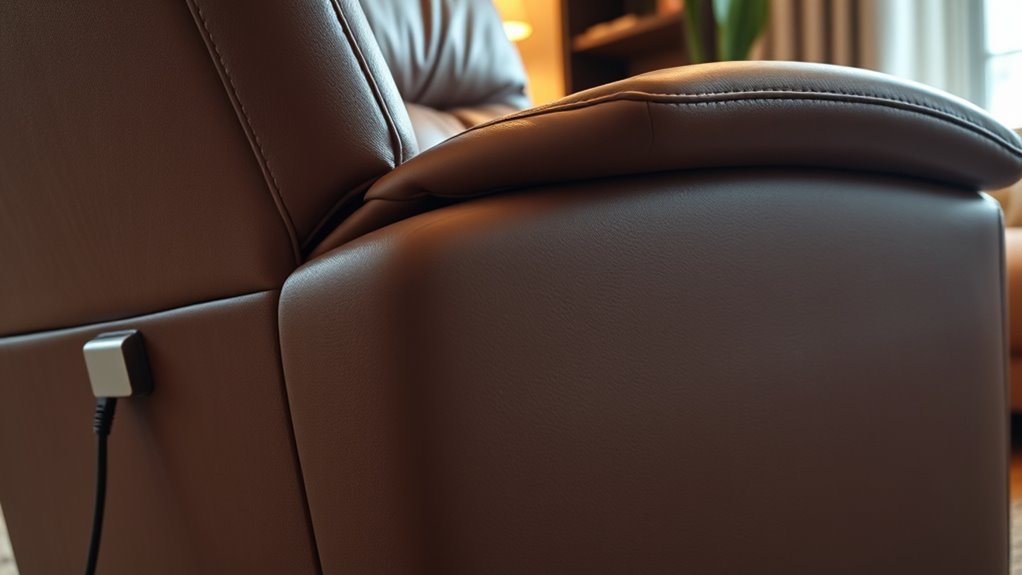
Although power recliners rely on electric motors to adjust their positions, you’ll need to keep them plugged into a standard household outlet to use their motorized functions. The electric motor inside runs on a consistent power source, usually 110V or 220V AC, depending on your region.
When you press buttons on the control panel or remote, electrical signals activate the motor to recline or lift the chair smoothly. While some models include rechargeable batteries, these typically serve as backup power rather than the main source.
This means your recliner depends primarily on being connected to an outlet for continuous operation. Without that steady power source, the motor won’t function properly, limiting your ability to adjust the chair’s position as needed.
The Role of Battery Packs in Power Recliners
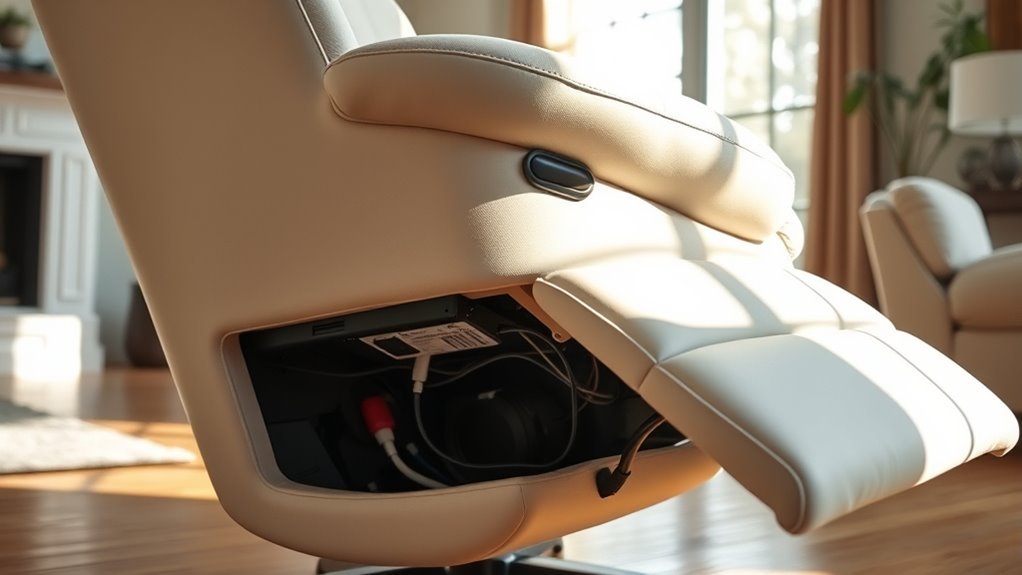
You’ll appreciate how battery packs let you use your power recliner without being tethered to an outlet. These packs offer several advantages, like supporting multiple recline cycles per charge and providing backup power during outages.
Battery Pack Advantages
When you choose a power recliner with a battery pack, you gain the freedom to operate it without plugging into a wall outlet. This battery backup provides power for 20-80 recline cycles per charge, depending on the pack’s capacity.
Weighing just 2-4 pounds, the battery is easy to handle and recharges within 4-8 hours using a standard outlet. This setup offers a reliable backup power source, especially during power outages or in rooms without nearby sockets.
Battery packs typically last 2-4 years and cost between $50 and $150, making them a practical investment. While ideal for occasional adjustments, they might not suit continuous heavy use.
Cordless Operation Benefits
Battery packs let you enjoy cordless operation with your power recliner, freeing you from needing a constant plug-in connection.
With battery packs, you can move your recliner anywhere in the room without worrying about proximity to an outlet. This cordless operation reduces clutter and trip hazards caused by cords stretching across your space.
Plus, during power outages, battery packs keep your recliner functional, ensuring you won’t be stuck in an uncomfortable position.
Fully charged, these batteries typically support 20 to 80 reclining cycles and recharge within 4 to 8 hours.
Benefits of Using Battery Backup Systems
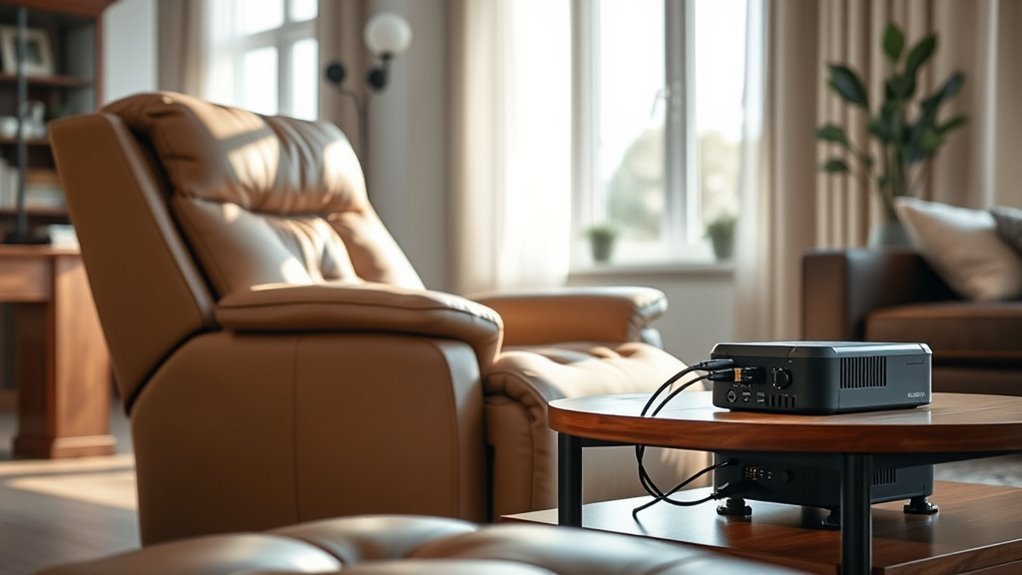
Although power outages can strike unexpectedly, using a backup system guarantees your power recliner keeps working without interruption. Battery backup systems supply reliable backup power, meeting your recliner’s power needs even during blackouts.
This means you won’t face the inconvenience or safety risks that sudden power failures can cause. With a quality battery backup like Delta 2, you can enjoy hours of uninterrupted use, depending on the system’s capacity and your recliner’s usage.
These systems also reduce the wear and tear on your recliner’s motor and battery by minimizing constant plugging and unplugging. By providing seamless power, battery backup systems help extend the lifespan of your recliner’s electrical components, ensuring you get the most out of your investment.
How to Maintain and Charge Your Recliner Battery
Since power recliners rely on their batteries for smooth operation, maintaining and charging them properly is essential to keep your recliner functioning well. Most recliner batteries recharge by plugging into a standard wall outlet, taking about 4-8 hours for a full charge.
To preserve battery life, avoid leaving it plugged in constantly unless the charger has an auto shut-off feature. It’s a good idea to monitor your battery’s charge regularly and recharge before it drops below 50% to extend longevity.
Many units include indicator lights or displays to help you track charging status easily. Also, try to store your recliner in a moderate environment, avoiding extreme temperatures, which can damage the battery.
Following these steps ensures your recliner battery stays healthy and ready whenever you need it. Taking a little extra care goes a long way!
Comparing Corded and Cordless Recliner Options
When choosing between corded and cordless recliners, consider how you’ll use and install them. Corded models provide continuous power but need a nearby outlet.
On the other hand, battery-powered ones offer mobility and fewer safety concerns since there are no visible cords. Understanding these differences helps you pick the best fit for your space and lifestyle.
Corded Recliners Overview
While corded recliners need to stay plugged into an electrical outlet to power their motors, cordless recliners give you the freedom of movement with rechargeable batteries.
Corded recliners rely on a constant AC power connection, which means you’ll see cords running from the chair to the wall. This setup can create tripping hazards and limit where you place your chair.
On the other hand, cordless models use power packs or rechargeable batteries, allowing you to move around without worrying about cords.
Here’s what to keep in mind about corded recliners: they require a direct plug-in for continuous operation. Also, visible cords may affect room aesthetics and safety.
But the good thing is, they don’t rely on battery life, so you won’t need to recharge power packs.
Choosing between corded recliners and cordless options depends on your priorities for convenience and safety. It really comes down to what works best for your space and lifestyle.
Battery-Powered Recliner Benefits
How much freedom do you want from cords when using a recliner? A battery-powered recliner offers you the convenience of cordless operation, letting you place your furniture anywhere without worrying about wall outlets.
These recliners use rechargeable batteries that can last from several days up to a month per charge, depending on usage. With portable power options, you can enjoy 20 to 80 recline cycles on a single charge, perfect for casual or frequent adjustments.
High-capacity portable power stations even support continuous recliner power for extended periods, powering multiple devices at once. Besides enhancing room aesthetics, cordless recliners reduce tripping hazards by eliminating visible cords.
If you value flexibility and freedom, a battery-powered recliner provides a clean, versatile alternative to traditional corded models. It’s a smart choice if you want both style and convenience in your living space.
Installation and Safety Considerations
Choosing between corded and cordless power recliners means thinking about more than just convenience—it’s also about installation and safety. Corded recliners require a permanent electrical outlet connection. Sometimes, you might need a professional to install them to reduce tripping hazards.
On the other hand, cordless models run on rechargeable battery packs. This means you don’t have to keep plugging them in, but keep in mind, usage time per charge is limited.
To make sure your recliner is installed properly and stays safe, here are a few tips to remember:
- Place outlets close to your recliner so cords aren’t stretched or exposed.
- Tuck cords under furniture to keep them out of the way and prevent accidents.
- Keep an eye on your battery pack’s charge level to ensure consistent performance.
Common Challenges With Power Cord Placement
Since power recliners need to stay plugged in, you often face challenges with where to place the cord without disrupting your room’s look or layout. Power cord placement can restrict how you arrange furniture, especially if the outlet is far away.
You usually can’t just move the recliner, so you’ll need to focus on cord concealment to maintain room aesthetics. Hiding the cord under furniture lips, along baseboards, or securing it with cable tape on the floor are common solutions.
Visible cords not only clash with your decor but also create tripping hazards. Managing these challenges means finding discreet ways to keep cords out of sight while ensuring they don’t interfere with your space, so your power recliner blends seamlessly into your room.
Safety Considerations for Power Recliners
Managing the placement of power cords is just one part of keeping your power recliner safe. You also need to follow essential safety precautions to avoid electrical hazards and protect your investment, whether it uses battery packs or plugs directly into an outlet.
Make sure cords aren’t frayed or loose, and never overload your electrical outlets. Using a surge protector can safeguard the motor and electronics from power surges. Regularly inspect connections to catch issues early.
Keep in mind that if your recliner has a built-in battery backup, leaving it plugged in continuously might lead to overcharging or unnecessary power drain. Here’s what you should focus on:
- Secure cords to prevent tripping and damage
- Avoid overloading outlets and use surge protectors
- Inspect cords and plugs regularly for wear and tear
Choosing the Right Power Solution for Your Recliner
When selecting a power solution for your recliner, consider how often you’ll use it and the layout of your room, including outlet availability.
If you adjust your recliner occasionally, a lightweight battery pack is ideal. These packs recharge in 4-8 hours, support 20-80 cycles per charge, and typically cost between $50-$150.
For frequent use or as an emergency backup, a high-capacity power station offers longer-lasting power, supporting 200-2000+ cycles and multiple devices.
Before choosing, check your recliner battery’s motor voltage and connector type to verify compatibility. Matching the right power solution to your usage and space will keep your recliner functional and convenient without constant plugging in.
Whether you pick a battery pack or power station, you’ll enjoy cordless comfort tailored to your needs. It’s all about what fits best for you!
Frequently Asked Questions
How to Connect a Power Reclining Couch?
To connect a power reclining couch, first locate the power port on its frame. Then, plug the power cord securely into a nearby outlet.
If the outlet isn’t close enough, you can use an extension cord. Just make sure everything’s firmly connected before you start using it.
Do Manual Recliners Last Longer Than Power?
Yes, manual recliners usually last longer than power ones because they have fewer mechanical parts.
You’ll find they’re less prone to wear and tear, often lasting 10-15 years versus 5-10 for power models.
Do Electric Recliners Use a Lot of Electricity?
You might worry electric recliners drain your power, but they don’t use much electricity—just like a lamp.
You’ll barely notice the cost, making them an energy-friendly, comfortable addition to your home.
Is There a Manual Override on a Power Recliner?
Yes, your power recliner usually has a manual override like a lever or battery backup. This lets you adjust it even during power outages.
Make sure to check your user manual to find the override. That way, you can use it properly when needed.
Conclusion
Think of your power recliner like a smartphone—it usually needs to be plugged in to work. But a battery backup lets you move freely without being tethered.
Just like how 70% of people prefer cordless phones for convenience, having a battery pack keeps your recliner functional during power outages or tricky cord placements.
By choosing the right power option and maintaining your battery, you’ll enjoy comfort without interruptions. This means your power recliner stays ready whenever you want to relax.
So, do power recliners need to be plugged in? Most do, but with a battery backup, you get the best of both worlds—power and freedom. Keeping your power recliner plugged in ensures consistent performance, while the battery backup adds flexibility and reliability, especially during outages. This combination makes your relaxation effortless and uninterrupted.