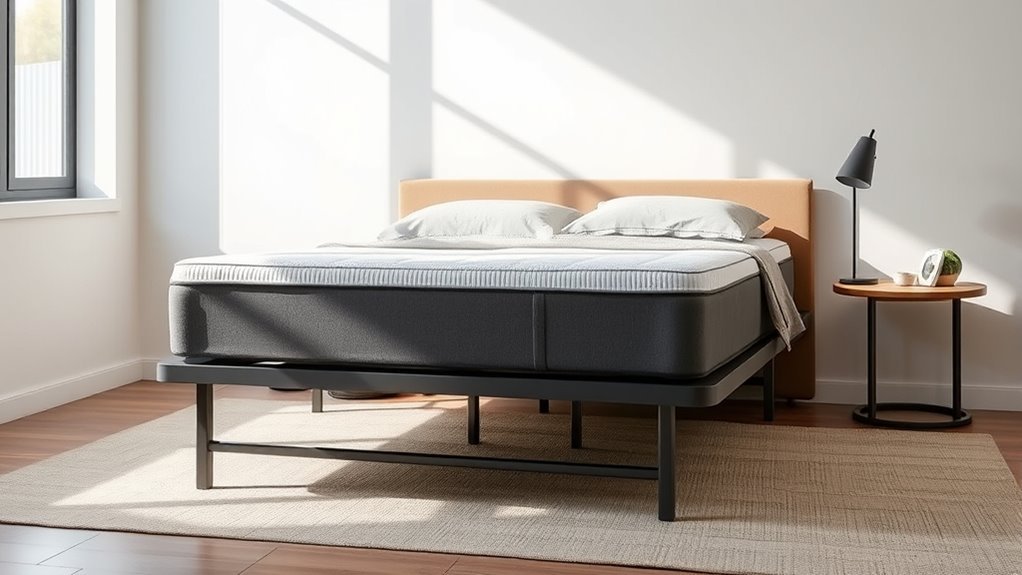
Do You Need a Box Spring With an Adjustable Base?
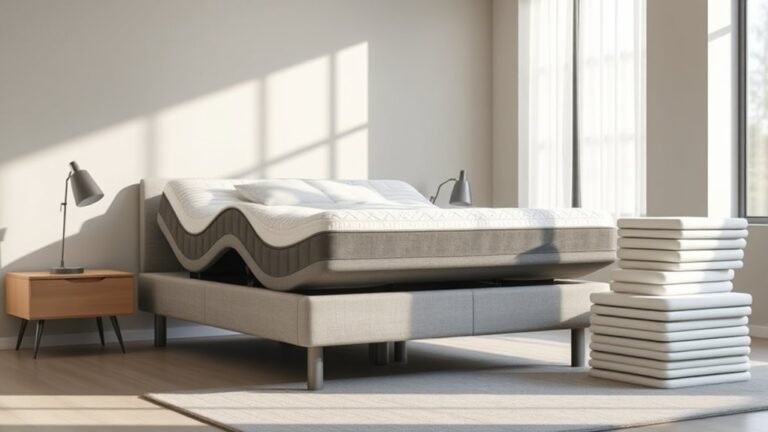
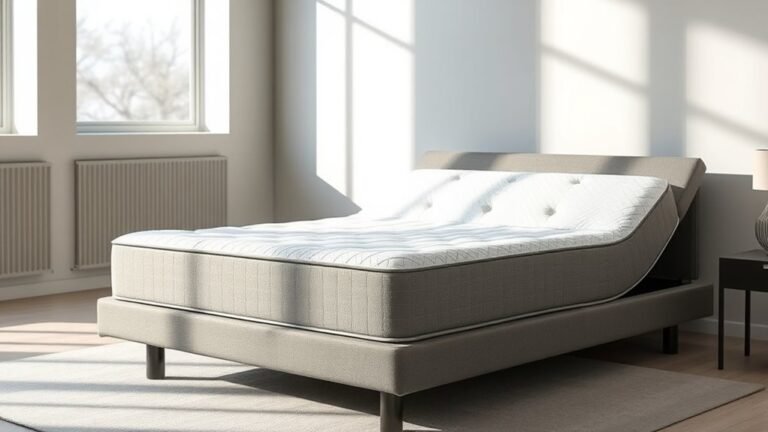
You don’t need a box spring with an adjustable base because it’s designed to support your mattress directly, ensuring even weight distribution and preventing damage. Adjustable bases work best with flexible mattresses like memory foam, hybrid, or latex.
Box springs can interfere with movement and may even void your mattress warranty. So, using just the adjustable base improves comfort and durability while giving your room a fresh, modern look.
If you’re curious about mattress compatibility, comfort benefits, or wondering when a box spring might still be helpful, keep reading. There’s plenty more to explore to make sure your setup is just right for you.
Key Takeaways
- Adjustable bases are designed to support mattresses directly without a box spring for optimal movement and warranty compliance. Using a box spring with an adjustable base can interfere with base functions and damage the mattress or base.
- Memory foam, latex, and hybrid mattresses are generally compatible with adjustable bases without needing a box spring. Box springs may be necessary only when extra height or specific frame compatibility is required.
- Make sure to confirm mattress flexibility and weight capacity to ensure proper support. This helps avoid voiding warranties when using an adjustable base.
Understanding the Role of a Box Spring
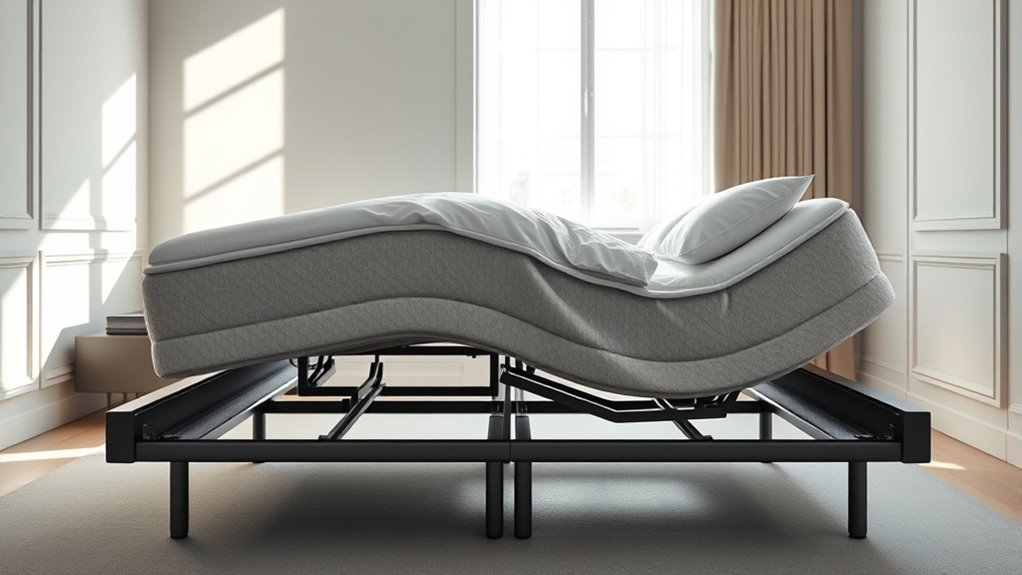
Although box springs were originally designed with coil springs to provide flexibility, today they mainly serve as a sturdy foundation made of wooden slats or steel supports that elevate your mattress, improve airflow, and absorb shock. When you use a box spring, you create a solid mattress foundation that enhances support for traditional innerspring mattresses.
This bed foundation helps distribute weight evenly, reducing wear and prolonging mattress life. While box springs work well with traditional innerspring mattresses, they aren’t usually necessary if you have an adjustable base, which offers its own support system.
How Adjustable Bases Support Mattresses
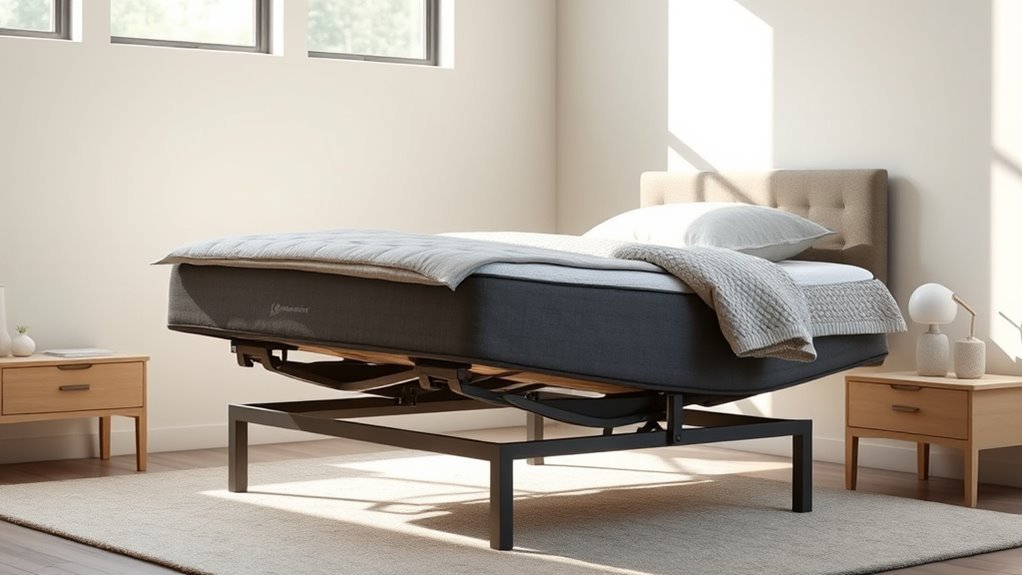
When choosing an adjustable base, you’ll want to consider how flexible your mattress needs to be to move smoothly. It’s also important to check the base’s weight capacity to ensure it can support your mattress and body comfortably.
Plus, not all mattress types work equally well with adjustable bases, so compatibility is key. You definitely don’t want to end up with a setup that doesn’t fit your needs or feels awkward to use.
Mattress Flexibility Requirements
Because adjustable bases move and bend to different positions, your mattress needs to be flexible enough to adapt without damage. Mattress flexibility is vital for compatibility with adjustable bases. It makes certain the mattress contours smoothly with the bed frame’s movements.
Foam mattresses, especially memory foam, often provide excellent flexibility. On the other hand, mattresses with dense support layers may struggle to bend properly. Choosing a mattress designed to work with adjustable bases helps preserve its shape and support over time.
| Mattress Type | Flexibility Level |
|---|---|
| Memory Foam | High |
| Hybrid | Moderate to High |
| High-Density Foam | Low |
| Traditional Innerspring | Low to Moderate |
Be sure to check manufacturer specs to confirm your mattress’s compatibility with adjustable bases. This way, you avoid damage and guarantee comfort.
Weight and Load Capacity
Since adjustable bases are engineered to support various mattress types directly, you usually don’t need a box spring to handle the weight. These bases come with a weight capacity typically ranging between 600 and 850 pounds, covering both the mattress and sleepers.
To guarantee safe use, you should always check the load limit and support specifications of your particular model. Proper mattress support depends on even weight distribution and the base’s load bearing ability, which prevents damage to the frame or motor.
If you have a heavier mattress, like dense foam or hybrid, verifying the base’s weight capacity is especially important. By matching your mattress with an adjustable base designed for its load, you maintain stability and extend mattress longevity without extra support.
Compatibility With Mattress Types
Although adjustable bases support mattresses directly, you’ll find that most modern mattress types—such as memory foam, hybrid, and latex—work well with their flexible design. These mattresses are compatible with adjustable bases because they bend without damage, eliminating the need for a box spring.
Using a box spring with your adjustable base can interfere with its movement and might void warranties or cause damage. Compatibility largely depends on your mattress type; firmer or thicker mattresses may need extra support or confirmation from the manufacturer.
Foam and hybrid mattresses, in particular, pair excellently with adjustable bases, as their flexibility aligns perfectly with the base’s motion. For ideal support and function, place your mattress directly on the adjustable base or a solid platform instead of relying on a traditional box spring.
Mattress Compatibility With Adjustable Bases
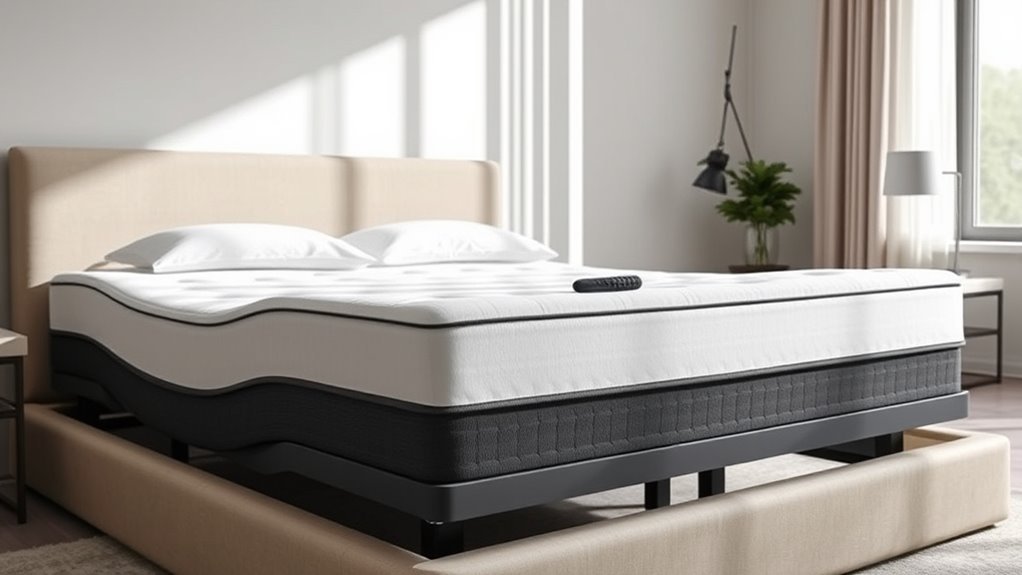
You’ll want to choose a mattress that bends easily to match your adjustable base’s movements. Memory foam, latex, and hybrid mattresses usually work best, while traditional innersprings may need extra support.
If you have a split mattress, make sure both sides are compatible with your base for smooth adjustments. It’s all about making sure everything works together without any hiccups.
Mattress Flexibility Requirements
When choosing a mattress for an adjustable base, you need to guarantee it can bend and flex easily without getting damaged. Mattress flexibility is vital because your adjustable base moves to different positions, and a compatible mattress must follow those contours smoothly.
Most modern mattresses like memory foam and hybrids offer the right pliability, eliminating the need for extra bed support or a box spring. However, traditional innerspring mattresses with stiff coils often fail foundation requirements unless paired with a proper bed frame or support system.
Always check the manufacturer’s guidelines to confirm if your mattress is suitable for adjustable bases. Ensuring your mattress meets these flexibility standards will protect its durability and provide consistent comfort with every adjustment.
Suitable Mattress Types
Since adjustable bases require mattresses that can bend without damage, you’ll want to choose types known for flexibility and support. Memory foam and latex mattresses are highly compatible with an adjustable base because they contour easily.
Hybrid models with reinforced support layers also work well. Traditional innerspring mattresses may not be the best fit unless they’re designed for flexibility.
Here’s a quick guide:
| Mattress Type | Compatibility |
|---|---|
| Memory Foam | High flexibility, ideal |
| Latex | Flexible, supportive |
| Hybrid | Compatible with reinforced support |
| Traditional Innerspring | Often requires platform bed or box spring |
| Innerspring (Flexible) | Compatible with adjustable |
Always check your mattress’s manufacturer guidelines to make sure it suits your adjustable base. That way, you can avoid any damage or warranty issues down the line.
Split Mattress Considerations
Although adjustable bases often support a single mattress, split mattresses offer a flexible solution for couples who want independent control over their sides. When considering split mattresses, you need to ensure compatibility with your adjustable base.
Not all bases are designed to handle dual-mattress setups, so verify your base supports split or dual-mattress configurations. Using two separate mattresses on an adjustable base lets each sleeper adjust their side without disturbing the other.
Many split mattresses are specifically made to work with adjustable bases, providing proper support and full range of motion. Always check that the total width and weight of your split mattress fall within the adjustable base’s support system limits to maintain durability and comfort.
This guarantees maximum performance and longevity for both mattress and base. It’s definitely worth taking the time to double-check these details before you buy!
Advantages of Using an Adjustable Base Alone
Because an adjustable base can support most mattresses directly, you don’t need a box spring to create a stable foundation. This setup offers excellent support and durability that often outperforms traditional box springs.
Modern mattresses designed for adjustable bases handle movement and positioning well, so compatibility isn’t an issue whether you have memory foam, hybrid, or latex mattresses. Using just an adjustable base simplifies your bed’s foundation, reduces overall height, and makes accessing or cleaning beneath the bed easier.
When a Box Spring Might Still Be Necessary
You might need a box spring if your bed frame requires extra height to fit your adjustable base comfortably. Some frames also need the added support a box spring supplies to ensure everything stays stable.
Before skipping it, check if your setup calls for that extra boost in height or compatibility. It’s always good to double-check so your bed feels just right!
Height Requirements
When your mattress sits too low for comfort, adding a box spring can raise the overall height of your bed. This makes it easier to get in and out.
If you have a low-profile mattress or an adjustable base that doesn’t provide enough elevation, a box spring or a low-profile foundation can offer the extra height you need.
It also helps when your bed frame has widely spaced slats. The box spring provides proper support to protect your mattress.
Additionally, if you’re using a panel bed with a headboard and footboard, a box spring can help achieve the ideal height to match your furniture’s style.
In these cases, supporting your mattress with the right foundation is key for comfort and durability. It really makes a difference in how your bed feels and lasts.
Frame Compatibility
Although most modern adjustable bases support mattresses directly without needing a box spring, some frame types and mattress models still call for one. Frame compatibility plays a key role in deciding if a box spring is necessary.
For example, platform beds and slatted foundations usually offer enough support, eliminating the need for a box spring. However, older bed frames or certain mattress warranties might require one to maintain proper support and avoid damage.
| Bed Frame Type | Box Spring Needed? | Emotion |
|---|---|---|
| Platform Bed | No | Relief |
| Slatted Foundation | Usually No | Confidence |
| Traditional Frame | Sometimes Yes | Caution |
Understanding frame compatibility ensures you protect your adjustable base and mattress investment. It’s definitely worth checking before making a decision!
Impact on Bed Height and Room Aesthetics
Since adjustable bases add between 8 to 15 inches to your bed height, they considerably affect both the room’s aesthetics and how easily you can get in and out of bed.
Unlike a traditional box spring, which raises bed height to about 25-30 inches and can overwhelm smaller rooms or those with low ceilings, an adjustable base offers more customizable options.
By eliminating the box spring, you create a lower, sleeker bed height that enhances a modern appearance, complementing minimalist or contemporary decor.
This change improves room aesthetics by aligning your bed better with your furniture and overall style.
Ultimately, choosing an adjustable base without a box spring lets you tailor bed height for both visual appeal and practical ease.
Health and Comfort Benefits of Adjustable Bases
If you want to improve your sleep quality and overall well-being, an adjustable base offers significant health and comfort benefits. By customizing your sleep position, it helps support your mattress and foundation to align your spine properly, reducing back pain.
Enhance sleep quality and reduce back pain with an adjustable base that aligns your spine perfectly.
Elevating your head can ease symptoms of sleep apnea and acid reflux, making breathing and digestion more comfortable. The adjustable base’s support zones adapt to your body, relieving pressure points and joint pain, especially if you suffer from arthritis.
Some models even include massage functions that relax muscles and decrease nighttime tension. Plus, improving circulation through better support enhances overall sleep health.
With an adjustable base, you get personalized comfort and support that a traditional mattress and foundation combo can’t match. It’s like having a sleep setup made just for you!
Comparing Durability and Longevity of Foundations
Beyond enhancing your comfort and health, an adjustable base also improves the durability and longevity of your sleep setup. Unlike a box spring, which may wear out quickly under modern mattresses, an adjustable base provides consistent, customized support that prevents sagging and structural issues.
This means your mattress stays in better shape longer, and you avoid the uneven support that worn box springs often cause. Choosing an adjustable base over a box spring offers you reliable, tailored support that adapts to your mattress.
You’ll also reduce the risk of foundation failure and extend your mattress lifespan. Plus, it enhances the overall durability of your sleep system.
In short, with an adjustable base, you’re not just improving comfort—you’re protecting your mattress and maximizing its longevity. Peace of mind knowing your investment lasts? That’s a win.
Cost Considerations Between Adjustable Bases and Box Springs
Although adjustable bases come with a higher price tag—typically between $1,299 and $1,895—they offer advanced features like massage functions, USB ports, and customizable positions.
A box spring, on the other hand, costs considerably less, usually between $200 and $500, providing basic support without the added tech.
When considering your budget, weigh the cost against the benefits each option offers.
If you want simple, effective support, a box spring fits the bill without breaking the bank.
But if you value customizable comfort and extra features, an adjustable base justifies its higher price.
| Feature | Adjustable Base | Box Spring |
|---|---|---|
| Price Range | $1,299 – $1,895 | $200 – $500 |
| Support Type | Motorized, customizable | Basic, mechanical |
| Extra Features | Massage, USB ports, positions | None |
Tips for Transitioning From a Box Spring to an Adjustable Base
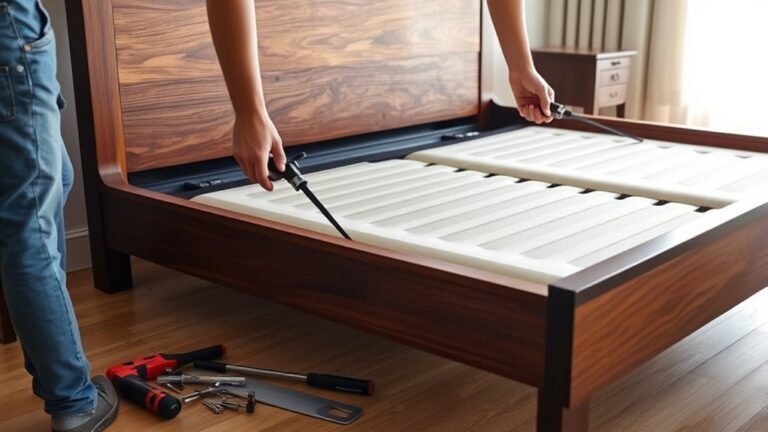
When you switch from a box spring to an adjustable base, you’ll need to remove the box spring and place your mattress directly on the adjustable platform to guarantee proper support. This changeover ensures your mattress works seamlessly with the adjustable base, maintaining comfort and durability.
Make sure to check your mattress compatibility so you don’t accidentally void warranties or cause damage. If your mattress isn’t designed for adjustable bases, it might be worth upgrading to a flexible, supportive model.
Confirm mattress compatibility to protect warranties and avoid damage when switching to an adjustable base.
For extra height or foundation support, consider using low-profile foundations like bunkie boards instead of traditional box springs. This will help keep your bed setup stable and comfortable.
- Feel confident knowing your bed setup maximizes comfort
- Enjoy personalized support with your adjustable base
- Avoid damage by confirming mattress compatibility
- Experience easier transition with the right foundation
- Sleep better with a supportive, flexible base foundation
Frequently Asked Questions
Can You Use an Adjustable Base Instead of a Box Spring?
Yes, you can use an adjustable base instead of a box spring. It supports your mattress directly, improves flexibility, and won’t void warranties, as long as your mattress is compatible and you place it straight on the base.
Using an adjustable base gives you more control over your sleeping position, which can be great for comfort and health. Just make sure your mattress is designed to work with an adjustable base to avoid any issues.
Why Are People No Longer Using Box Springs?
You’re no longer using box springs because modern mattresses need solid support. Box springs can actually void warranties, which is a big deal if you want to keep your mattress protected.
Also, adjustable bases work way better without them. Plus, skipping box springs gives your bedroom a sleek, minimalist look you’ll love. It just feels cleaner and more modern.
What Are the Downsides of Adjustable Beds?
Adjustable beds offer comfort but can be noisy and costly. You’ll face maintenance, potential mattress wear, and compatibility issues.
While they enhance rest, you might deal with electrical glitches and limited mattress options. It can definitely complicate your sleep setup.
What Are People Using Instead of Box Springs?
You’re likely using platform beds, slatted bases, bunkie boards, or adjustable bases instead of box springs. These options offer sturdy, modern support for your mattress.
They also improve airflow and comfort without the bulk of traditional box springs. It’s a smart switch that many people are making these days!
Conclusion
You don’t need a box spring with an adjustable base—these modern marvels provide the support your mattress craves all on their own. Think of it like swapping a horse-drawn carriage for a sleek electric car: why stick with old-fashioned when you can enjoy enhanced comfort, health benefits, and durability?
If you’re moving from a box spring, just follow a few simple tips, and you’ll be reclining like royalty in no time.
Adjustable bases are designed to work without the bulk of a box spring, offering better flexibility and support tailored to your needs. Plus, they help improve circulation and reduce pressure points, making your sleep healthier and more restful.
So, when considering whether you need a box spring with an adjustable base, the answer is no. Embrace the convenience and innovation of an adjustable base, and upgrade your sleep experience today!