Do You Need a Boxspring for Your Memory Foam Mattress?
You don’t need a boxspring for your memory foam mattress because it requires firm, even support to maintain its shape and comfort.
Boxsprings have coils that create uneven pressure, which can cause sagging and reduce your mattress’s lifespan.
Instead, use a solid platform bed, bunkie board, or closely spaced slats for proper support.
These options keep your mattress stable and help it last longer.
Keep exploring to find the best foundation that suits your needs.
Trust me, giving your memory foam mattress the right base really makes a difference!
Key Takeaways
- Memory foam mattresses need a firm, flat support surface instead of a traditional boxspring with springs.
- Using a boxspring can actually cause uneven pressure and sagging because of its coil structure.
- The best support options are platform beds with closely spaced slats or solid surfaces.
- Bunkie boards or adjustable bed bases also work well since they provide firm, consistent support and help keep your mattress in shape.
- So, it’s a good idea to avoid boxsprings if you want to extend the life of your mattress.
- This will also improve comfort and prevent premature wear of your memory foam.
What Is a Boxspring and How Does It Work?
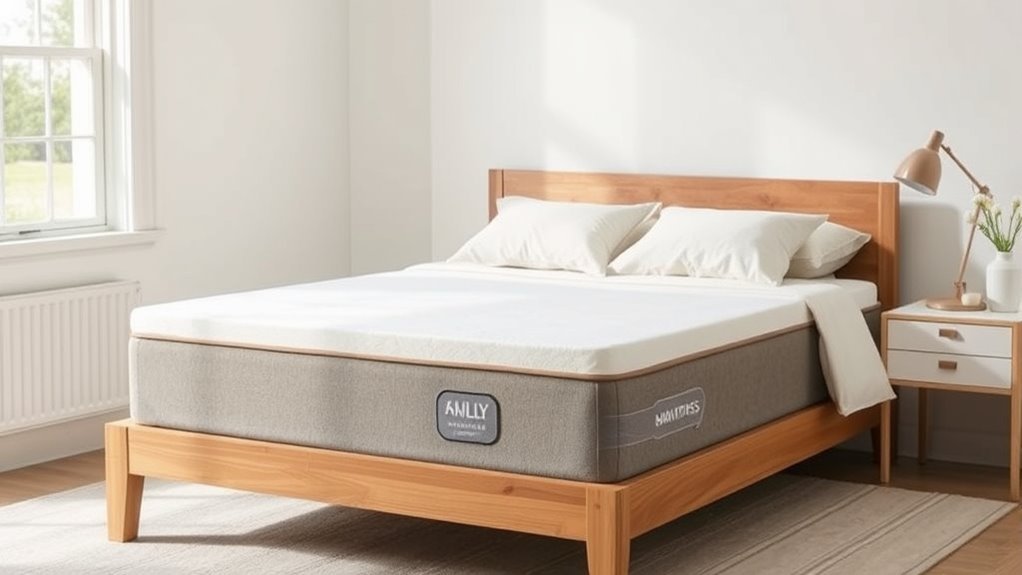
Although you might not always notice it, a boxspring plays a crucial role in supporting your mattress by providing a sturdy wooden frame filled with metal coils or springs that elevate and cushion the bed. The springs inside absorb shock and offer bounce, which helps your mattress maintain its shape and comfort over time.
By lifting the mattress off the bed frame or floor, the boxspring also adds height and improves air circulation underneath. This support distributes your weight evenly, reducing wear and tear and extending your mattress’s lifespan.
While some modern boxsprings lack springs, they still provide a flat, firm base to keep your mattress stable and comfortable. So, even without the springs, they make sure you get the most out of your bed setup.
Why Memory Foam Mattresses Typically Don’t Need Boxsprings
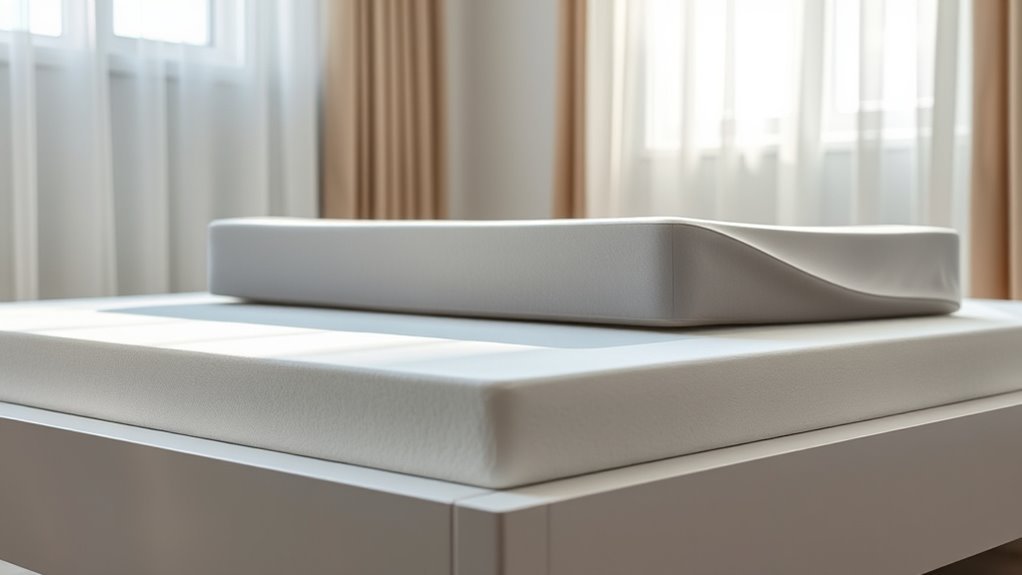
While traditional mattresses benefit from the springy support of a boxspring, memory foam mattresses work differently. Their dense, rigid structure provides built-in support, making a box spring unnecessary.
Memory foam mattresses have built-in support, so they don’t need the springy foundation of a box spring.
In fact, using a box spring can cause uneven pressure, which might lead to sagging and shorten your mattress’s lifespan. Instead, memory foam mattresses need a solid base that offers firm, even support without springs.
Platform beds or solid slatted bases work great because they prevent sagging and help maintain the mattress’s shape. The right support enhances comfort and stops premature wear by distributing your weight evenly.
Since a box spring’s coils create uneven support points, they don’t align with the uniform compression memory foam requires. So, trust a solid base to keep your memory foam mattress comfortable and durable.
Alternatives to Boxsprings for Memory Foam Support
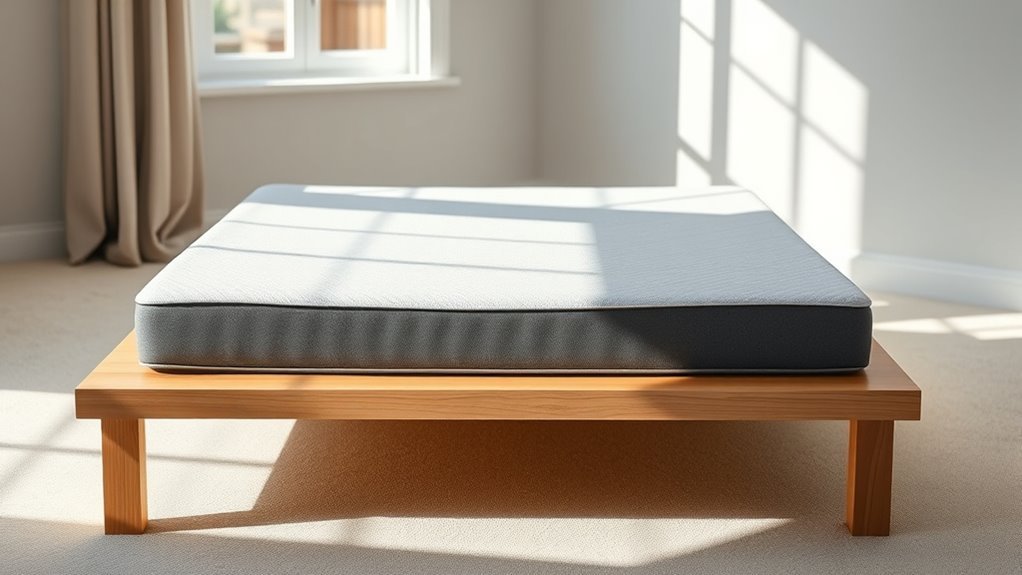
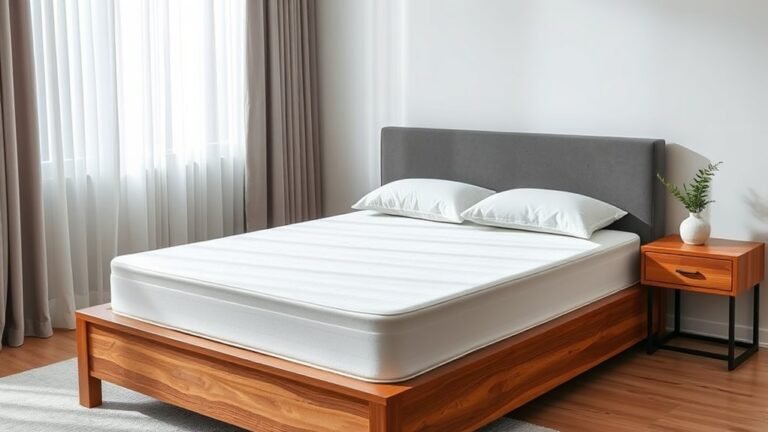
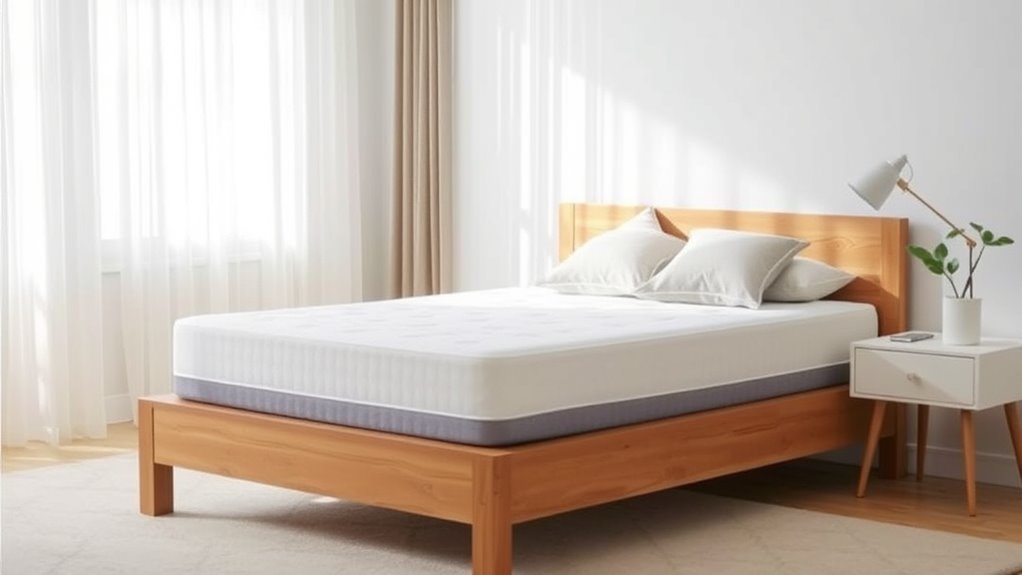
Since memory foam mattresses need firm, even support, you’ll want to skip traditional box springs and look for alternatives that provide a solid, stable base. One popular choice is a platform bed, which offers solid support through sturdy slats or a solid surface, eliminating the need for a box spring.
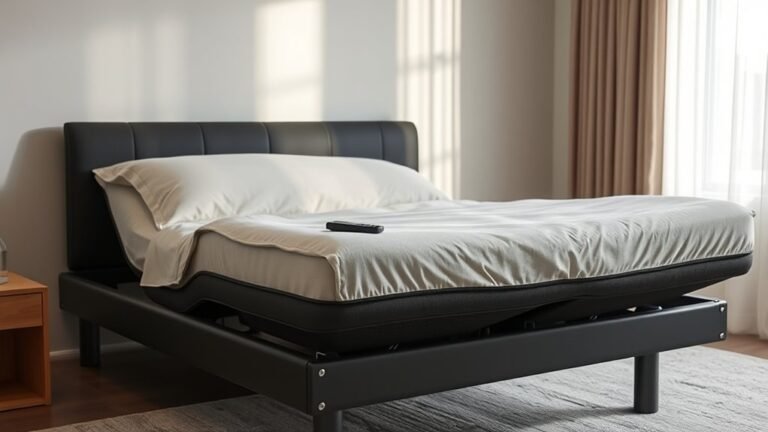
If you already have bed frames, adding a bunkie board—a thin wooden or metal panel—can create the firm foundation your memory foam mattress requires. Adjustable bed bases also serve as excellent alternatives, allowing you to customize the support and position.
While placing your mattress directly on the floor is an option, it’s less ideal due to poor airflow and potential moisture issues. Choosing the right alternative guarantees your mattress performs well and lasts longer.
How Platform Beds Provide Proper Support for Memory Foam
You’ll find that platform beds with closely spaced slats offer the perfect balance of support and airflow for your memory foam mattress. This setup keeps your mattress from sagging while promoting durability by allowing it to breathe.
Choosing a platform bed means you won’t need an extra foundation, making it a simple and effective support solution. It’s a straightforward way to keep your mattress comfortable and long-lasting.
Slatted Support Benefits
When you choose a platform bed with slatted support, you give your memory foam mattress a firm, even foundation that prevents sagging and prolongs its life. Slatted support in platform beds is designed to offer proper support by spacing slats no more than 2-3 inches apart, which avoids indentations and maintains mattress shape.
Plus, this setup promotes airflow beneath the mattress, helping keep it cool and comfortable.
Here’s what slatted support benefits you get:
- A sturdy base that supports heavy memory foam without bending.
- Consistent mattress support to prevent sagging and prolong lifespan.
- Enhanced airflow that reduces heat buildup for better sleep quality.
Choosing platform beds with slatted support means you can skip the box spring without sacrificing comfort or durability. It’s a smart choice for keeping your mattress comfy and lasting longer.
Airflow and Durability
Although memory foam mattresses offer exceptional comfort, they need proper support to maintain their shape and longevity. A platform bed with a slatted design promotes excellent airflow, preventing heat buildup and moisture retention beneath your mattress.
This airflow helps keep your sleeping environment cool and dry, enhancing comfort and hygiene. The slats, spaced about 2 to 3 inches apart, provide sturdy, even support that prevents sagging and preserves the mattress’s structure.
Unlike box springs, platform beds eliminate gaps that trap dust and allergens, boosting your mattress’s durability. With a stable, flat surface, a platform bed minimizes pressure points, helping your memory foam retain its contouring properties over time.
Choosing a platform bed ensures your mattress stays supported, breathable, and long-lasting. It’s a simple way to get the most out of your memory foam mattress.
Impact of Support Type on Mattress Longevity and Comfort
Because proper support directly affects both comfort and mattress lifespan, choosing the right foundation is essential for your memory foam mattress. A flat, sturdy foundation prevents sagging and uneven wear, boosting durability.
Using a box spring often causes unnecessary sinking, compromising support and comfort. So, it’s better to consider other options that offer more consistent support.
For example, a rigid platform bed offers consistent, flat support that helps maintain your mattress’s firmness and shape.
Or, you might want to try a Bunkie board, which provides a solid, even base to prevent indentations and permanent dents.
Plus, proper support also improves airflow, reducing heat retention and making your mattress more comfortable to sleep on.
Selecting the Best Foundation for Your Memory Foam Mattress
You’ll want to choose a foundation that offers firm, even support to safeguard your memory foam mattress. Different bases, like platform beds or solid foundations, affect how well your mattress performs and lasts.
Matching the right foundation to your foam type ensures you get the comfort and durability you expect. It’s all about giving your mattress the support it needs so you can enjoy a great night’s sleep.
Foundation Types Explained
When choosing a foundation for your memory foam mattress, it’s crucial to pick one that offers flat, sturdy support to keep the mattress in shape and prevent sagging.
Traditional box springs often don’t provide the even support memory foam needs, which can shorten its lifespan. So, it’s better to look for other options.
Instead, consider these foundation types:
- Platform bed with solid or closely spaced slats (less than 3 inches apart) to ensure proper support and airflow.
- Bunkie board, a thin, rigid layer that adds stability without raising bed height.
- Foundations designed specifically for memory foam, offering a flat, firm surface to maintain mattress integrity.
Support Impact on Mattress
Choosing the right foundation directly affects how well your memory foam mattress performs and lasts. Proper mattress support prevents sagging, maintains contouring, and enhances pressure relief.
Traditional box springs often cause uneven weight distribution, which can shorten your mattress’s life. Instead, solid surfaces like platform beds or bunkie boards provide firm, flat support that’s critical for your mattress’s durability.
| Foundation Type | Support Impact |
|---|---|
| Traditional Box Spring | Uneven support, reduces lifespan |
| Platform Bed | Firm, flat surface, ideal support |
| Solid Slatted Base | Supports with minimal gaps (<3") |
| Bunkie Board | Rigid, prevents sinking or bowing |
| Foundation Panel | Stable surface, enhances pressure relief |
Choosing the right support keeps your mattress comfortable and extends its life. It’s one of the best ways to protect your investment and enjoy restful sleep for years to come.
Matching Foundations to Foam
Although memory foam mattresses can work with various foundations, matching them to the right support is essential to preserve their shape and comfort. To get the best from your memory foam mattress, focus on a foundation that offers firm, flat support.
Here are three top options:
- Platform Bed – provides a solid, even surface that prevents sagging and supports proper weight distribution.
- Bunkie Board – a thin, sturdy layer that fits under your mattress, enhancing support without adding bulk.
- Slatted Foundation – choose one with slats spaced no more than 2-3 inches apart to ensure consistent support.
Avoid box springs, as they can cause premature wear. Proper support not only extends your mattress’s life but also maintains comfort and pressure relief. So, picking the right foundation really makes a difference!
Frequently Asked Questions
Do I Really Need a Box Spring Under My Mattress?
No, you don’t need a box spring under your memory foam mattress.
You’ll get better support and durability by placing it on a solid, flat surface or a platform bed designed for memory foam.
It really helps to keep your mattress in good shape for longer.
What Happens if You Sleep on a Box Mattress Before 24 Hours?
If you sleep on your memory foam mattress before 24 hours, you’ll likely face chemical odors and discomfort. It might feel firmer, and those fumes can cause headaches or irritation, so it’s best to wait and let it fully off-gas.
Trust me, giving it that time really makes a difference. Your nose and body will thank you!
What Are People Using Instead of Box Springs?
You’re likely using platform beds with built-in slats, bunkie boards, solid plywood foundations, or adjustable bases instead of box springs.
These options offer sturdy, even support that suits memory foam mattresses perfectly.
They’re pretty popular because they keep your mattress in great shape and provide the right kind of support without the bulk of a traditional box spring.
What Is a Box Spring Bed?
Think of a box spring bed as a mattress’s supportive dance partner—a wooden or metal frame filled with springs that lifts and cushions your mattress.
It enhances comfort and longevity while adding a bit of stylish height to your sleeping setup.
Pretty neat, right? It’s like giving your mattress a little extra love and support every night.
Conclusion
You don’t need a boxspring cradling your memory foam mattress like an old-fashioned cradle. Instead, imagine your mattress resting on a sturdy platform bed—like a ship anchored firmly in calm waters. This setup provides the perfect support it needs to breathe and last.
Choosing the right foundation is like planting roots for a tree; it helps your mattress grow comfortable and strong over time. So, pick wisely, and let your sleep bloom night after night. Remember, a solid base is essential for memory foam mattresses to maintain their shape and durability. By skipping the boxspring and opting for a platform bed or slatted foundation, you ensure better airflow and support. This will keep your mattress in top condition, helping you enjoy restful, rejuvenating sleep for years to come.