Why Do Power Recliners Have to Be Plugged In?
You have to keep power recliners plugged in because their electric motors need a constant power source to move and hold positions smoothly. Without electricity, the motor can’t function, so your recliner won’t adjust.
Most models don’t have manual overrides, meaning they stop working if unplugged.
Some power recliners use batteries, but those still need recharging and offer limited time. So, even with batteries, you’re not completely free from power sources.
If you want to understand why placement and power options matter, there’s more to discover.
Key Takeaways
- Power recliners rely on electric motors that need a continuous power source to operate and adjust positions. Plugging in ensures a steady electricity supply for smooth and precise reclining movements.
- Without being plugged in, the motor simply can’t function, which means all electronic adjustments are disabled.
- Sure, there are battery-powered options out there, but they usually have limited runtime and need recharging. This makes plug-in models way more reliable for everyday use.
- Also, it’s important to place the recliner near an outlet. Using extension cords can lead to safety issues, so keeping it close helps maintain consistent power without any hassle.
Understanding the Electric Motor in Power Recliners
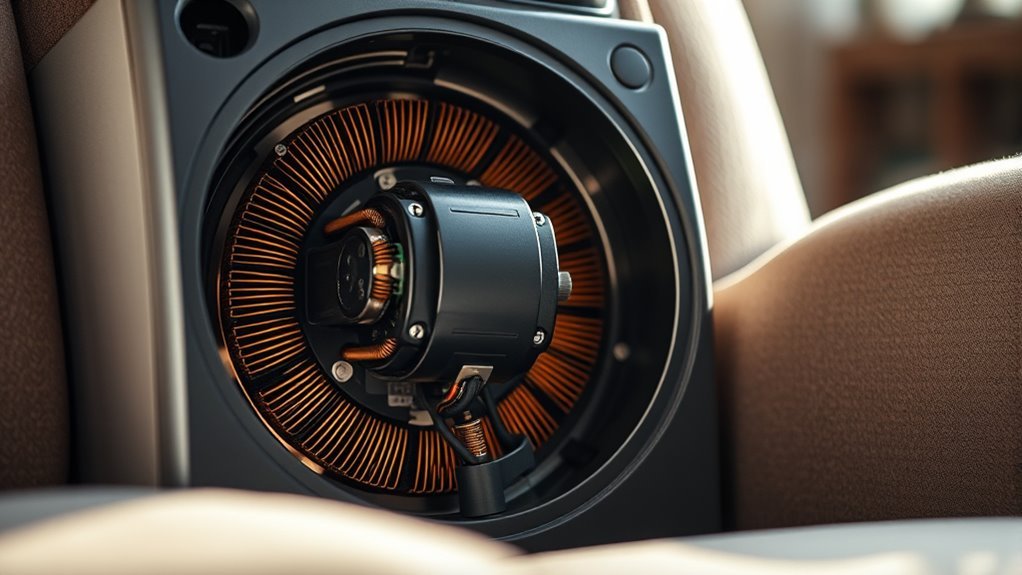
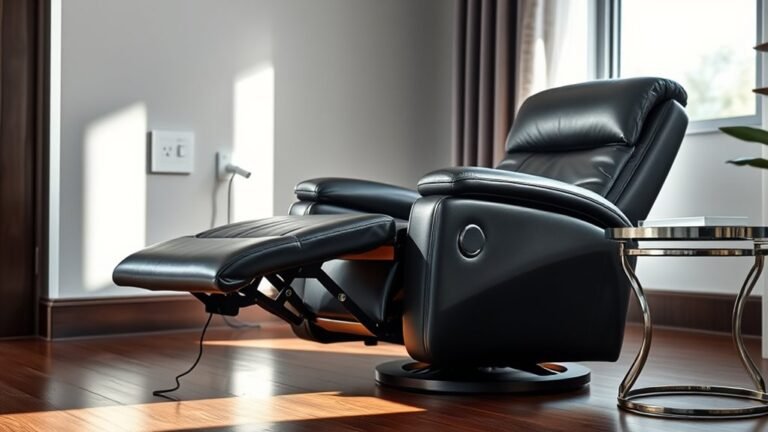
Although power recliners look simple to use, their electric motors require a constant power source to operate and adjust positions smoothly. When you press a button on the control system—like a remote or side panel—it sends electrical signals to the motor, activating the reclining mechanism.
This electric motor’s power consumption is minimal when idle but essential for precise movements. Because of the motor design, there’s no manual override, so you can’t adjust the recliner without electricity.
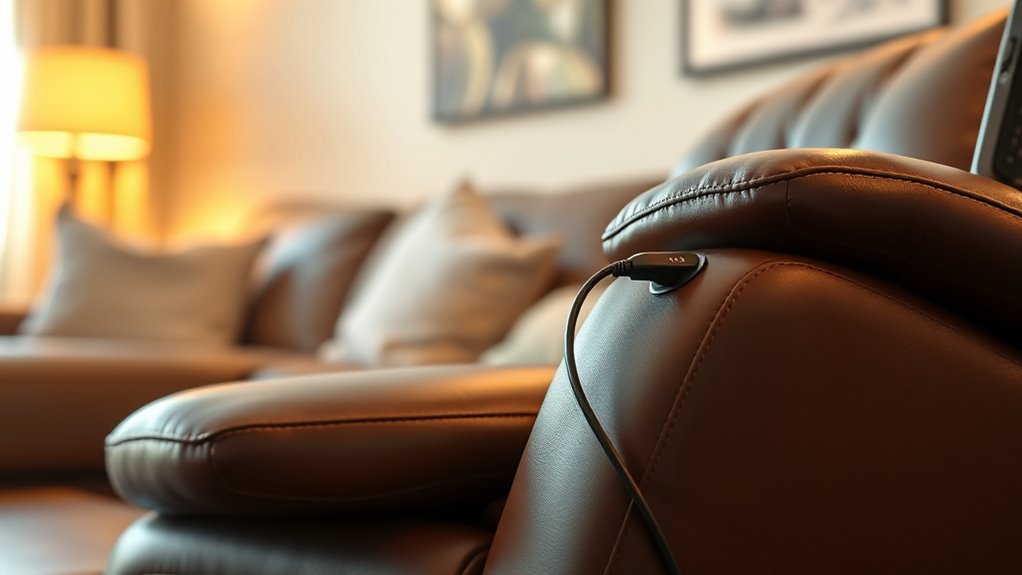
The recliner depends on a continuous electrical supply delivered through the power cord to function properly. Without this, the motor can’t generate enough force to move or hold your desired position.
Exploring Power Sources: Plug-In vs. Battery Options
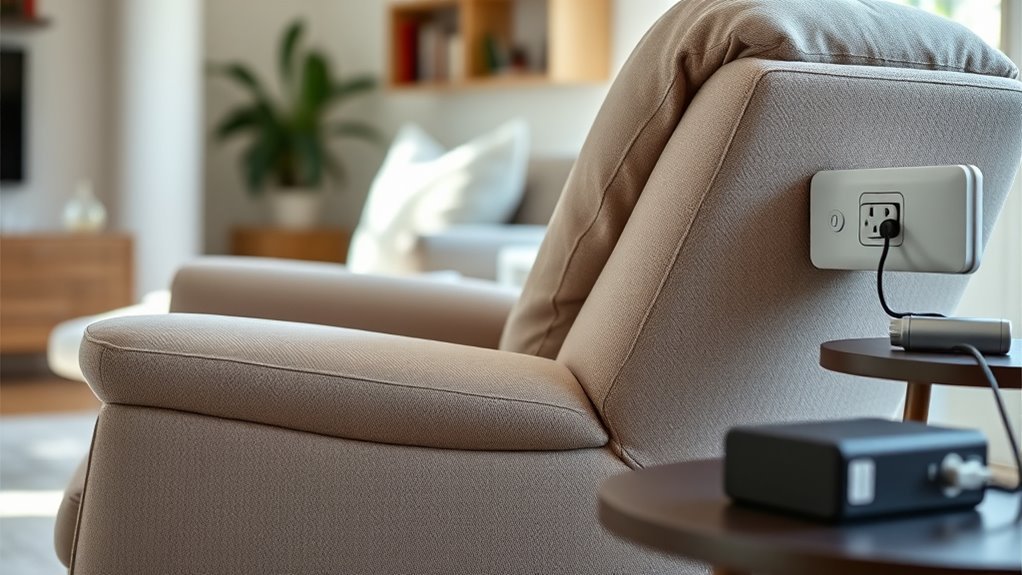
When choosing a power recliner, you’ll find that most models need to be plugged into an electrical outlet to keep their motors running smoothly. Plug-in recliners rely on a steady power supply to support multiple functions like adjusting positions and heating.
However, battery-powered recliners use rechargeable batteries, offering cordless operation and greater placement flexibility since you’re not limited by outlet locations. The trade-off is that battery backup typically provides limited usage time before needing a recharge.
Some recliners combine both options, letting you switch between plug-in power and battery backup for added convenience. Understanding these power sources helps you pick a recliner that fits your space and lifestyle, balancing continuous power supply with the freedom of cordless operation.
The Role of Electricity in Recliner Functionality
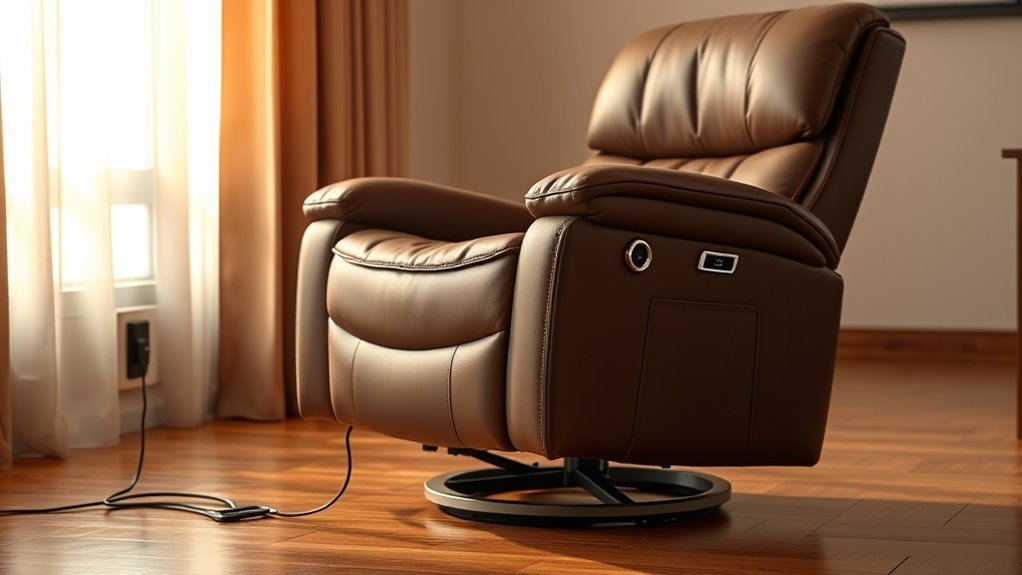
Understanding how power sources affect your recliner’s operation helps clarify why electricity plays a key role in its functionality. Your recliner’s motor needs electricity to convert energy into mechanical movement, enabling smooth adjustments.
Without a power source, the motor won’t operate, so the chair can’t recline electronically. Most models use a power cord plugged into an electrical outlet for consistent energy supply. Some include rechargeable batteries, but these still require electricity to recharge and maintain functionality.
| Component | Function | Power Source |
|---|---|---|
| Motor | Converts energy to movement | Electricity |
| Power Cord | Connects to outlet | Electrical outlet |
| Mechanical Movement | Enables reclining action | Motor |
| Rechargeable Battery | Stores energy temporarily | Electricity recharge |
| Recliner Functionality | Depends on constant energy supply | Power source |
Placement Considerations for Power Recliners
Since power recliners rely on a constant electrical connection, you’ll need to place them near an outlet to guarantee smooth operation. When considering placement, find a convenient electrical outlet to avoid using extension cords, which can pose safety risks and increase electrical costs.
Proper cord management is essential; secure cords to prevent tripping hazards and damage. If placement flexibility is a priority, look for models with rechargeable batteries, letting you position the recliner further from a wall outlet without sacrificing power.
Always evaluate the distance between the power source and your recliner, balancing convenience and safety. Thoughtful placement considerations ensure your recliner operates efficiently while maintaining a tidy, hazard-free space.
What Happens When a Power Recliner Is Unplugged
If you unplug your power recliner, you’ll quickly notice it stops responding because its motors lose power. Without a continuous power supply, the motor can’t drive any movement or adjustment, rendering the recliner non-functional.
Most power recliners rely entirely on electricity, so when unplugged, neither the electronic features nor the motor will work. Some models include a battery pack to provide limited backup power, allowing brief use before needing to recharge.
However, once that battery drains, the recliner will again become unresponsive until you reconnect it to a power source. So, if you want your power recliner to maintain full functionality and smooth movement, keeping it plugged in is essential.
Otherwise, you’ll lose all adjustment capabilities and electronic convenience.
Frequently Asked Questions
Should I Unplug My Power Recliner When Not in Use?
Yes, you should unplug your power recliner when not in use to save energy and reduce fire risks.
It’s a simple step that can help keep your home safer. Just remember to keep it plugged in if you want it ready for quick use or if it has battery backup.
Can Electric Recliners Work Without Electricity?
You might think electric recliners work without power, but they don’t—unless they have a battery backup or manual override.
Without electricity, you won’t be able to move or adjust them, so they mostly stay put when unplugged.
What Are the Disadvantages of Power Recliners?
You’ll face limited placement, risk of tripping over cords, higher energy bills, and motor failure during outages.
Plus, power recliners can wear out electrically over time, making them less reliable and less flexible than manual chairs. It’s something to think about if you want a hassle-free experience.
Can Power Recliners Be Operated Manually?
Yes, you can operate some power recliners manually using a lever or release feature, but it depends on the model.
Not all offer this, so you’ll want to check your recliner’s manual or specs first.
Conclusion
Now that you know why power recliners have to be plugged in, you won’t be left in the dark when your chair suddenly stops moving. Without a constant power source, these electric motors just can’t perform their magic.
Sure, batteries exist, but they’re no match for the steady energy a plug provides. So, keep your recliner connected—because without electricity, it’s about as useful as a screen door on a submarine!
In short, power recliners need to be plugged in to ensure a reliable power supply for smooth operation. The electric motors inside require constant energy to move the chair’s parts efficiently. While battery-powered options are available, they typically don’t offer the same consistent performance and can run out quickly.
So, if you want your power recliner to work seamlessly and last longer, it’s best to keep it plugged into a power outlet at all times. This way, you’ll enjoy comfort without interruptions, making your investment in a power recliner truly worthwhile.