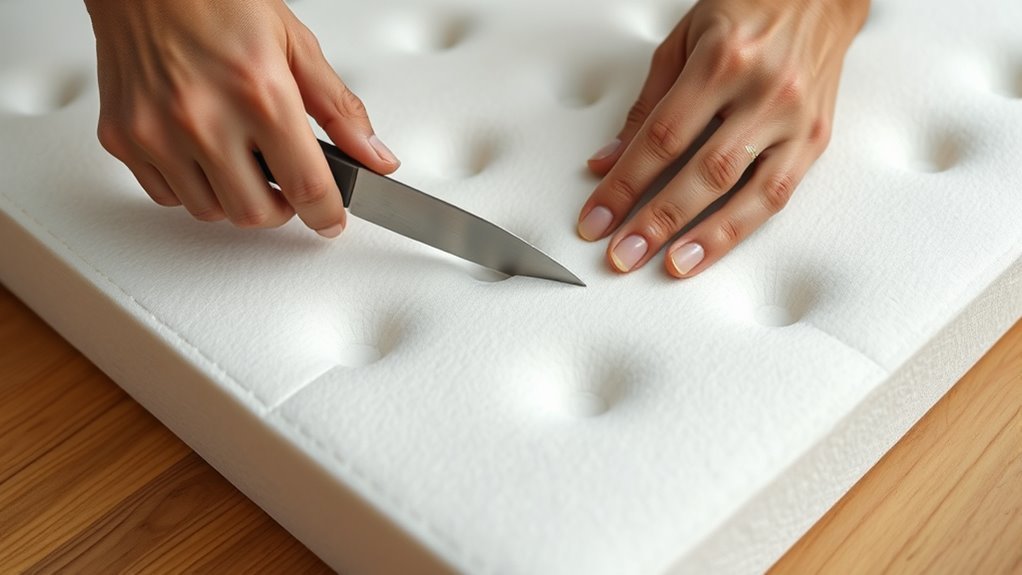
How You Cut a Memory Foam Mattress Step by Step
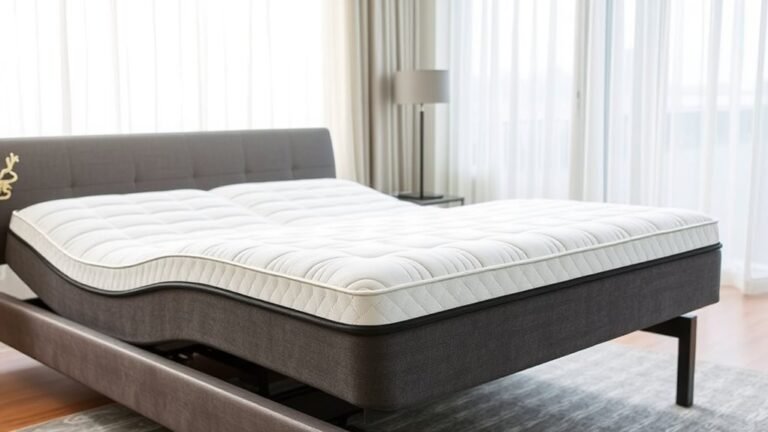
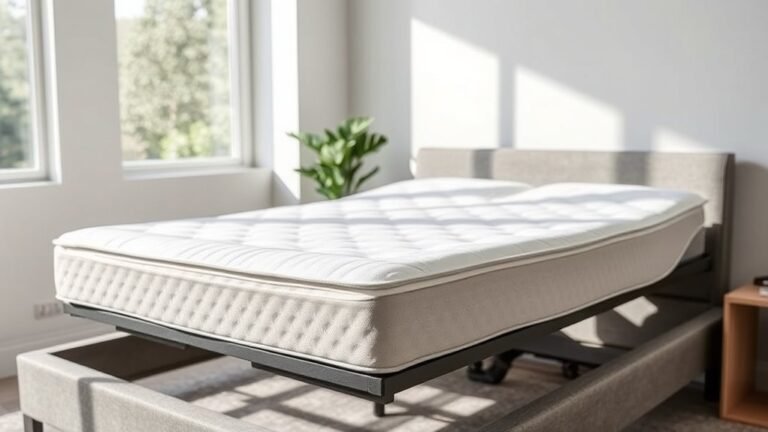
To cut a memory foam mattress, start by removing the cover and laying the foam flat on a stable surface. This step is crucial for making clean, precise cuts and avoiding any damage to your mattress.
Next, measure and mark your cut lines carefully, adding a small allowance to ensure smooth edges once you’re done.
Use a sharp electric carving knife or utility knife, cutting slowly along the lines with multiple passes for better control. It’s a good idea to wear gloves and goggles for safety, and make sure to secure the foam so it doesn’t shift while you’re cutting.
Don’t forget to clean up scraps promptly to keep your workspace tidy.
Keep going to discover tips on getting the perfect fit and the best tools to get the job done right. Cutting memory foam can seem tricky, but with these simple steps, you’ll have it done in no time!
Key Takeaways
- Carefully remove and set aside the mattress cover to expose clean, debris-free foam for cutting.
- Measure and mark cut lines precisely, using templates for rounded corners and adding seam allowances.
- Select sharp cutting tools like an electric carving knife or utility knife, and use safety gear during cutting.
- Secure foam on a stable surface with clamps or tape, ensuring good ventilation and workspace protection.
- Cut slowly along marked lines with multiple passes, trim edges for fit, then clean up debris and dust thoroughly.
Remove Mattress Covers and Prepare Foam for Cutting
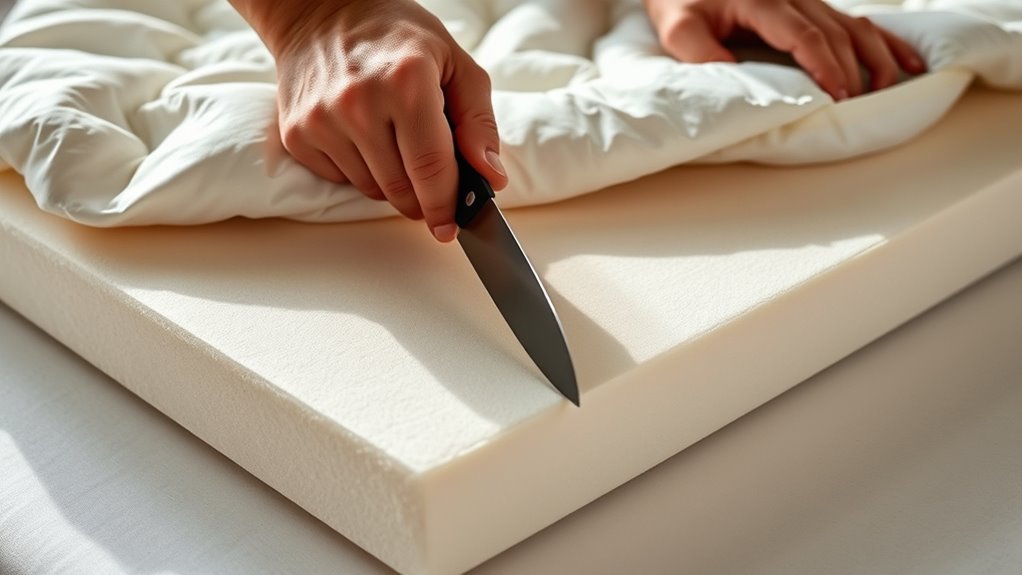
Before you begin cutting your memory foam mattress, carefully remove the mattress cover by unzipping or peeling it away to expose the foam. Make certain to handle the mattress cover gently to avoid damaging it, as you might want to reuse or reposition it later.
Once the foam is exposed, check that it’s clean and free of any debris. If the mattress cover has damaged or uneven areas, use a sharp utility knife or scissors to trim those sections carefully.
Next, lay the foam flat on a sturdy, level surface to keep it stable while you work. Keeping the mattress cover in a safe place during this process guarantees it stays intact and ready for re-covering after you finish cutting.
Measure and Mark Cut Lines Accurately

When you’re ready to cut your memory foam mattress, make sure you measure the exact dimensions you need. Add at least 0.32 cm to account for any foam breakage.
Use a measuring tape to get precise measurements, then mark the cut lines clearly with a permanent marker or felt tip pen. Place the foam on a flat, stable surface to prevent shifting while you measure and mark.
Measure precisely and mark cut lines with a permanent marker on a stable surface to ensure accuracy.
Use a ruler or straightedge to draw straight, even cut lines connecting your measured points. Double-check all your measurements and markings before you proceed to cut, making sure everything is accurate.
Taking these steps will help you measure and mark cut lines accurately. This will make your cutting process smoother and help you avoid costly mistakes.
Pick the Best Tools to Cut Your Memory Foam
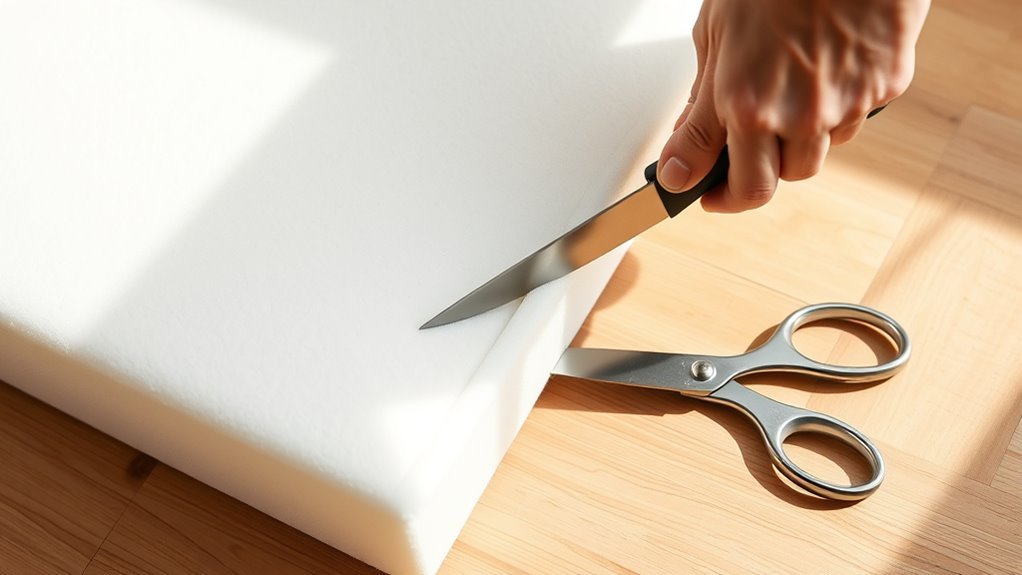
To cut your memory foam cleanly, choose the right tools like an electric carving knife or a hot wire cutter for thicker pieces. Always use safety gear like gloves and eye protection when handling sharp or heated blades.
You can also use a straightedge to guide your cuts and spray silicone on the blade to reduce friction for smoother slicing. This little trick makes a big difference! Just take your time, and you’ll get nice, clean edges every time.
Recommended Cutting Tools
Although cutting memory foam might seem intimidating, choosing the right tools can make the process much smoother and more accurate. An electric knife is one of the best options because its serrated blades easily slice through foam, giving you clean cuts with minimal effort.
If you want even more precision, a hot wire cutter uses a heated Nichrome wire to deliver smooth, detailed edges, perfect for shaping. For a budget-friendly option, sharp manual knives like bread or utility knives work well, but expect to make several passes for the best results.
To keep cuts straight and precise, use a straightedge or guide. Picking the right tool sets you up for success and helps you achieve professional-looking results every time.
Safety Precautions Needed
Since cutting memory foam involves sharp or heated tools, you’ll want to prioritize safety by wearing goggles and gloves to protect your eyes and hands from debris and accidental slips.
Use a sharp, suitable tool like an electric carving knife or hot wire cutter to make clean cuts and reduce slipping risks. It’s also a good idea to secure your mattress firmly on a stable, flat surface using clamps or weights to prevent movement during cutting.
Make sure your workspace is well-ventilated, especially when using heated tools, so you don’t end up inhaling any fumes. And if you’re working with heat-based tools, keep a fire extinguisher nearby just in case.
Following these safety precautions will help you cut your memory foam mattress efficiently and without accidents.
Alternative Cutting Methods
Wearing gloves and goggles keeps you safe, but choosing the right tool makes the job easier and your cuts cleaner.
When cutting memory foam, consider these alternative methods to get the best results:
- Electric carving knife – Its sharp, oscillating blades deliver smooth, straight cuts quickly and precisely. It’s perfect for most foam sizes.
- Hot wire cutter – Using a heated Nichrome wire, it slices through foam effortlessly. This tool is ideal for detailed or large shapes; just be sure to guarantee proper ventilation.
- Serrated bread or utility knife – With multiple passes and a straightedge guide, you can achieve accurate cuts without tearing the foam.
Each tool offers unique benefits, so pick one based on your project’s complexity and size. Remember, safety first with gloves and eye protection!
Set Up a Stable Cutting Surface for Memory Foam
Before you start cutting your memory foam mattress, you need to set up a stable and secure surface to work on. Use a sturdy, flat base like a worktable or a large piece of plywood to guarantee stability as you cut a memory foam mattress.
Secure the foam to this surface with clamps or double-sided tape to prevent any shifting during cutting. Place a straightedge along your marked cutting line for a precise, straight cut.
Make sure your workspace is well-ventilated, especially if using heated or powered tools. And don’t forget to protect your area with a drop cloth or newspapers to catch foam debris and simplify cleanup.
A stable setup really helps you cut a memory foam mattress accurately and safely every time. It makes the whole process a lot easier and less messy.
How to Cut Memory Foam Smoothly and Safely
Once your memory foam is securely fixed on a stable surface and your cutting line is clearly marked, you can focus on making smooth, clean cuts. Using the right tools and technique is key.
Secure your foam and mark your cut line clearly before focusing on smooth, precise cutting with the right tools.
Here’s how to cut memory foam smoothly and safely:
- Wear protective gloves and eye protection to shield yourself from foam particles and fumes.
- Use a sharp, serrated electric carving knife for precise, clean cuts. Cut slowly along the marked lines, making multiple passes if needed.
- Keep your foam flat and hold the electric carving knife steady with a straightedge as a guide for an even edge.
How to Cut Gel-Infused Memory Foam Without a Hassle
Although gel-infused memory foam can be tricky to cut, using a sharp electric carving knife and marking your cut lines clearly will help you achieve clean, precise edges without much hassle.
Just take your time and carefully cut by making multiple gentle passes. This way, you avoid tearing the foam.
Spray the carving knife blade with silicone spray for smoother cuts. And don’t forget to always wear protective goggles and work in a well-ventilated area.
| Step | Tip |
|---|---|
| Mark cut lines | Use a permanent marker |
| Use carving knife | Sharp electric preferred |
| Cutting technique | Multiple gentle passes |
| Safety precautions | Goggles and ventilation |
One more thing—avoid using a hot knife. It can damage the memory foam.
With a bit of patience and the right tools, you’ll cut gel-infused memory foam efficiently.
Trim Memory Foam Edges and Corners for a Perfect Fit
Cutting gel-infused memory foam smoothly sets the stage for shaping the mattress to fit your space perfectly. To trim foam edges and corners for a perfect fit, follow these steps carefully:
First, measure and mark the exact foam edges and corners using a straightedge and permanent marker. This helps ensure clean, straight lines so you don’t mess up the shape.
Next, use a sharp electric carving knife or hot wire cutter to trim along the marked lines. It’s best to make multiple passes for smooth, precise edges rather than trying to do it all at once.
If you’re dealing with rounded corners, create cardboard templates to trace and cut consistent curves into the foam. This little trick makes your cuts look neat and professional.
Always wear protective gloves and work on a stable surface to keep control and stay safe while cutting. This way, your foam mattress will fit seamlessly into your desired space without any awkward gaps or uneven edges.
Refitting or Replacing Memory Foam Mattress Covers
If you want your memory foam mattress to stay fresh and comfortable, refitting or replacing its cover is essential. Start by carefully removing the existing cover, unzipping or peeling it away without damaging the foam.
To keep your memory foam mattress fresh, gently remove its cover without harming the foam beneath.
Next, measure your memory foam mattress accurately—height, width, and length—to ensure a perfect fit for the new cover. Choose a durable, breathable fabric like cotton or a polyester blend that stretches easily for snug coverage.
When sewing a new cover, add seam allowances and consider installing a zipper or Velcro to make removal and cleaning easier. After fitting the new cover over your memory foam mattress, check for tightness and comfort.
Adjust as needed to avoid bunching or gaps that could affect your sleep quality. It’s worth taking the time to get it just right!
Clean Up and Dispose of Foam Scraps Properly
After ensuring your memory foam mattress has a well-fitted cover, it’s important to handle the leftover foam scraps properly. Collect all foam scraps immediately after cutting to avoid mess and spreading.
Then, follow these steps for cleaning and disposal:
- Use a vacuum cleaner with a HEPA filter to remove fine foam dust and small particles safely.
- Wrap or bag the foam scraps tightly to contain any loose pieces and reduce airborne particles.
- Check your local disposal regulations to see if special handling or recycling is required for foam materials.
If possible, consider repurposing foam scraps for padding, insulation, or craft projects. This way, you reduce waste and get extra use out of them.
Proper cleanup keeps your space tidy and prevents potential issues with foam dust. It’s a simple step that really makes a difference!
Memory Foam Cutting Mistakes to Avoid
While working with memory foam, you’ll want to avoid common mistakes that can ruin your cut and waste material. First, never use a dull knife; it causes jagged edges and uneven cuts, making your work look sloppy.
Always measure and mark the foam accurately before cutting to guarantee the right size. Cutting without proper support can cause the foam to shift, resulting in inaccurate cuts.
Use a straightedge or guide to keep your knife line straight and avoid wavy or crooked edges.
And hey, don’t ignore safety—wear eye protection and work in a well-ventilated area to prevent accidents or inhaling fumes. By steering clear of these errors, you’ll achieve clean, precise cuts every time.
Frequently Asked Questions
What Is the Easiest Way to Cut up a Foam Mattress?
The easiest way to cut a foam mattress is using an electric carving knife. Mark your cut line clearly, stabilize the foam on a flat surface, and cut slowly in multiple passes for a clean, precise edge without damaging the foam.
It might sound a bit tricky at first, but taking your time really pays off. Just keep the knife steady and follow the line carefully, and you’ll get great results.
What Are the Disadvantages of a Gel Memory Foam Mattress?
You’ll find gel memory foam mattresses can trap heat, feel heavier to move, and sometimes smell chemical right after unpacking.
Plus, they’re pricier, and over time, the gel might shift, reducing cooling effectiveness. It’s something to keep in mind if you’re considering one.
Can I Get a Foam Mattress Cut to Size?
Yes, you can get a foam mattress cut to size. Just measure carefully and mark your dimensions.
Then, you can either cut it yourself with the right tools or ask the retailer for a custom cut.
This way, it fits your exact space perfectly without any hassle.
Why Are People No Longer Buying Memory Foam?
You’re seeing fewer people buy memory foam because it traps heat and smells from off-gassing. It also costs a lot and sometimes lacks support.
Plus, many worry about its environmental impact. So, they’re pushing themselves to explore other mattress options instead.
Conclusion
Cutting your memory foam mattress carefully creates comfort and convenience. By choosing the correct cutting tools, crafting clear cut lines, and controlling your cutting cadence, you can confidently customize your cushion.
Don’t dash the delicate details—diligently trimming edges and tidying up scraps guarantees a neat, natural finish. Remember, rushing risks ruin.
So, stay steady, stay safe, and savor the satisfaction of a smartly shaped, snug sleep surface made just for you. Taking your time while cutting memory foam ensures a smooth, comfortable mattress tailored perfectly to your needs. With the right approach, your customized mattress will provide cozy support and long-lasting comfort every night.