Does Serta Mattress Have Fiberglass and How to Remove It
You won’t find fiberglass in a Serta mattress since they guarantee all their products are fiberglass-free for your safety. This means you can sleep easy knowing your mattress doesn’t contain those itchy, tiny glass fibers. It’s a relief for anyone worried about fiberglass exposure in bedding.
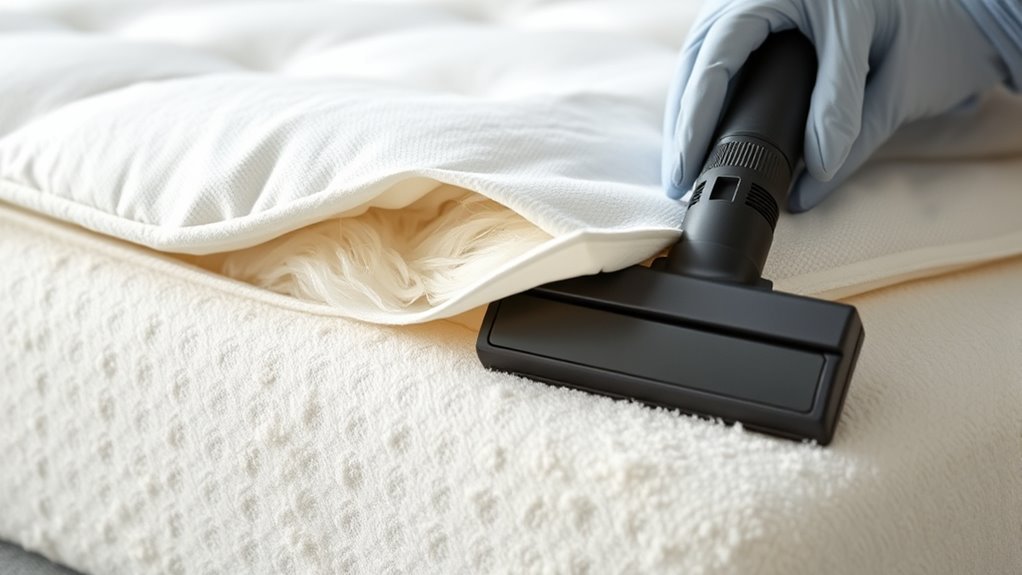
If you ever need to remove fiberglass from a mattress, first make sure to wear gloves and a mask. This protects your skin and lungs from irritation. Then, use duct tape or a HEPA vacuum to gently lift the fibers without spreading them around.
Finally, wipe surfaces with a damp cloth to catch any stray particles.
Want to know how to spot fiberglass and protect yourself better? More details can guide you through it, so you’re fully informed and safe.
Key Takeaways
- Serta mattresses are guaranteed to be fiberglass-free. They use safer alternative fire-resistant materials, which is great for your safety and peace of mind.
- Always check product labels for words like “fiberglass” or “fire barrier.” This helps you confirm whether there’s any fiberglass in the mattress or not.
- If you do find fiberglass, make sure to wear protective gear first. Then, use duct tape, a HEPA vacuum, and damp cloths to carefully remove any loose fibers.
- Avoid sweeping or dry wiping fiberglass particles. Doing so can send tiny fibers into the air and cause irritation.
- Once you’ve cleaned up, seal any contaminated bedding in plastic bags for disposal. Also, remember to wash your hands, clothes, and tools thoroughly after cleanup.
What Is Fiberglass and Why Is It Used in Mattresses?
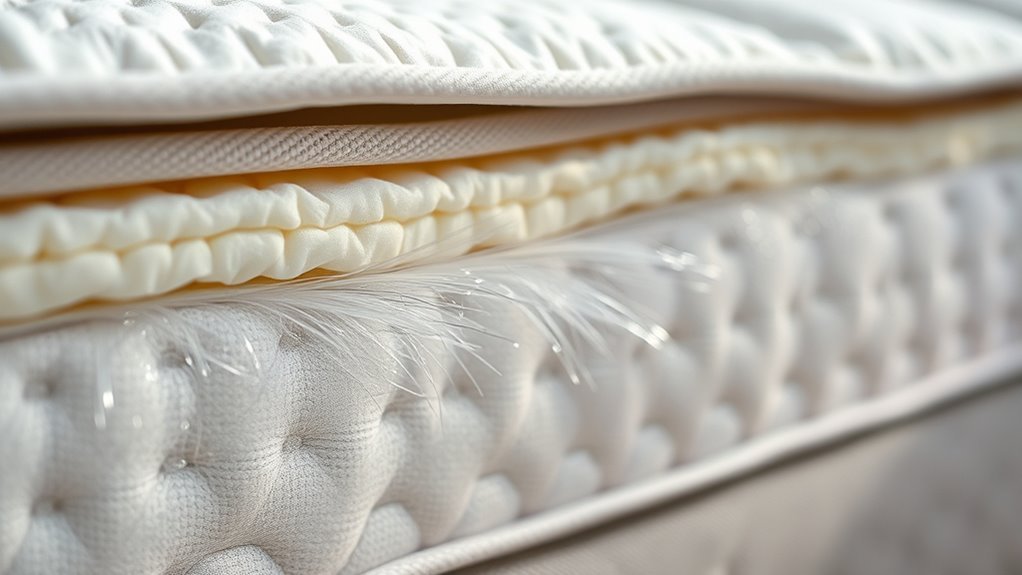
Although you might not see it, fiberglass plays an essential role in some mattresses by acting as a fire-resistant barrier. It’s made from fine, spun glass fibers that add strength and durability while helping mattresses meet fire safety standards without relying on chemical flame retardants.
Because fiberglass is lightweight and inexpensive, manufacturers can incorporate it easily into mattress layers to reduce fire hazards. However, if fiberglass fibers become airborne, they can cause skin irritation and respiratory issues. That’s why many companies, including Serta, avoid using it.
Understanding fiberglass’s purpose helps you see why it’s common in mattresses. But it also explains why some brands choose to guarantee their products are fiberglass-free—to prioritize your safety and comfort.
Serta’s Commitment to Fiberglass-Free Mattresses
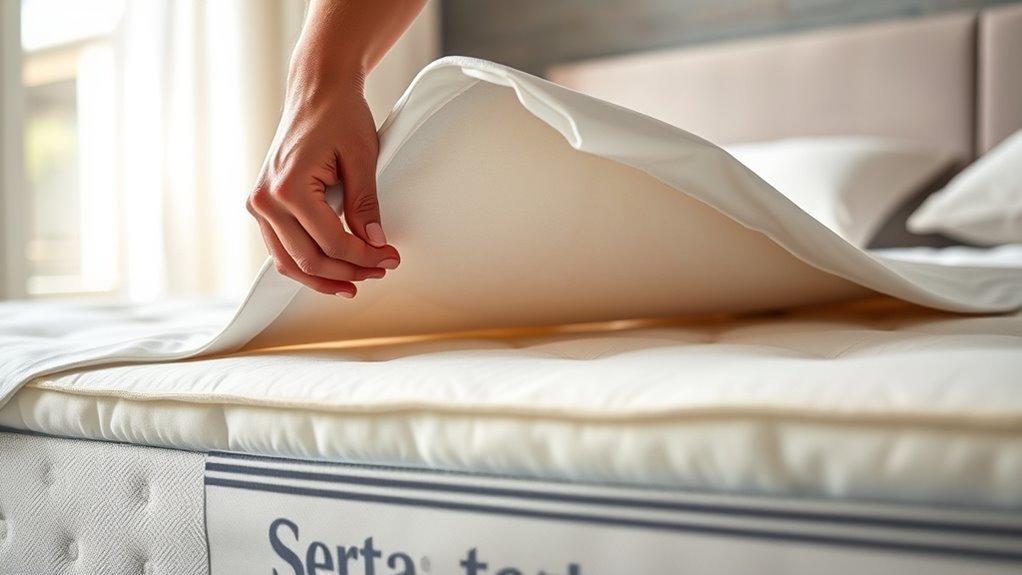
Because your safety matters, Serta guarantees all its mattresses are made without fiberglass. They prioritize your health by avoiding fiberglass as a fire-retardant and instead use safer alternative materials.
Serta clearly labels their products as fiberglass-free, so you can confidently choose without worry. Transparency is key—they want you to know exactly what’s inside your mattress.
| Commitment Aspect | What It Means for You |
|---|---|
| Fiberglass-Free Materials | No fiberglass irritation risks |
| Alternative Fire Retardants | Safe, compliant fire safety |
| Clear Product Labeling | Informed buying decisions |
| Material Transparency | Trust in mattress safety |
Serta’s dedication ensures you sleep soundly on a safe, fiberglass-free mattress. It’s all about giving you peace of mind every night.
How to Identify Fiberglass in Your Mattress
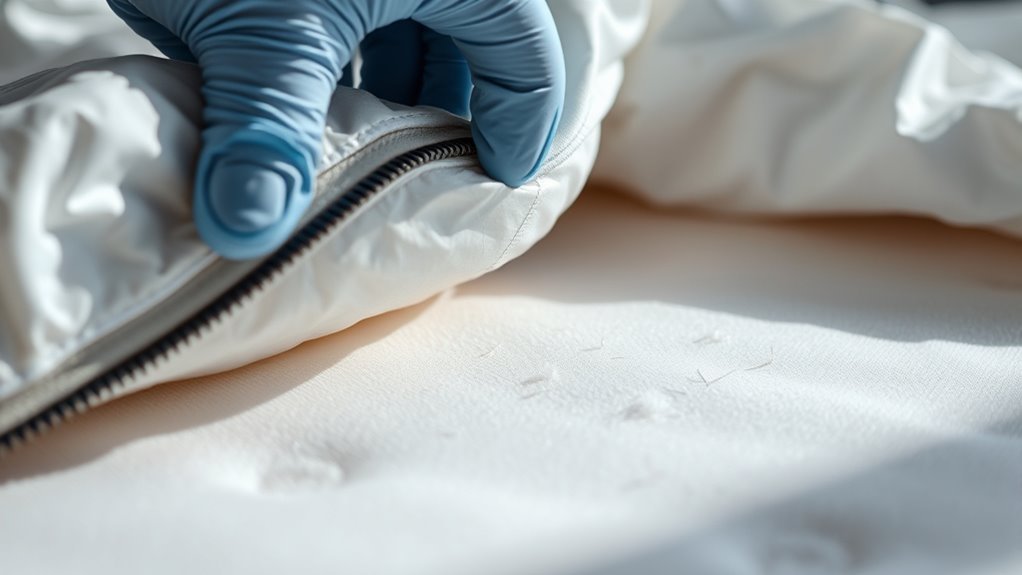
If you want to know whether your mattress contains fiberglass, start by checking the label for terms like “fiberglass,” “glass fiber,” or “fire barrier.” Sometimes, labels use vague terms like “fire-resistant” or “flame retardant” without specifics.
So, don’t hesitate to ask the manufacturer or retailer for clarification. Be cautious if your mattress has a visible or easily removable fire barrier, as these often contain fiberglass fibers.
To further ensure safety, verify product certifications such as CertiPUR-US® or Oeko-Tex Standard 100. These typically indicate the absence of harmful materials like fiberglass.
Taking these steps helps you confidently identify if fiberglass is present in your mattress and understand what protective measures it might include.
Understanding Mattress Labels and Certifications
You’ll want to check mattress labels for key certifications like CertiPUR-US® that guarantee low chemical emissions and safe materials.
Pay close attention to how fire barriers are described, since vague terms can hide fiberglass or other irritants.
Don’t hesitate to contact the manufacturer if you need clear, transparent info about what’s inside your mattress.
Key Certification Standards
When choosing a mattress, understanding the certifications on the label can help you make a safer, more informed decision. Look for CertiPUR-US® certification, which ensures the foam components have low VOC emissions and contain no harmful chemicals.
The Oeko-Tex Standard 100 label confirms that all mattress materials are free from harmful substances and won’t irritate your skin. Fire-resistant mattresses often carry labels showing compliance with fire safety standards, though these typically relate to fire barriers rather than specific chemicals like fiberglass.
Transparency matters—brands like Serta provide clear documentation, making it easier for you to identify fiberglass-free options. By paying attention to these certifications, you protect your health and ensure your mattress meets strict safety and environmental standards.
Decoding Fire Barrier Terms
Although mattress labels often include terms like “fire barrier” or “flame retardant,” these phrases don’t always clarify whether materials like fiberglass are used. You might see certifications such as CertiPUR-US® or Oeko-Tex Standard 100, which confirm low chemical emissions but don’t guarantee fiberglass absence.
Manufacturers must disclose fiberglass use in fire barriers, so check labels carefully. Some brands use alternative fire retardants without fiberglass, often highlighted in product descriptions or certifications.
To truly decode these terms, look for specific mentions of fiberglass or reach out to the manufacturer for detailed material information. Understanding these labels helps you make safer choices and avoid unwanted fiberglass exposure in your mattress.
Importance of Label Transparency
How can you be sure your mattress is free from unwanted materials like fiberglass? Start by carefully examining the mattress label. Transparent labels should clearly disclose if fire-resistant materials like fiberglass or safer alternatives are used.
Certifications such as CertiPUR-US® and Oeko-Tex Standard 100 are reliable indicators that the mattress meets safety standards and is free from harmful chemicals and fiberglass. If fire barrier or retardant information is vague or missing, don’t hesitate to contact the manufacturer for clarification.
Reputable brands like Serta prioritize label transparency, assuring you their mattresses are fiberglass-free and safe. By understanding and verifying labels and certifications, you can confidently choose a mattress without hidden fiberglass. This way, you protect your health and peace of mind.
Health Risks Associated With Fiberglass Exposure
When fiberglass fibers come into contact with your skin, you might notice redness and itching that can be quite uncomfortable.
Breathing in these tiny particles can cause coughing and throat irritation. Over time, it may lead to more serious respiratory problems.
It’s important to understand these risks, especially if you’re handling or removing mattresses that contain fiberglass. Taking precautions can really help keep you safe.
Fiberglass Irritation Symptoms
If you come into contact with fiberglass fibers, you might experience skin irritation like redness, itching, or rashes. These tiny fibers can embed themselves in your skin, causing discomfort that often feels like a persistent itch or a gritty sensation.
Your eyes may also react, becoming watery or irritated with a scratchy feeling. While this subtopic focuses on irritation symptoms, it’s important to note that repeated exposure increases the risk of more serious health issues.
People with sensitive skin or existing respiratory problems may find these symptoms worse. If you notice persistent irritation after handling fiberglass, it’s best to wash the area thoroughly and avoid further contact until the fibers are completely removed from your skin.
Respiratory Risks Explained
Why should you be cautious about fiberglass in your mattress? When the fire-resistant barrier gets damaged or torn, tiny fiberglass particles can become airborne. If you breathe these fibers in, you might experience throat irritation, coughing, wheezing, or other respiratory discomfort.
These fine glass fibers can also embed deep in your lungs, which raises concerns if exposure happens repeatedly. Besides inhalation, fiberglass can irritate your skin, and accidental ingestion or further inhalation increases the risks.
To protect yourself, handle and maintain your mattress carefully, avoiding any damage to the fiberglass barrier. By doing so, you reduce the chance of releasing harmful fibers into the air and minimize potential respiratory problems linked to fiberglass exposure.
Long-Term Health Concerns
Although fiberglass is effective as a fire-resistant material, you should be aware that long-term exposure to its fibers can lead to serious health issues. If you inhale or touch fiberglass particles regularly, you might experience skin irritation, eye discomfort, or respiratory problems like coughing and wheezing.
Over time, this exposure can cause chronic respiratory conditions or even asthma-like symptoms. Fiberglass is also considered a potential carcinogen when inhaled in large amounts over extended periods, which raises significant health concerns.
To protect yourself, avoid direct contact with fiberglass fibers and use protective gear if you ever need to repair or modify a mattress containing fiberglass. Fortunately, brands like Serta guarantee their mattresses are fiberglass-free, helping you avoid these long-term health risks altogether.
Effective Methods to Remove Fiberglass Particles
When dealing with fiberglass particles, you should wear gloves, long sleeves, and a dust mask to protect your skin and lungs from irritation. Start by using duct tape or a vacuum with a HEPA filter to carefully lift loose fiberglass fibers from surfaces.
Wear protective gear and use duct tape or a HEPA vacuum to safely remove fiberglass fibers from surfaces.
Avoid sweeping or dry wiping, as this can spread particles into the air. Next, gently wipe the area with a damp cloth to capture any remaining fiberglass dust without dispersing fibers.
If bedding or fabric is contaminated, seal it tightly in plastic bags before disposal to prevent fiber release. After cleanup, thoroughly wash your hands, clothes, and any tools you used.
These steps help you remove fiberglass safely and reduce the chance of spreading irritation throughout your home. It’s all about being careful and making sure those tiny fibers don’t get everywhere.
Preventing Fiberglass Contamination With Mattress Protectors
To keep fiberglass particles from spreading after removal, using a fitted mattress protector makes a big difference. It acts as a barrier, preventing fibers from contaminating your bedding and skin.
To maximize protection, pick a mattress protector designed to contain fiberglass, usually with a tightly woven, fire-resistant material.
Here’s how to effectively prevent fiberglass contamination:
- Choose protectors compatible with your mattress and follow manufacturer guidelines.
- Regularly inspect for tears or damage, replacing protectors as needed.
- Install the protector properly to ensure a secure fit that minimizes exposure.
Frequently Asked Questions
Are All Serta Mattresses Fiberglass Free?
Yes, all Serta mattresses are fiberglass-free, so you don’t have to worry about exposure. They use safe, fire-resistant materials instead.
You can confidently choose any Serta mattress without concern for fiberglass hazards. It’s great to know you’re sleeping on something safe and comfortable!
How Do I Tell if My Mattress Has Fiberglass in It?
You can tell if your mattress has fiberglass by checking labels, smelling for chemical odors, and inspecting for fine glass fibers or a barrier layer.
If you’re unsure, just reach out to the manufacturer. They can confirm what materials were used in your mattress.
What Can Be Mistaken for Fiberglass in a Mattress?
About 70% of people mistake polyester batting or wool fibers for fiberglass in mattresses.
You’ll also confuse thin fire barriers or frayed fabric pieces for fiberglass, so always check labels and inspect materials closely to avoid mix-ups.
Can You Get Fiberglass Out of a Mattress?
You can’t fully get fiberglass out of a mattress once it’s embedded.
Avoid disturbing it, gently vacuum nearby, and consider sealing or replacing the mattress to prevent airborne fibers and protect your health effectively.
Conclusion
Now that you know fiberglass can be a hidden irritant in some mattresses, including certain Serta models, you’re better equipped to safeguard yourself. Like tiny needles, fiberglass particles can cause discomfort, but with careful inspection and the right mattress protector, you can keep them at bay.
Always check labels and certifications to avoid surprises. Taking these steps ensures your sleep stays safe and comfortable, free from unwanted fiberglass exposure.
If you suspect your Serta mattress contains fiberglass, don’t panic. Removing it usually involves carefully opening the mattress cover and using protective gloves to avoid contact. A vacuum with a HEPA filter can help clean up any loose particles.
Remember, prevention is key. Using a mattress encasement designed to block fiberglass can save you from irritation and keep your bed safe. By staying informed about fiberglass in Serta mattresses and following these tips, you can enjoy a restful, irritation-free sleep every night.