How You Can Use a Regular Mattress With an Adjustable Bed
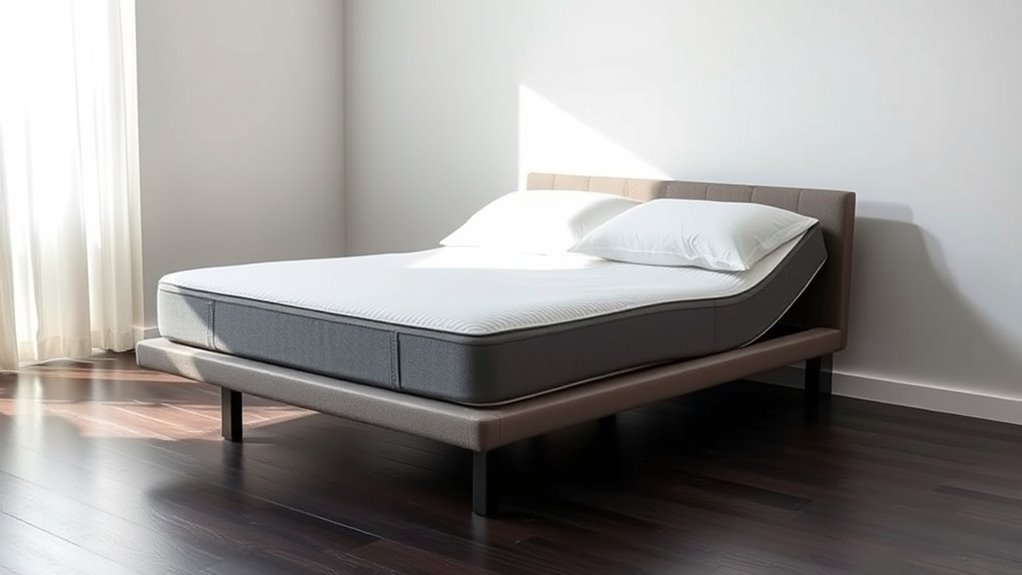
You can use a regular mattress with an adjustable bed only if it’s flexible and fits the base perfectly. Choosing the right mattress is key to enjoying the benefits of your adjustable bed without any issues.
Mattresses made from memory foam, latex, or hybrid materials are ideal because they bend easily without getting damaged.
Avoid innerspring mattresses with rigid coils or border wires since they can restrict movement and potentially harm your bed.
Also, make sure the mattress matches your adjustable base size exactly. Don’t forget to remove any box springs or foundations before placing your mattress on the adjustable bed.
To get the full picture on selecting and maintaining the right mattress, keep exploring these key tips.
This way, you’ll ensure comfort and durability with your adjustable bed setup.
Key Takeaways
- Verify if your regular mattress is flexible enough to bend without damage, such as memory foam or latex types without rigid coils.
- Remove any box springs or rigid foundations to allow proper adjustable base movement and mattress support.
- Match the mattress size exactly to the adjustable base, ensuring no gaps or misalignment for optimal function.
- Avoid innerspring mattresses with border wires or rigid coil structures that restrict bending and damage the bed mechanism.
- If compatible, limit mattress thickness to 8-12 inches for better flexibility and contouring with the adjustable base.
Understanding Adjustable Bed Bases and Mattress Compatibility
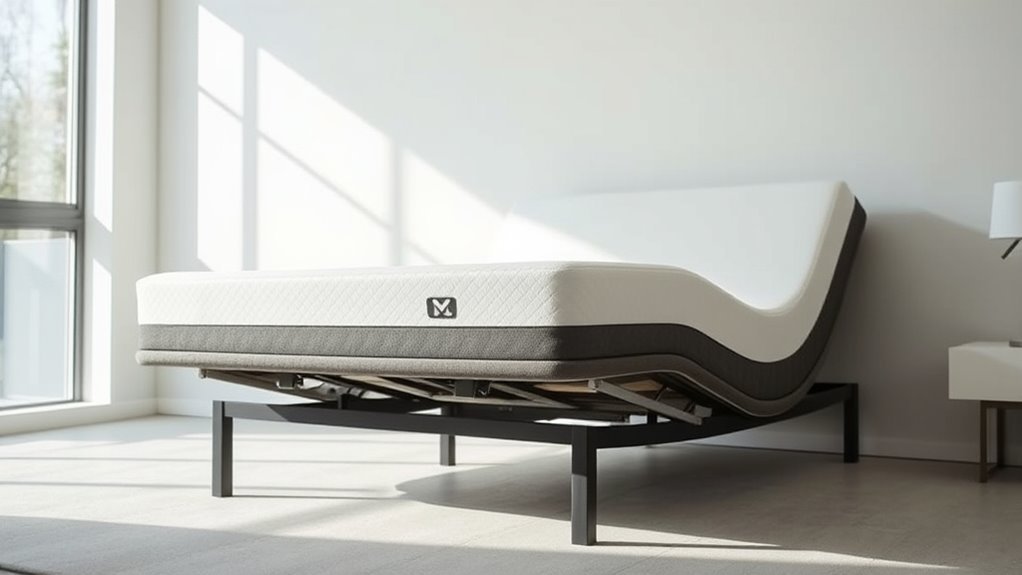
Although adjustable bed bases offer great flexibility, not every mattress works well with them. To guarantee mattress compatibility, you need a flexible mattress that can bend without damage.
Innerspring mattresses usually don’t suit adjustable bed frames because their rigid coil structures and border wires limit movement. Instead, modern mattresses designed for adjustable beds lack border wires and use materials like memory foam, latex, or hybrid blends that easily flex at a 45° angle.
Mattress thickness also matters—a range of 8-12 inches works best to maintain proper support and support system effectiveness while bending. Always check the mattress label or manufacturer specifications to confirm if your mattress pairs well with an adjustable bed base before making a decision.
Mattress Types That Work Best With Adjustable Beds
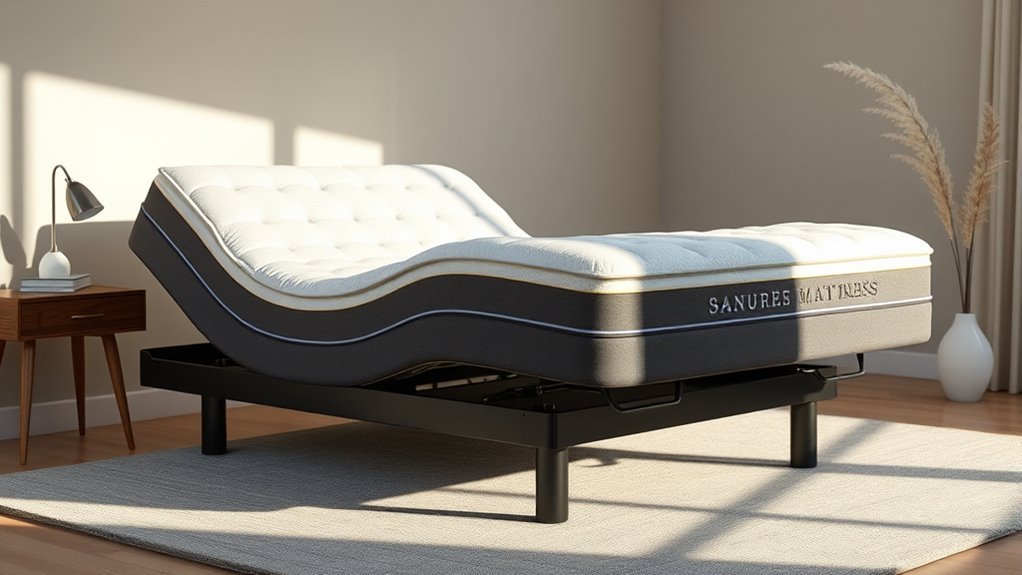
When choosing a mattress for an adjustable bed, you want materials that flex easily without losing support or shape. Memory foam, latex, gel foam, and hybrid mattresses are your best bets because they offer excellent flexibility and support. This makes them highly compatible mattresses for adjustable bases.
Memory foam, latex, gel foam, and hybrid mattresses flex easily while maintaining support—ideal for adjustable beds.
In contrast, innerspring mattresses often lack the flexibility needed and can get damaged due to their rigid coil systems. So, it’s usually best to avoid those if you want your bed to adjust smoothly.
Here are three key mattress features to weigh:
- Choose flexible materials like memory foam or hybrid mattresses.
- Avoid innerspring mattresses with rigid coils.
- Opt for mattresses with an ideal thickness, usually between 8 and 12 inches, to ensure proper bending without sacrificing support.
Always confirm the mattress specs to guarantee compatibility with your adjustable base. It’s worth double-checking to make sure everything works perfectly together!
How Mattress Thickness and Flexibility Affect Adjustability
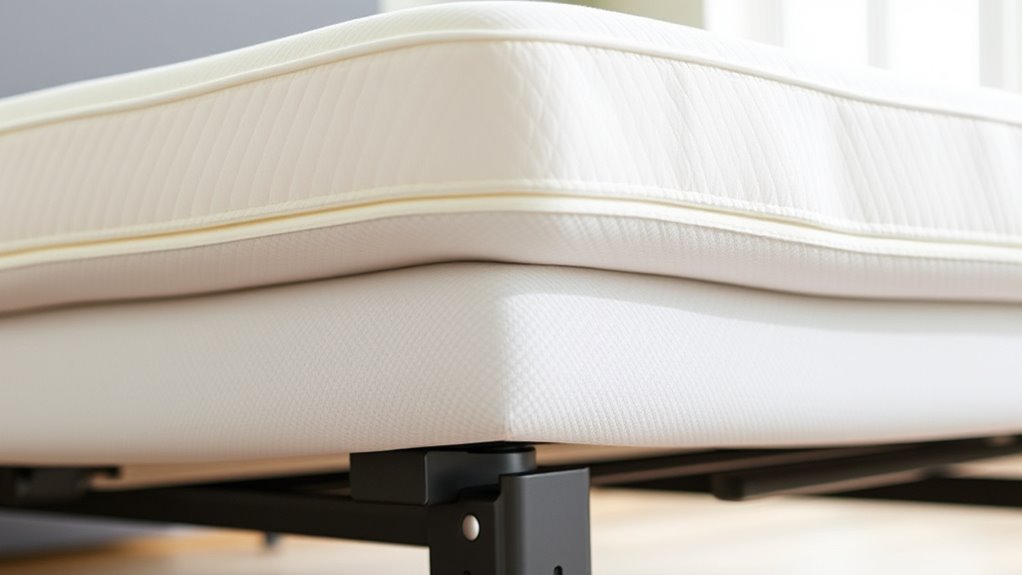
You’ll want a mattress between 8 to 12 inches thick for the best adjustability without risking damage. Softer materials like memory foam and latex flex more easily than rigid innerspring mattresses, making your adjustable bed work smoothly.
Keep in mind that overly thick or dense mattresses can limit movement and wear out your adjustable base faster. So, choosing the right thickness and flexibility really makes a difference. It helps your bed adjust just the way you want without any hassle.
Ideal Mattress Thickness
Since adjustable beds rely on smooth bending and contouring, picking the right mattress thickness is essential for maintaining flexibility and comfort. The ideal mattress thickness balances support and compatibility with the adjustable base to avoid issues like bridging or rigidity.
When choosing your mattress, keep these points in mind:
- Opt for 8 to 12 inches in thickness to ensure proper contour and flexibility without compromising support.
- Avoid mattresses thicker than 14 inches, as they can become too stiff and limit adjustability.
- Steer clear of mattresses thinner than 8 inches, which may lack adequate support and fail to contour well.
Material composition also plays a role, but focusing on the right mattress thickness really maximizes your adjustable bed’s performance and comfort. So, it’s worth paying attention to this detail!
Flexibility and Material Types
Although mattress thickness plays a crucial role, the material type largely determines how well your mattress flexes with an adjustable bed. Memory foam and latex are flexible materials known for excellent mattress flexibility, bending up to 45 degrees without damage. Their material composition makes them highly compatible with adjustable beds.
When choosing thickness, aim for 8-12 inches to balance support and bending ease. Hybrid mattresses with pocketed coil systems offer decent flexibility, but avoid those with interconnected coils or traditional innersprings. These tend to resist bending and can harm the adjustable mechanism.
Also, open-cell foam and gel-infused layers improve breathability and ease of adjustment. So, by prioritizing flexible materials and appropriate thickness, you’ll ensure your mattress works seamlessly with your adjustable bed.
Removing Foundations and Box Springs for Adjustable Bed Use
Before setting up your adjustable bed, you need to remove any existing foundations or box springs that could block its movement. Removing the foundation or box spring creates the necessary space for the adjustable bed base to fit directly on the bed frame or floor.
Make sure to pay attention to any rigid structures or fixed parts in your current setup. These can really get in the way and limit how the adjustable base moves.
Follow these steps for proper removal and support:
- Detach and remove any non-removable parts of the box spring or foundation.
- Replace with a compatible support system, such as a sturdy flat platform or slat system.
- Ensure mattress support remains even to prevent sagging during adjustments.
Doing it this way ensures your regular mattress works well with the adjustable bed base.
Ensuring Proper Mattress Size and Fit for Adjustable Bases
You’ll want to make sure your mattress size matches your adjustable base exactly, like pairing a King mattress with a King frame. Measuring carefully helps guarantee the mattress fits snugly and aligns properly with the base’s moving parts.
This prevents gaps or misalignment that could affect comfort and the base’s function. It’s all about making sure everything works smoothly together for the best experience.
Mattress Dimensions Guidelines
When selecting a mattress for your adjustable bed, matching the mattress size precisely to the base is crucial to guarantee proper fit and function. To ensure your mattress dimensions are compatible, follow these guidelines:
Choose a mattress with standard size measurements (Twin, Full, Queen, King) that exactly match your adjustable bed’s base size. Avoid larger mattresses that won’t fit the bed frame.
Opt for mattress thickness between 8 to 12 inches to maintain flexibility and support during adjustments.
For split adjustable beds, select split-size mattresses like Split King or Split Queen to allow independent movement of each side. This helps each side adjust without interfering with the other.
Frame and Base Alignment
Although selecting the right mattress size is essential, ensuring your bed frame aligns properly with the adjustable base is just as important. Start by confirming mattress compatibility—your mattress size must match the adjustable bed frame dimensions, like Queen or King, for a secure fit.
Also, check that the mattress thickness falls between 8-12 inches to allow flexibility and avoid bridging. Remove any rigid support structure or old slats from your existing bed frame to prevent interference with the base’s movement.
Verify your bed frame support can handle the adjustable base’s weight capacity without sagging or instability. If necessary, consider bed frame modification or replacement to maintain proper base and frame alignment and guarantee your mattress stays firmly supported.
Tips for Maintaining Your Mattress on an Adjustable Bed
Since adjustable beds move frequently, maintaining your mattress properly guarantees it lasts longer and performs better. To guarantee your mattress compatibility and maintain support, follow these tips:
First, choose a mattress flexible enough—like memory foam, latex, or hybrid—that bends with the adjustable frame without damage. This also provides consistent motion isolation, which is a nice bonus.
Opt for flexible mattresses like memory foam, latex, or hybrid to ensure smooth bending and excellent motion isolation.
Keep mattress thickness between 8-12 inches to allow smooth articulation and prevent bridging or sagging during adjustments. That way, your mattress moves with the bed, not against it.
Regularly rotate and flip your mattress (if allowed) to evenly distribute wear and maintain the support needed for comfort and durability. It’s a simple step that really helps your mattress last.
Avoid traditional innerspring mattresses with rigid coils, as they may restrict your base’s functionality. Always check your mattress’s label or manufacturer guidelines to confirm it suits adjustable beds and to follow specific maintenance advice. It’s best to be sure before you buy or use one.
Frequently Asked Questions
What Is the Lifespan of an Adjustable Bed?
You can expect your adjustable bed to last around 10 to 15 years if you maintain it well.
Keep an eye on motors and electronics, avoid exceeding weight limits, and follow care instructions to extend its lifespan.
Taking a little time for regular maintenance really pays off in the long run!
Why Do My Sheets Keep Coming off My Adjustable Bed?
Your sheets slip off like leaves in the wind because adjustable beds constantly shift angles, loosening regular sheets.
You’ll need deep-pocket or elastic strap sheets to keep them snug during all those movements.
Do Adjustable Beds Work With Any Mattress?
Adjustable beds don’t work with every mattress. You’ll need flexible ones like memory foam or hybrids that bend easily.
Traditional innerspring mattresses usually won’t flex properly. So, choose compatible mattresses to avoid damage and make certain of comfort.
What Type of Mattress Is Suitable for an Adjustable Bed?
Of course, your stiff innerspring mattress is perfect for an adjustable bed—if you enjoy discomfort!
Actually, memory foam, latex, or hybrid mattresses suit you best since they bend easily without damage, ensuring comfort and support.
Conclusion
You might think a regular mattress and an adjustable bed don’t belong together, but with the right flexibility and fit, they can work in harmony. While adjustable bases move and contour, your mattress needs to bend without breaking.
Removing bulky foundations might feel like a loss, yet it’s a gain in comfort and function. By understanding these contrasts, you’ll transform your sleep setup into a perfect balance of support and adaptability.
Using a regular mattress with an adjustable bed is totally doable when you choose one that can flex easily. Memory foam and latex mattresses usually do well because they bend smoothly with the base. Just remember, the key is finding a mattress that offers both comfort and durability while allowing your adjustable bed to work its magic. This way, you get the best of both worlds—great sleep support and the benefits of an adjustable bed’s customization.